Biomedical and Chemical Engineering Doctor of Philosophy (Ph.D.) Degree

The biomedical and chemical engineering Ph.D. program provides you with the knowledge, training, and expertise to tackle important problems in diverse industries.
Overview for Biomedical and Chemical Engineering Ph.D.
Why Pursue a Biomedical and Chemical Engineering Ph.D.?
STEM-OPT Visa Eligible: The STEM Optional Practical Training (OPT) program allows full-time, on-campus international students on an F-1 student visa to stay and work in the U.S. for up to three years after graduation.
Future-Focused Curriculum: Provides a dynamic program designed by academic and industry leaders to integrate formal education with state-of-the-art research and best practices from industry.
Internship Opportunities for Research: Apply for internships in industry or national laboratories related to your thesis research, gaining hands-on experience, professional connections, and advancing your academic work.
Top-Notch Faculty: Work side-by-side with experienced faculty conducting research on contemporary problems.
In the biomedical and chemical engineering Ph.D. program, you will complete a number of classes in your first two years of study, including foundational courses with other engineering doctorate students, discipline-specific courses within biomedical and chemical engineering, and elective courses you select with your research advisor. You will complete a research thesis project with your faculty advisor in their lab and may have the opportunity to complete a complementary industrial co-op or internship. You will graduate from the chemical and biomedical engineering Ph.D. as a highly skilled researcher who is well positioned to be a leader in the next generation of engineers who will help tackle the challenging and complex problems facing our society.
Biomedical and Chemical Engineering Ph.D. Plan of Study
The curriculum for the biomedical and chemical engineering Ph.D. program provides the knowledge and skills to develop successful independent researchers.
Biomedical and Chemical Engineering Ph.D. Core Courses: Core courses, which are usually completed during the first two semesters of the program, serve as foundational preparation for elective courses. They develop your core competency skills for research, introduce the research landscape in biomedical and chemical engineering, and help prepare you for the qualifying exam.
Discipline Concentration Elective Courses: The discipline concentration elective courses provide rigorous education in a field of research in biomedical and chemical engineering. Students may choose elective courses in consultation with the dissertation and research advisor, and from courses offered by the department of biomedical engineering and the department of chemical engineering.
Focus Area Elective Courses: Focus area elective courses provide the flexibility for you to engage in trans-disciplinary learning. In consultation with your dissertation and research advisor, you will select graduate level elective courses offered by any of the departments in the Kate Gleason College of Engineering. In addition, and subject to the program director’s approval, you may choose graduate courses offered by any of the RIT colleges.
Qualifying Exam: You will complete a qualifying exam at the end of your first year of study. The exam evaluates your aptitude, potential, and competency in conducting doctorate-level research. Through written documentation and a presentation of your work, you will critically review a recent peer-reviewed journal article in your field and propose a creative extension of the work.
Dissertation Proposal and Candidacy Exam: You will present and defend a dissertation proposal to your dissertation committee typically during your third year of study. The proposal provides the opportunity for you to elaborate on your research plans and to obtain feedback from your dissertation committee on the direction and approach of your research.
Research Review Meetings: Research review meetings provide comprehensive feedback regarding your dissertation research progress and expected outcomes prior to the defense of your full dissertation.
Dissertation Presentation and Defense: You will prepare an original, technically rigorous, and well-written dissertation that describes your research body of work and novel contributions that have resulted from your doctoral studies in biomedical and chemical engineering. You will present and defend your dissertation and its accompanying research to your dissertation committee.
Research Assistantships
Research assistantships are available to doctoral students. Learn more about the college’s research assistantship opportunities and how you can apply.
-

Discover how graduate study at RIT can help further your career objectives.
Virtual Admissions Webinars | Recordings available
Virtual Academic Sessions | October 20 - October 29
On-Campus Open House | November 20
Research
Please visit the research laboratory profiles on the biomedical engineering department and chemical engineering department websites for an overview of opportunities. Visit individual faculty profiles for a more complete list of research advisors in the program.
AWARE-AI NSF Research Traineeship Program
The AWARE-AI National Science Foundation Research Traineeship Program provides a unique opportunity to RIT's graduate students, who are poised to become future research leaders in developing responsible, human-aware AI technologies.
Students in the mechanical and industrial engineering doctorate program are eligible to apply for traineeships in the AWARE-AI NSF Research Traineeship (NRT) Program. Trainees experience convergent AI research guided by accomplished RIT faculty who work in cross-disciplinary research tracks. In addition to high-touch mentoring, students also engage in curated, career-advancement activities. Learn more about the benefits of the trainee program, including training opportunities, application requirements, and deadlines.
Research Assistantships
Research assistantships are available to doctoral students. Learn more about the college's research assistantship opportunities and how you can apply.
Careers and Internships
Internships
You may apply for internships in industry or at one of the national laboratories that align with your thesis research. Internships provide an opportunity for hands-on research experience, professional networking, and can serve to advance your thesis work. In addition, you may identify research opportunities at the National Labs Career Fair, an annual event hosted by RIT that brings representatives to campus from the United States’ federally-funded research and development labs.


Featured Work and Profiles
-
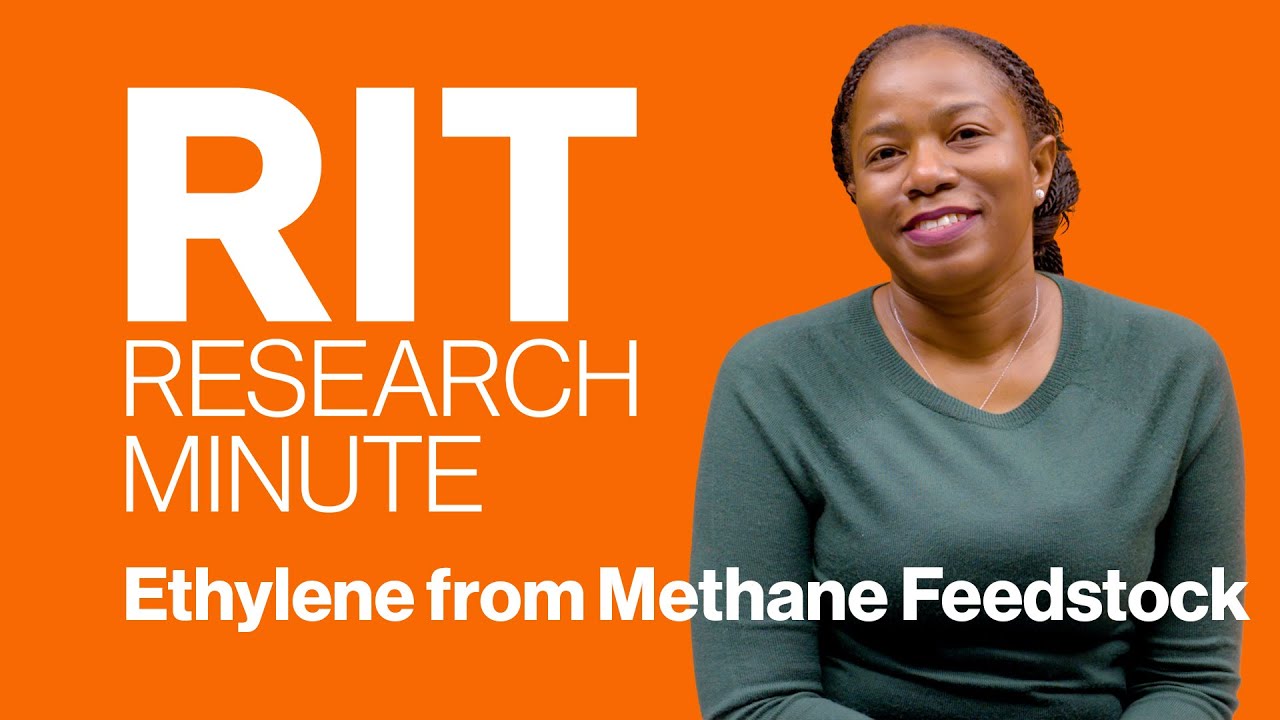
RIT Research Minute: Ethylene from Methane Feedstock
Obioma Uche RIT Assistant Professor, Dr. Obioma Uche is researching how to produce ethylene from methane feedstock with the goal of creating environmental and economic benefits. Learn more about what she and her...
Read More about RIT Research Minute: Ethylene from Methane Feedstock -

Studying fiber alignment gradients
Indranil M. Joshi Despite their biological relevance, fiber alignment gradients had not been extensively studied in the lab. Our research addresses this gap by developing a new technique using microfluidic devices...
Read More about Studying fiber alignment gradients -

Can Bacterial Extracellular Vesicles Break the Blood-Brain Barrier?
Louis P. Widom Sepsis is a life-threatening condition that can result from bacterial infections. If the bacteria enter the bloodstream, the host immune system may become hyperactivated and cause damage to the body...
Read More about Can Bacterial Extracellular Vesicles Break the Blood-Brain Barrier? -
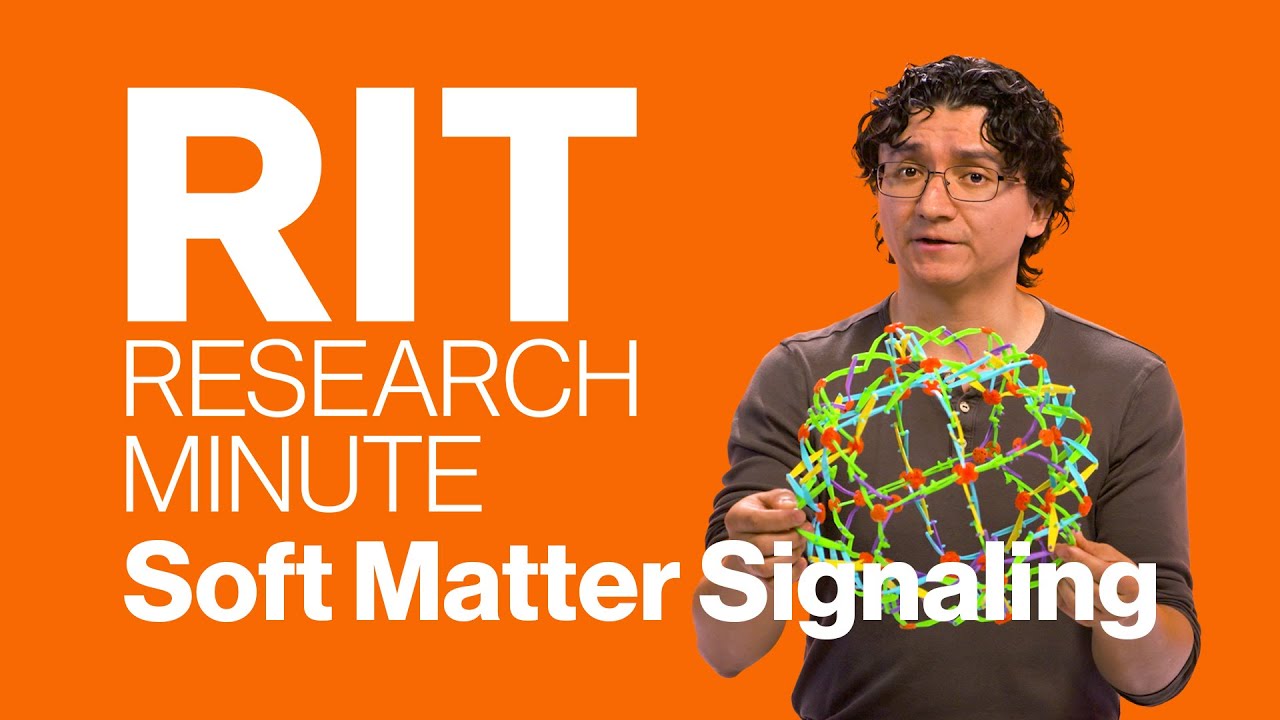
RIT Research Minute: Soft Matter Signaling
Jairo Diaz Amaya Professor Jairo Diaz and his research team are experimenting with soft matter to create new materials for the future. Learn how they’re changing the internal structure of tiny microscopic droplets to...
Read More about RIT Research Minute: Soft Matter Signaling -

A Breakthrough in Cell and Virus Analysis: How Electric Fields are Transforming Biomedical Research
Alaleh Vaghef-Koodehi, Blanca H. Lapizco-Encinas In biology and medicine, the ability to rapidly analyze and separate micron- and nano-sized particles, such as bacterial cells and viruses, is crucial. This article delves into a cutting-edge field...
Read More about A Breakthrough in Cell and Virus Analysis: How Electric Fields are Transforming Biomedical Research -

From Lab to Life: Transforming Medicine with Organ-on-Chip Technology
Mehran Mansouri Organ-on-chip technology is a breakthrough in developing new medicines.
Read More about From Lab to Life: Transforming Medicine with Organ-on-Chip Technology
Related News
-
September 25, 2026

RIT chemical engineering students reshaping particles to help build the materials of the future
Chemical engineering student Natalie Bedolla-Mortensen is playing a role in reengineering tiny particles that could one day become cell tissues of 3D-printed organs. Her research is part of Rochester Institute of Technology’s work in the growing field of soft matter development.
-
April 14, 2026

Antibiotics can trigger bacteria to release bubbles of inflammation tinder, making it harder to treat infection
The Conversation features research from Panteha Torabian, biomedical and chemical engineering Ph.D. student, examining how certain antibiotics can trigger bacteria to release particles that may increase inflammation, with implications for treating severe infections.
-
May 22, 2025

RIT researchers develop self-healing photopolymers for 3D printing to enhance part longevity and sustainability
3D Printing Industry discusses the research of Christopher Lewis, associate professor in the Department of Manufacturing and Mechanical Engineering Technology; graduate student Vincent Mei; and biomedical and chemical engineering Ph.D. student Kory Schimmelpfenning, which focuses on self-healing photopolymers for 3D printing that should enhance part longevity and sustainability.
Curriculum for 2026-2027 for Biomedical and Chemical Engineering Ph.D.
Current Students: See Curriculum Requirements
Admissions and Financial Aid
This program is available on-campus only.
| Offered | Admit Term(s) | Application Deadline | STEM-OPT Visa Eligible |
|---|---|---|---|
| Full‑time | Fall | December 15 priority deadline | Yes |
Full-time study is 9+ semester credit hours. International students requiring a visa to study at the RIT Rochester campus must study full‑time.
Application Details
To be considered for admission to the Biomedical and Chemical Engineering Ph.D. program, candidates must fulfill the following requirements:
- Learn tips to apply for a doctoral program and then complete a graduate application.
- Submit copies of official transcript(s) (in English) of all previously completed undergraduate and graduate course work, including any transfer credit earned.
- Hold a baccalaureate degree (or US equivalent) from an accredited university or college. A minimum cumulative GPA of 3.0 (or equivalent) is recommended.
- Submit a current resume or curriculum vitae.
- Submit a statement of purpose for research which will allow the Admissions Committee to learn the most about you as a prospective researcher.
- Submit two letters of recommendation.
- Entrance exam requirements: GRE optional but recommended
- Submit English language test scores (TOEFL, IELTS, PTE Academic, etc.), if required. Details are below.
English Language Test Scores
International applicants whose native language is not English must submit one of the following official English language test scores. Some international applicants may be considered for an English test requirement waiver.
Duolingo (DET): 135
IELTS: 7.0
LanguageCert Academic: 78
PTE Academic: 66
TOEFL: 94/5
International students below the minimum requirement may be considered for conditional admission. Deaf and hard-of-hearing test takers with significant hearing loss do not need to take the listening and speaking sections for the TOEFL and IELTS. Each program requires balanced sub-scores when determining an applicant’s need for additional English language courses.
How to Apply Start or Manage Your Application
Cost and Financial Aid
An RIT graduate degree is an investment with lifelong returns. Ph.D. students typically receive full tuition and an RIT Graduate Assistantship that will consist of a research assistantship (stipend) or a teaching assistantship (salary).
Resources
Access resources for students including student manual and research resources.
- BMECHE-PHD Student Manual
- BMECHE-PHD Candidacy Exam Eligibility
- BMECHE-PHD Request for Qualifying Exam
- BMECHE-PHD Advisory Committee Request Form
- BMECHE-PHD Request for Candidacy Exam
- BMECHE-PHD Request for Research Review Meeting Form
- BMECHE-PHD Request for Dissertation Defense
- BMECHE-PHD Independent Study Proposal
- PHD Outside Dissertation Committee Member Form
- Double Count Credits from RIT Graduate Degree
- Transfer courses from another University
Research Resources
- RIT Libraries
- RIT Libraries InfoGuides
- Our librarian
- Remote access to publications with RIT Account

