News
Jeyhan Kartaltepe
-
June 5, 2025
COSMOS-Web opens window into universe for scientists and citizens
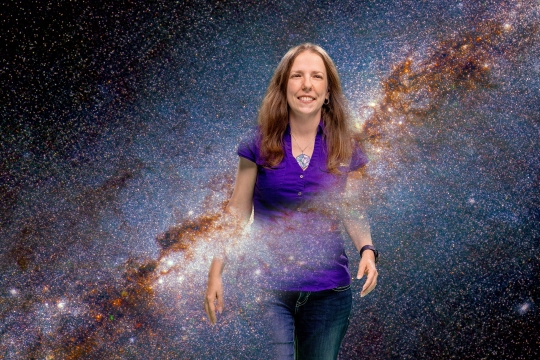
Supported by RIT Associate Professor Jeyhan Kartaltepe, COSMOS-Web—the largest James Webb Space Telescope Cycle 1 observation program—has made its full data set publicly available.
-
June 26, 2024

Like a time machine
CITY features Jeyhan Kartaltepe, associate professor in the School of Physics and Astronomy, in a review of Rochester's contributions to the James Webb Space Telescope and space exploration.
-
September 14, 2023
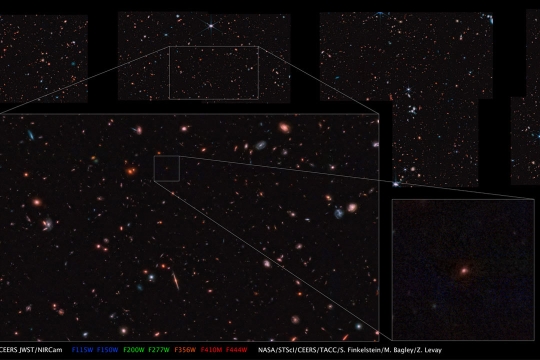
Collaboration with global team confirms, disproves distant galaxies
RIT scientists have once again used data from the James Webb Space Telescope (JWST) as part of the Cosmic Evolution Early Release Science (CEERS) Survey to change the way we think about the universe and its distant galaxies. Jeyhan Kartaltepe and Rebecca Larson co-authored a paper confirming very bright galaxies in the early universe, while also disproving the identification of what would have been the most distant galaxy ever found.
-
July 12, 2023
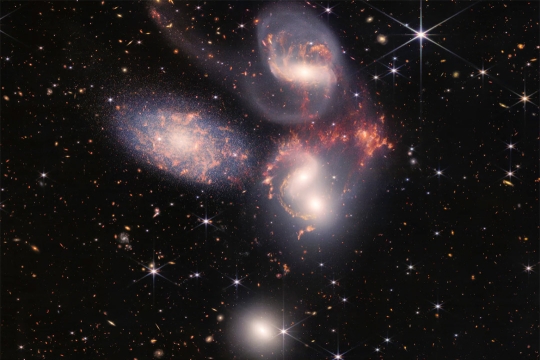
NASA releases spectacular image to celebrate James Webb Space Telescope
The Washington Post talks to Jeyhan Kartaltepe, associate professor in RIT's School of Physics and Astronomy, and Rebecca Larson, postdoctoral research associate in RIT’s School of Physics and Astronomy, about images from the James Webb Space Telescope.
-
July 6, 2023
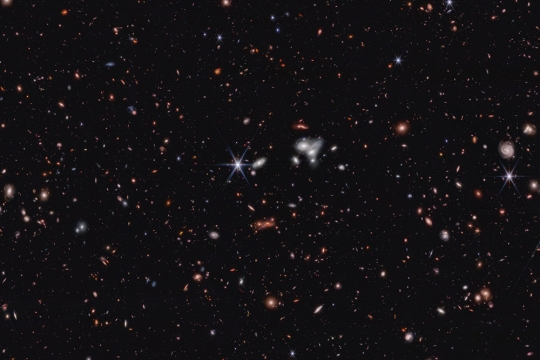
RIT researchers discover most distant active black hole ever
An RIT postdoctoral researcher and an associate professor in the School of Physics and Astronomy, along with a team behind the Cosmic Evolution Early Release Science (CEERS) Survey, have used new observations from the James Webb Space Telescope to confirm the existence of the most distant active supermassive black hole ever found.
-
May 8, 2023
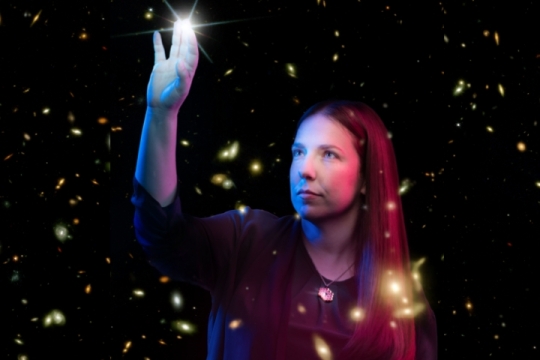
Unfolding the universe
Associate Professor Jeyhan Kartaltepe has her hands full studying data from the most powerful observational instrument ever made, while continuing to bolster her reputation as a teacher and mentor. Her work has gotten the attention of the astronomy community worldwide.
-
March 10, 2023
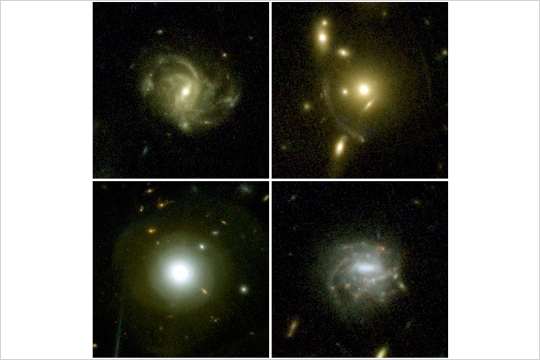
First images released from JWST’s largest general observer program
Tech Explorist features the first images from the largest program in the James Webb Space Telescope, COSMOS-Web, co-led by principal investigator Jeyhan Kartaltepe, associate professor in the School of Physics and Astronomy.
-
March 9, 2023
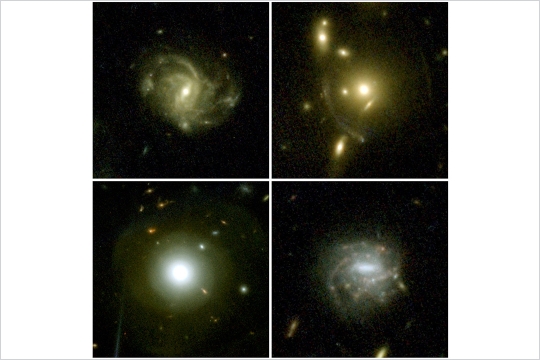
New images from James Webb telescope released, part of RIT co-led research project
WROC-TV features the first images from the largest program in the James Webb Space Telescope, COSMOS-Web, co-led by principal investigator Jeyhan Kartaltepe, associate professor in the School of Physics and Astronomy.
-
March 9, 2023

First images released from James Webb Space Telescope’s largest general observer program
The first images from the largest program in the James Webb Space Telescope’s first year show many types of galaxies. Scientists from the COSMOS-Web program released mosaic images taken in early January by the telescope. COSMOS-Web, co-led by principal investigator Jeyhan Kartaltepe, aims to map the earliest structures of the universe.
-
January 16, 2023

Our universe mastered the art of making galaxies while it was still young
Popular Science talks to Jeyhan Kartaltepe, associate professor in the School of Physics and Astronomy, about early galaxies detected by the James Webb Space Telescope.
-
January 10, 2023

Astronomers May Have Just Spotted the Universe’s First Galaxies
Wired talks to Jeyhan Kartaltepe, associate professor in the School of Physics and Astronomy, about early galaxies detected by the James Webb Space Telescope.
-
January 9, 2023

James Webb Space Telescope study reveals wide diversity of galaxies in the early universe
New data from the James Webb Space Telescope (JWST) have revealed that the structures of galaxies in the early universe were much more diverse and mature than previously known. RIT Associate Professor Jeyhan Kartaltepe said that JWST’s ability to see faint high redshift galaxies in sharper detail than Hubble allowed the team of researchers to resolve more features and see a wide mix of galaxies.