News
-
July 19, 2023

Faculty-researcher joins national organizations to help improve personal protective equipment
Jennifer Schneider, a faculty-researcher at RIT and expert in hazardous materials and community resilience, recently joined two national organizations to investigate and guide improved standards for use of personal protective equipment (PPE) and technologies.
-
May 8, 2023

Personal experiences inspire RIT’s first deaf doctoral candidates
For decades, deaf and hard-of-hearing students attending RIT’s National Technical Institute for the Deaf have been earning associate, bachelor’s, and master’s degrees. This year, the first three NTID-supported students are on track to earn their doctoral degrees from RIT.
-
April 29, 2023

Imagine RIT festival proves the future is bright
Thousands of visitors at the 2023 Imagine RIT: Creativity and Innovation Festival got to see what’s on the horizon in the areas of technology, the arts, and design. Festivalgoers traversed RIT’s campus on Saturday, exploring more than 350 exhibits.
-
April 7, 2023
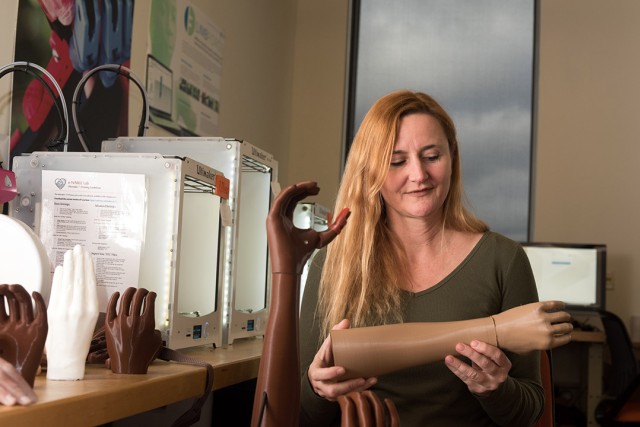
Jade Myers recognized as recipient of 2023 Bruce R. James ’64 Distinguished Public Service Award
Prosthetic devices can be symbolic of loss or they can represent challenges being overcome. Jade Myers’ focus on designing prosthetics for individuals who have lost limbs is a way to give them the second chance that can make all the difference in the world.
-
February 1, 2023
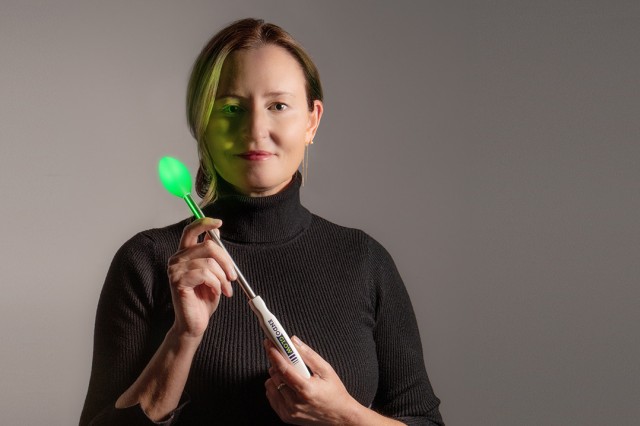
Business incubator grows companies
The ability to see through body tissue may sound like something from a science fiction movie, but a start-up company in RIT’s Venture Creations business incubator has developed a device that makes this possible.
-
December 22, 2022

Leading spinal researcher develops new tissue regeneration approaches for back pain
Karin Wuertz-Kozak described her lab test equipment as a gym for cells. Stretching and compressions tests using bioreactors—her lab equipment—can make a difference in understanding how cells respond to mechanical cues and how that affects disease progression, specifically for spinal disc degeneration, common to millions of Americans.
-
October 20, 2022

Biomedical engineering researcher awarded grant to study chronic skin fibrosis
More collagen in the human body is not always good, and Professor Karin Wuertz-Kozak is investigating how disease progresses because of the increase in this important protein.
-
October 18, 2022

Digital therapy treatments give RIT researchers tools to reach rural communities in N.Y. and N.H.
RIT behavioral health researchers are providing remote mental health care and addiction therapy to rural communities in New York and New Hampshire and training for therapists to deploy the digital treatments at their clinics.
-
October 17, 2022

RIT researcher developing new mathematical techniques to speed up biomechanical imaging
Assistant Professor Olalekan Babaniyi is developing new mathematical techniques that could lead to improvements in applications ranging from medical imaging to predicting how fast ice flows into the ocean.
-
October 8, 2022
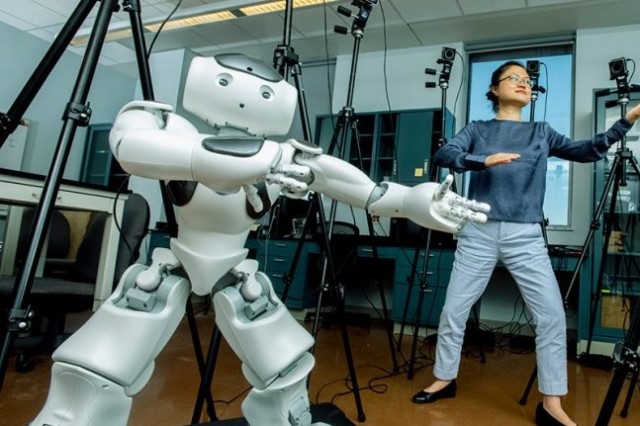
Robot Teaches Tai Chi
IoT World Today reports on a team of engineers from RIT that created a robotic system that can teach Tai Chi.
-
September 28, 2022
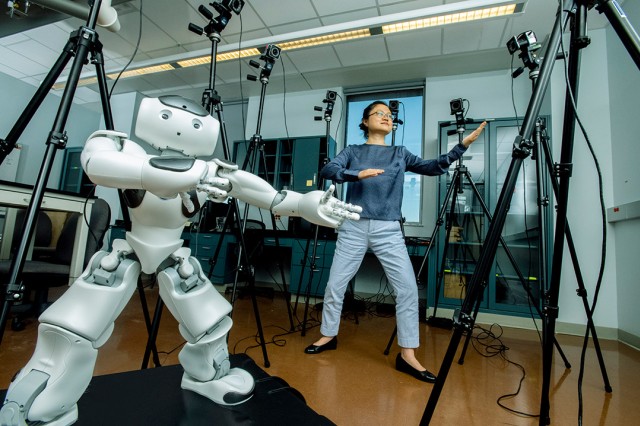
Faculty researchers develop humanoid robotic system to teach Tai Chi
Zhi Zheng’s robot is skilled at Tai Chi, and her research team hopes it will soon lead a class of older adults at a local community center. Zheng, assistant professor of biomedical engineering in Kate Gleason College of Engineering, developed the humanoid robot as part of her assistive technology research.
-
September 23, 2022
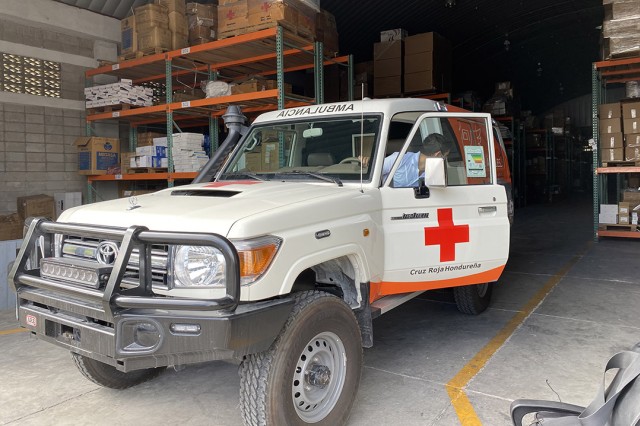
Neonatal ambulance hits ground in Honduras
After five years of collaboration and production, the neonatal transport ambulance designed by RIT’s Hope for Honduras team has hit the ground in Honduras. The ambulance will help save countless young lives by greatly enhancing medical access to neonatal care for those living in rural areas of the country.