RIT researchers get design inspiration from rescuing neglected media
How 50-year-old instructional television has implications for interactive learning today
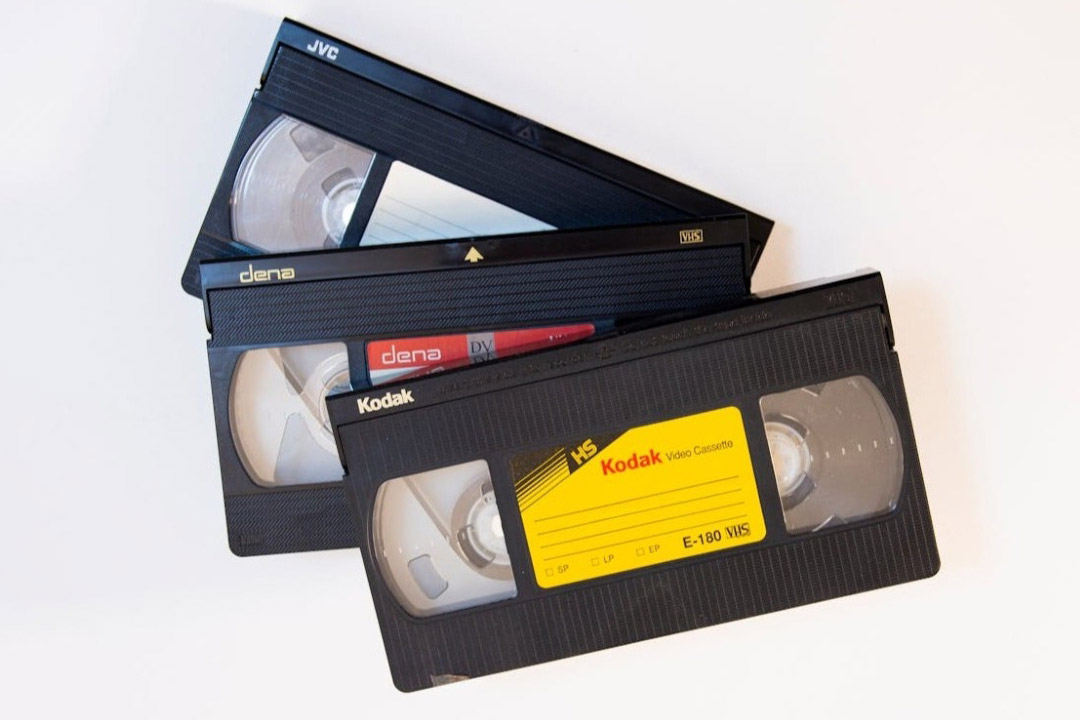
Student and faculty researchers in the Interaction, Media, and Learning Lab are rescuing neglected and discarded media, including instructional television VHS tapes from the 1970s and 80s. Historical media can offer key lessons in designing new interactive learning experiences.
Like Indiana Jones, researchers at RIT’s Interaction, Media, and Learning Lab hope to save pieces of history before they disappear so that people can learn from the designs. Recently, the researchers have been recovering late 20th century instructional tv programs before the tapes literally fade away.
Owen Gottlieb, founder and director of the lab, leads projects by faculty and students focused on exploring where learning, media, and technology meet. The work varies from games for learning in religion and culture to health and wellness interventions and from media history to novelty with AI. Gottlieb said a lot of the history work focuses on design precedents, which can provide foundational references and narrative frameworks to guide creators in designing new interactive learning experiences.
“If we’re going to make the best games and interactive media in the future, we need to know our history,” said Gottlieb, associate professor in RIT’s School of Interactive Games and Media. “We can learn from them and create better and better designs.”
For about a decade, Gottlieb has researched instructional classroom television designs of the 1970s and 1980s. This was a breakthrough period for impactful learning media design that has largely been forgotten. He said recovering this understudied genre of educational media is unlocking key design cases and related research for contemporary learning designers.
Gottlieb researched and wrote a chapter about instructional design archival history—called “Heritage in Search of a Home”—in the book The Archivability of Television: Essays on Preservation and Perseverance. In April, that book won the 2026 Library of American Broadcasting Foundation Broadcast Historian Award.
“Owen expertly demonstrates the interdisciplinary acumen necessary to tackle histories of archiving media, which offers vital lessons about how we preserve our present media environments,” said Lauren Bratslavsky, co-editor of the book. “By providing a window into a genre otherwise lost to scholars, he weaves a fascinating story of the history of instructional television and its remaining archival preservation—with key implications for contemporary interactive media and games for learning.”
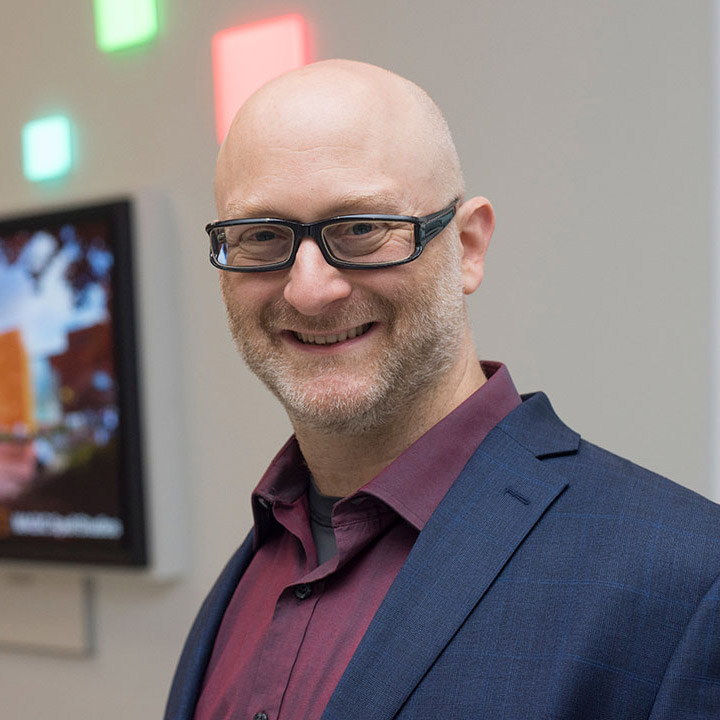
Owen Gottlieb, associate professor in the School of Interactive Games and Media, leads the Interaction, Media, and Learning Lab.
Gottlieb researched at the Indiana University Libraries’ Moving Image Archives and the National Archive of Public Broadcasting at the University of Maryland. He has also conducted dozens of oral histories for upcoming publications and helped recover missing instructional television, restoring works to archives, including locating a rare film print in Australia and a tape believed forever lost from a private family collection.
“I was interviewing family members of a major instructional tv producer, and they let me review some remaining tapes that happened to include a broken half-inch VHS cassette with a missing episode on it,” said Gottlieb. “With the help of the American Archive of Public Broadcasting, we ended up recovering a full episode of John Robbins’ Book Bird, which had been lost.”
Gottlieb presented the lost episode and its implications at the 2025 Association of Moving Image Archivists on a panel including other key works from the Smithsonian African American Museum, University of Georgia, and UCLA Film and Television Archive. He also presented historically important instructional design media at a number of other venues, including the highly selective Orphan Film Symposium.
Interdisciplinary research in the lab
Avigail Daniel, a third-year game design and development BS/MS student, is currently working in the Interaction, Media, and Learning Lab. She is learning the intricacies of media history practice, tracking down and organizing primary sources from the mid and late 20th century by working with RIT’s Interlibrary Loan professionals and government databases. In the library, she has built a variety of research skills and dug into the historical record—even through microfiches—something she said she never expected to do as a game design and development major.

Avigail Daniel, third-year game design and development student.
“I have always loved puzzles and detective work and the task of finding articles buried or lost in an online library has a surprisingly similar vibe,” said Daniel, who is from Port Washington, N.Y. “I didn’t expect to enjoy the work as much as I did, but each time I would find an article previously marked ‘missing’ I felt so accomplished, especially knowing that the articles uncovered are potentially very useful to the professor’s research.”
Daniel said she’s also excited to be researching and designing on an upcoming video game with the lab’s Religion, Culture, and Policy Initiative at RIT’s MAGIC Center. Gottlieb previously released Lost & Found, a series of award-winning tabletop and digital games that teach players about the history of prosocial religious legal codes.

Dakota Herald ’17 (game design and development)
Dakota Herold ’17 (game design and development) worked on two of the Lost & Found games as a student. He learned game design and development on the job, helping create a digital, mobile prototype of Lost & Found in Unreal Engine for the National Endowment for the Humanities. He also turned that research into a co-op.
“Before Lost & Found, I never even knew there was such an intersection of education and games,” said Herold. “This work outside of class helped build my foundation and my portfolio. It’s what put me to the next level.”
Through connections in the lab, Herold got his first job at the Rochester game company Workinman Interactive, where he got to create kids’ games with Nickelodeon and Disney. Today, Herold is a senior software engineer working on gameplay at Secret Dimension. On the side, he has his own independent game studio Mythfire Studios.