College of Science News
Imaging Science BS
-
August 17, 2026

Tests of a New Telescope Captured the Faint Aftermath of a Star’s Death
The New York Times speaks to Joel Kastner, professor of imaging science at RIT, about new images from the MOTHRA telescope that reveal previously unseen stellar debris surrounding the Helix Nebula.
-
June 18, 2026

Donors commit $24 million to advance AI leadership, faculty excellence, and student success at RIT
The $24 million gift supports several strategic priorities, including the creation of a Harris-Pratt Directorship for the university's new artificial intelligence institute expected to launch in early 2027, expanded scholarship support, and strengthened endowments for three distinguished professorships.
-
May 29, 2026
Science without borders
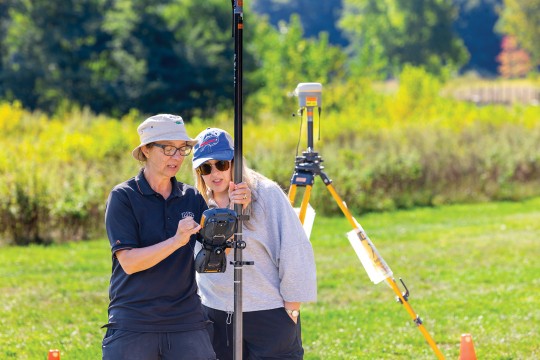
RIT researchers value citizen science, where making data available to everyone not only accelerates research but also fosters education, trust in science, and worldwide collaboration.
-
May 18, 2026

NSF CAREER Awards spotlight RIT research shaping the future of AI
RIT faculty members are tackling some of AI’s most pressing challenges with support from the National Science Foundation’s prestigious CAREER Award program, which recognizes early-career scholars who integrate cutting-edge research with student education.
-
April 22, 2026

Freshman Imaging Project brings historic artifacts to new dimension
First-year imaging science and motion picture science students receive immediate hands-on, collaborative experiences as they start their college careers through the Freshman Imaging Project.
-
April 2, 2026

A curious secret of color vision revealed by scientists
Scientific American speaks to Benjamin Chin, assistant professor of imaging science, about new research showing how the human eye determines which color to focus on, with implications for vision science and virtual reality.
-
March 17, 2026
Erased, Burned, or Hidden from Sight, Unreadable Texts Are Being Decoded
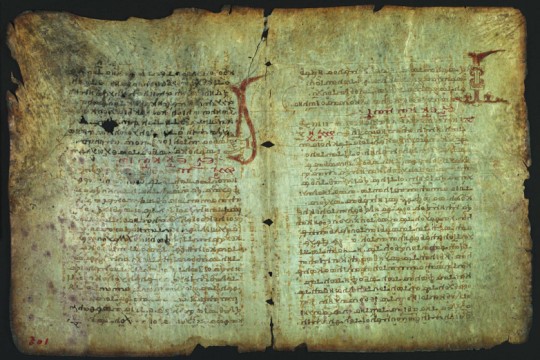
Fine Books Magazine speaks to Roger Easton Jr., professor of imaging science, about using advanced imaging technologies to help reveal hidden texts such as the Archimedes Palimpsest, contributing to the preservation and interpretation of historical manuscripts.
-
November 19, 2025

RIT innovation helps illuminate lost history
The goal of libraries, museums, and archives around the world is to safeguard historical documents, but some objects can deteriorate with time. RIT’s Cultural Heritage Imaging (CHI) lab is using funding from the National Endowment for the Humanities to develop a relatively low-cost system that makes cultural heritage imaging methods more accessible.
-
April 22, 2025

Virtually endless possibilities: RIT researchers push boundaries with immersive technologies
RIT researchers are pushing the boundaries with immersive technologies, including augmented reality (AR), virtual reality (VR), extended reality (XR), and mixed reality (MR).
-
November 21, 2024

In and out of Africa
Africa is rich in natural resources and contains one of the most diverse ecosystems across the globe. The Sahara Desert itself is larger than the continental United States. With all the unique landscapes, wildlife, and growing urban areas, more than 30 RIT faculty have recognized the importance of traveling to the continent, all backed by RIT Global.
-
April 10, 2024

University researchers measure the sun during the eclipse to assess impact on solar arrays
The recent total solar eclipse over Rochester provided a once-in-a-lifetime opportunity on Earth for two faculty-researchers and their students to capture data about the effects of the sun’s energy during a total eclipse.
-
April 5, 2024

Imaging science professor continues legacy of his mentors
Life experience and lessons from all of his mentors, many of whom were past recipients of the Eisenhart Award, made Salvaggio a teacher worthy of the accolade.