Field Course Sparks a Passion for a Freshwater Science Career
Alexandra Bros ’22 turned early concerns about water pollution into a passion for field research at RIT leading her from the Lacawac Sanctuary to a Ph.D. program in limnology.
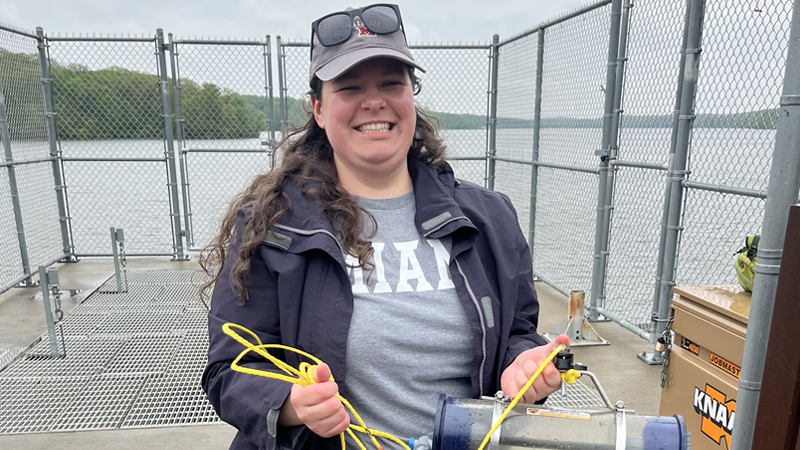
Growing up in a city where she saw signs of water pollution first-hand, Alexandra Bros ’22 often wondered about the extent of human impact on aquatic ecosystems. At RIT, she began exploring that interest through a biological research project. First, she studied migratory birds called thrushes in Dr. Susan Pagano’s lab, then shifted to freshwater ecology research with Dr. Sandi Connelly, where she examined how zooplankton tolerate zinc in lakes. These hands-on experiences started her journey of freshwater research that ultimately turned into her career path.
Alexandra’s turning point came during Biology Without Walls, a field-based class experience led by Dr. Sandi Connelly, Dr. Dawn Carter, and Michelle Weatherell. The course gave Alexandra her first exposure to Lacawac Sanctuary and helped her realize that field research was more than just an interest. “It was by far my favorite course at RIT,” she says. “It introduced me to Lacawac and is the reason I found my true calling in biological research.”
Designed to immerse students in real ecological systems, the Biology Without Walls course explores how near-pristine environments like Lake Lacawac are affected by climate change, species invasions, and human activity. Due to the small class size, Alexandra and her peers were able to form close connections with the faculty. Alexandra even developed an independent research project during the class, an experience she now recognizes as a preview of graduate-level work. “It gives you a glimpse into what it’s like to design a thesis or write a dissertation chapter,” she says. “And it’s a great way to step outside the classroom and broaden your experiences at RIT.”
That course also opened the door to her next big step. In her final semester at RIT, Dr. Connelly shared a flyer about an internship through the Pocono Lake Ecological Observatory Network (PLEON) at Lacawac Sanctuary in Pennsylvania. Alexandra applied, interviewed, and was selected as a summer intern. The experience immersed her in full-time fieldwork and lake-based research, something she had been wanting to do since starting at RIT. During the internship, she worked on a team that provided water quality monitoring for dozens of lakes in the Pocono region. She spent long hours on the water collecting data, troubleshooting equipment, and learning how to communicate science with local lake associations and community members. “It was hands-on, fast-paced, and so fulfilling,” she says. “I loved seeing how different each lake was and how important this work was to the people who live around them.”
Her performance and enthusiasm led to a new opportunity. Dr. Beth Norman, Lacawac’s Director of Science and Research, invited Alexandra to return as the newly created PLEON Technician. In that role, she took on even greater responsibility. She trained and mentored two cohorts of interns, wrote long-term monitoring reports to help guide lake management decisions, and led a citizen science project on a public reservoir. She also continued working on several research projects, one of which she independently led from start to finish. “Even on the worst field days, when everything goes wrong, there’s nothing better than being out on the water,” she says. “Every lake is like a snowflake: unique, unpredictable, and fascinating. I completely fell in love with the work.”
Now a Ph.D. student in the Global Change and Limnology Lab at Miami University, Alexandra is building on the work she started at RIT and Lacawac. She hopes to contribute to long-term freshwater research and teach the next generation of limnologists.
Her advice to students? Start early, stay curious, and don’t be afraid to fail. Alexandra encourages students to talk with their professors and advisors as soon as they start thinking about research. “Even if a professor can’t take you on, chances are they know someone who can or they’ll point you toward internships, REUs, or research opportunities in other labs,” she says.
She also stresses the importance of asking questions in class and in the lab. “That curiosity might be what helps you find your niche,” she adds. And when things don’t go as planned, which often happens in fieldwork, don’t give up. “In ecology especially, experiments can fail and results can be inconclusive. But that’s just part of the process. Sometimes those unanswered questions are the ones worth chasing.”
More Featured Profiles and Work
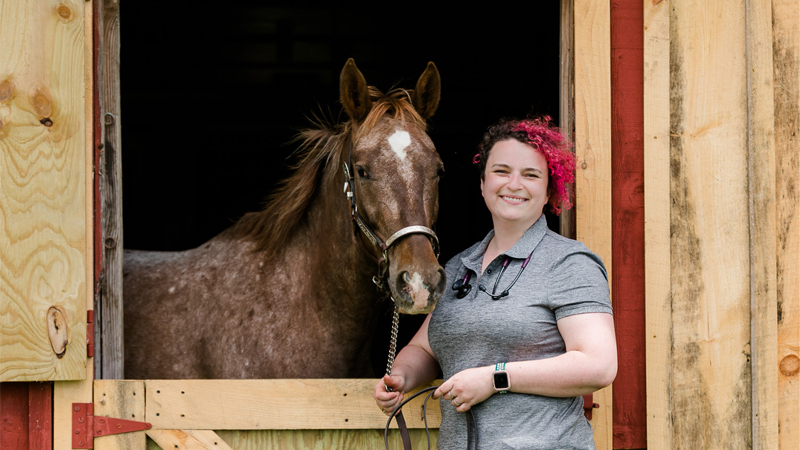
Liliya Becktell ‘11 (pre-vet advising)
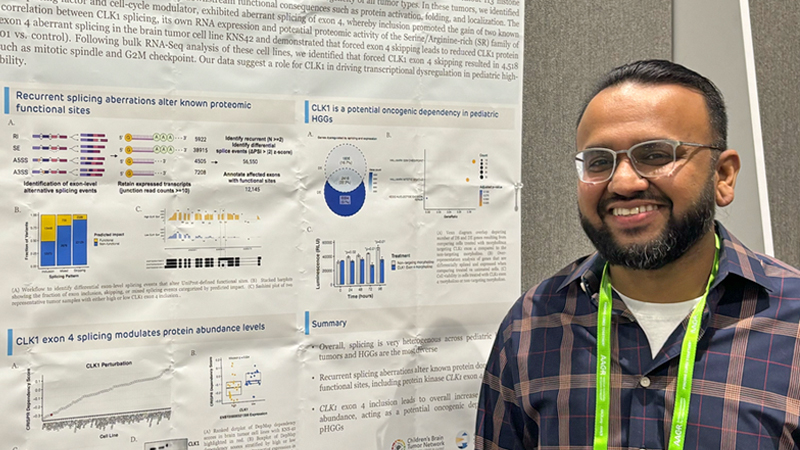
Kubra Naqvi ’16 (biotechnology)
Veronica Fell (biotechnology)