Transforming Genomic Data into Cancer Insight
RIT alum Spencer Richman ’20 uses computing and biology to build software that transforms genomic data into tools for cancer detection, helping bridge data and discovery in healthcare.
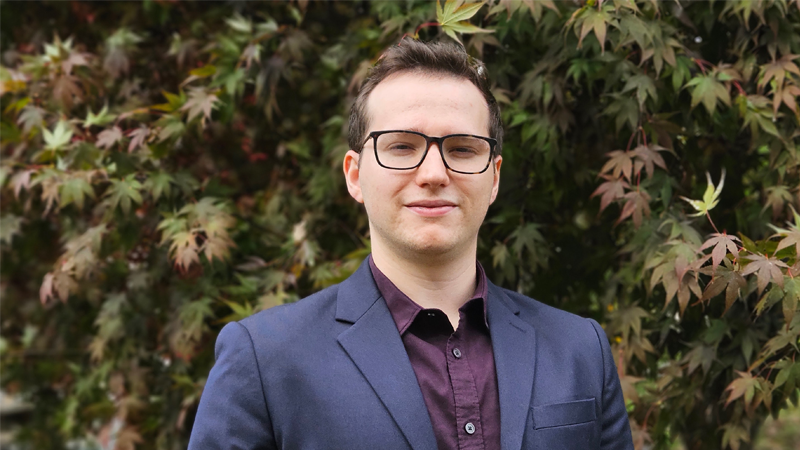
When Spencer Richman ’20 first arrived at RIT, he planned to study biotechnology. But within his first month, he began to wonder if a computing major might be a better fit. When he learned about RIT’s bioinformatics major, he discovered he could combine his love of biology and interest in computing in one program. “After hearing I could do biology and computing, I switched majors within weeks,” he recalls.
Now based in Rochester, Spencer works remotely as a Bioinformatics Software Engineer at Personal Genome Diagnostics, a Labcorp company that develops next generation sequencing (NGS) based tools for precision oncology. His work transforms genomic data into insights that guide cancer profiling and treatment. “My days can vary a lot depending on what I’m working on,” he says. “I spend much of my time developing custom integrations for our customers and serving as the lead developer for our core platform, the system that processes our assays post sequencing, from analysis to final reports.”
Bioinformatics software engineers like Spencer sit at the intersection of data and biology. They design tools that make sense of massive amounts of genetic information, turning raw data into results that clinicians and researchers can use to better understand disease. “It’s challenging, but that’s what I enjoy,” Spencer says. “There’s always something new to learn or a new problem to solve.”
Originally from California, Spencer says choosing a university across the country was a big decision, but RIT quickly stood out for its authenticity. “It’s hard to pinpoint one reason why I chose RIT,” he says. “The school just felt genuine.”
At RIT, Spencer says he learned far more than programming and lab techniques. “Of course, RIT taught me the fundamentals of molecular biology, genomics, and programming,” he says. “But more than anything, RIT taught me how to think critically and approach problems as both a scientist and an engineer.”
He credits the bioinformatics faculty for shaping that mindset. “Dr. Michael Osier had the biggest impact on how I approach difficult problems,” he says. “I would also be remiss not to mention Dr. Gary Skuse. His mentorship, both during and after RIT, has been invaluable as I navigate my career.”
As an undergraduate, Spencer conducted research with Dr. Suzanne O’Handley, where he learned the importance of precision and accountability in scientific work. “Besides making me an excellent pipetter,” he jokes, “it taught me the value of scientific rigor.” He also participated in a Research Experience for Undergraduates (REU) at Boston University, a National Science Foundation funded program that introduced him to hands-on research and faculty mentorship.
Reflecting on his time at RIT, Spencer says the university’s blend of science and technology prepared him for a fast-evolving field. “Every day, I apply what I learned at RIT,” he says. “The mix of scientific thinking and engineering perspective continues to serve me well.”
For students interested in bioinformatics, Spencer says the field is full of opportunity. “It’s such a broad and fast-moving area that it can feel a little overwhelming at first,” he says. “But once you focus on the core principles and keep your curiosity alive, it becomes an incredibly rewarding field to be part of.”
That same sense of curiosity continues to drive him. “Any current student, bioinformatics or otherwise, should feel free to reach out to me if they’re looking to learn more about what a career in industry looks like,” he says.
More Featured Profiles and Work
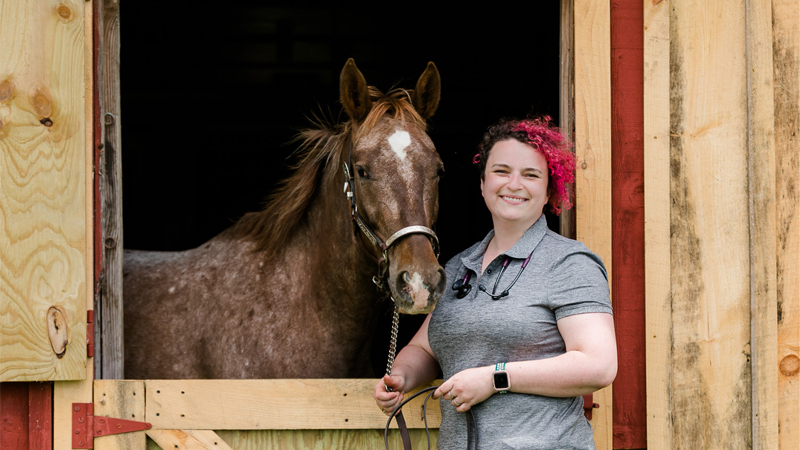
Liliya Becktell ‘11 (pre-vet advising)
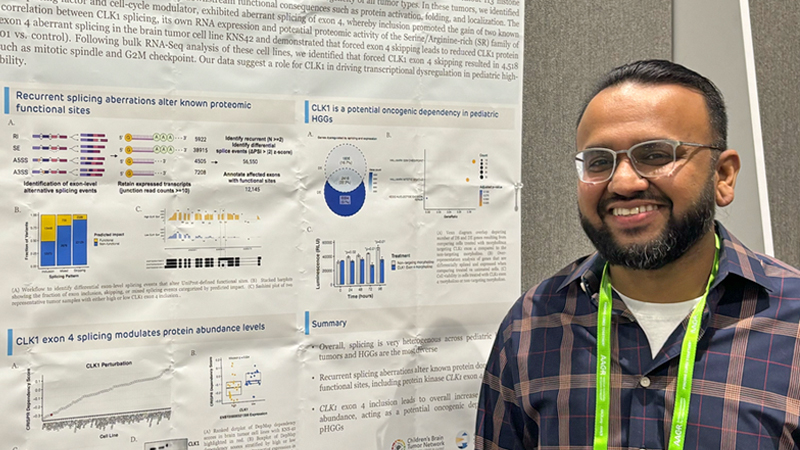
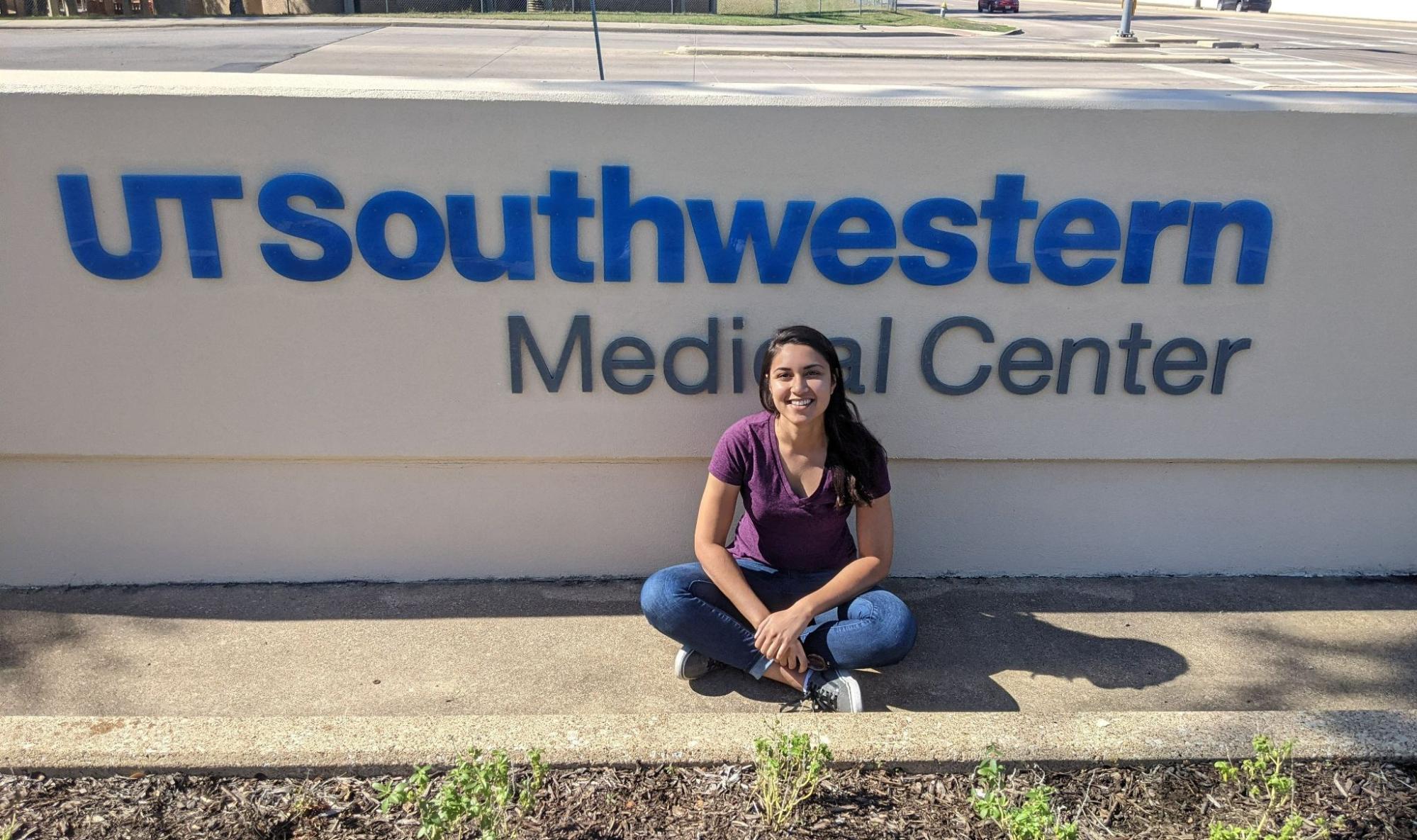
Kubra Naqvi ’16 (biotechnology)
Veronica Fell (biotechnology)