News
-
October 9, 2020
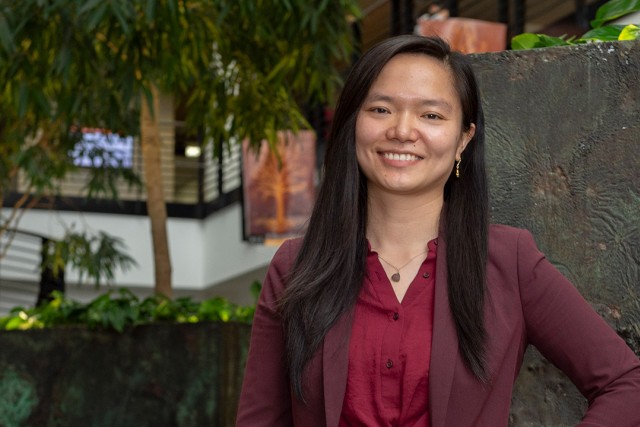
Linwei Wang named new director of RIT’s Personalized Healthcare Technology initiative
Linwei Wang has been named the new director of the Personalized Healthcare Technology signature research initiative at RIT, and Adam Smith has been named Creative Director, a new position with the group.
-
October 7, 2020

High-tech toilet seat aims to help researchers in Rochester reduce heart disease
WHAM-TV reports on the Fully-Integrated Toilet Seat (FIT Seat) research led by Dave Borkholder, a professor in the Kate Gleason College of Engineering, in collaboration with the University of Rochester Medical Center funded by a new 2.9M grant from the National Institutes of Health (NIH).
-
September 16, 2020

Caroline Easton Awarded $1M from HRSA
Caroline Easton, a professor in Biomedical Sciences in the College of Health Sciences and Technology, received $1M in funding from DHHS: Health Resources & Services Administration to develop and provide addiction therapy for Opioid Use Disorder (OUD) and Substance Use Disorder (SUD) in rural counties.
-
September 16, 2020

RIT names Yong “Tai” Wang as dean of College of Health Sciences and Technology
Yong “Tai” Wang currently is dean and endowed chair professor of the Drs. Lee Roy and Lucy Mathis College of Nursing and Health Sciences at the University of Texas at Tyler, a role he has held since 2014. He was chosen for the RIT dean following a national search, and will begin his new leadership role in January.
-
September 16, 2020
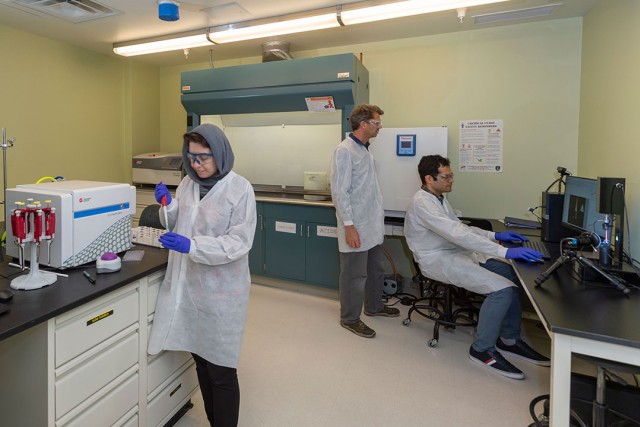
Steven Day awarded 337K from NIH & Drexel University
Steven Day, a professor in Biomedical Engineering, received 337K from the National Institutes of Health, in collaboration with Drexel University to research ventricular assist devices (VADs) for high-risk pediatric patients in outpatient settings.
-
September 1, 2020

Hans Schmitthenner awarded $25K from the Foundation for Women's Wellness
Han Schmitthenner, research faculty from the College of Science, awarded $25K from the Foundation for Women's Wellness (FWW) to develop molecularly targeted photosensitizer (MTPS) probes used in photodynamic therapy (PDT) to kill cancer cells.
-
August 25, 2020

Easton honored as Health Care Hero
Caroline Easton has been named a COVID-19 Health Care Hero by the Rochester Business Journal for her advocacy for homeless people at the House of Mercy shelter during the coronavirus pandemic.
-
July 16, 2020
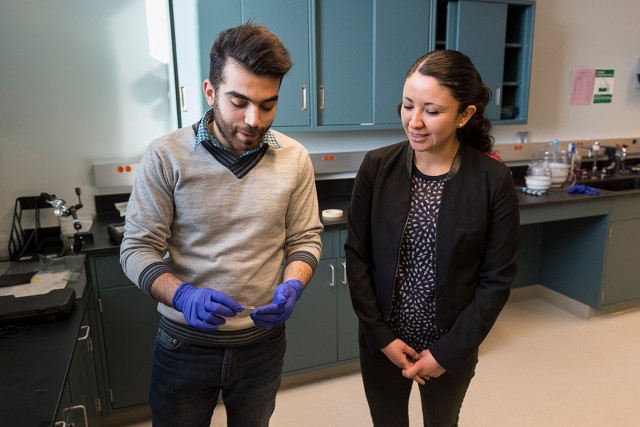
The advantages of working differently
RIT Ph.D. candidate Mehdi (Aslan) Dehghani secured an internship at bio-device company after his team's research paper was published nationally.
-
July 16, 2020

Researchers develop new method to filter extracellular vesicles to improve diagnostics options
Researchers at RIT and the University of Rochester discovered an alternative to successfully purify biological particles to better understand how cells communicate with one another.
-
July 7, 2020
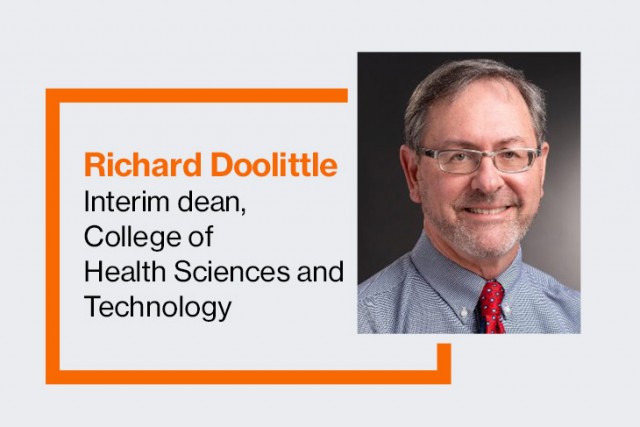
Richard Doolittle named interim dean of the College of Health Sciences and Technology
Richard Doolittle has been named interim dean of RIT’s College of Health Sciences and Technology, effective immediately. Doolittle has a long history with RIT’s health care programs, and he has served as vice dean of CHST for nearly a decade.
-
June 5, 2020
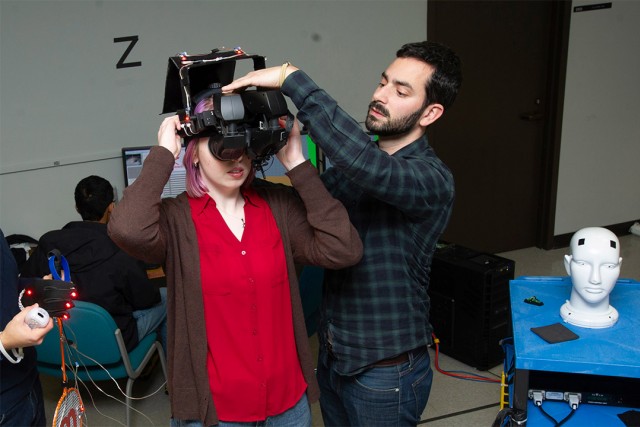
RIT faculty earns NIH grant to use virtual reality to help stroke patients regain lost vision
Scientists from RIT and the University of Rochester aim to use virtual reality to help restore vision for people with stroke-induced blindness. The team of researchers led by RIT's Gabriel Diaz, are developing a method they believe could revolutionize rehabilitation for patients with cortically induced blindness, which afflicts about 1% of the population over age 50.
-
June 2, 2020

Telehealth connects homeless with therapists training at RIT
Residents of a homeless shelter in Rochester are continuing to receive therapy during the coronavirus pandemic from a team of therapists in a clinical internship program at RIT. The doctoral training program began as an exercise in using telepsychology to deliver care to a marginalized and underserved population. When New York shut down in March to stem the spreading virus, the therapists were already prepared to apply the telehealth protocols in the crisis.