Research News
-
February 1, 2023

Expanding RIT’s research footprint
RIT has been expanding its research footprint to accommodate the university’s growing research portfolio. The Student Hall for Exploration and Development (SHED), which opens this fall, is enabling the university to convert 10 existing classrooms, totaling more than 23,000 square feet, into new research space. Another 14,700 square feet of research space opened in January in Brown Hall.
-
January 27, 2023

RIT scientists reach a milestone in the search for continuous gravitational waves
Scientists on the hunt for a previously undetected type of gravitational waves believe they are getting close and have refined techniques to use in upcoming observational runs. Researchers from the LIGO-Virgo-KAGRA Collaboration outlined the most sensitive search to date for continuous gravitational waves from a promising source in a paper recently published in the Astrophysical Journal Letters.
-
January 16, 2023

Our universe mastered the art of making galaxies while it was still young
Popular Science talks to Jeyhan Kartaltepe, associate professor in the School of Physics and Astronomy, about early galaxies detected by the James Webb Space Telescope.
-
January 16, 2023

RIT scientists help rediscover earliest known star map using multispectral imaging
Scientists uncovered what they believe to be the first astronomical map. The discovery, outlined in recent studies published in the Journal for the History of Astronomy and the Classical Quarterly, was made in part thanks to multispectral imaging conducted by researchers at Rochester Institute of Technology’s Chester F. Carlson Center for Imaging Science.
-
January 10, 2023
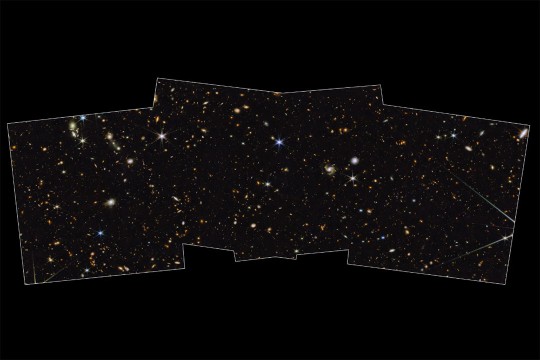
Astronomers May Have Just Spotted the Universe’s First Galaxies
Wired talks to Jeyhan Kartaltepe, associate professor in the School of Physics and Astronomy, about early galaxies detected by the James Webb Space Telescope.
-
January 9, 2023

James Webb Space Telescope study reveals wide diversity of galaxies in the early universe
New data from the James Webb Space Telescope (JWST) have revealed that the structures of galaxies in the early universe were much more diverse and mature than previously known. RIT Associate Professor Jeyhan Kartaltepe said that JWST’s ability to see faint high redshift galaxies in sharper detail than Hubble allowed the team of researchers to resolve more features and see a wide mix of galaxies.
-
January 5, 2023

RIT researcher develops math models to help predict patients’ medication adherence
Ensuring that patients take medications as prescribed can be crucial for maintaining and improving their health, so doctors, pharmacists, insurers, and public health officials all have an interest in better predicting whether patients will or will not follow medication guidelines.
-
January 5, 2023

RIT receives NSF grant to help universities across U.S. implement research-based biochemistry courses
The NSF awarded RIT more than $588,000 over the next five years to further implement and assess a course-based undergraduate research experience based on the Biochemistry Authentic Science Inquiry Laboratory (BASIL) project led by RIT.
-
December 17, 2022
Light from outside our galaxy brighter than expected
Tech Explorist features research led by Teresa Symons ’22 Ph.D. (astrophysical sciences and technology) and Associate Professor Michael Zemcov.
-
December 16, 2022
New study confirms the light from outside our galaxy brighter than expected
In a study led by RIT researchers, scientists analyzed new measurements showing that the light emitted by stars outside our galaxy is two to three times brighter than the light from known populations of galaxies, challenging assumptions about the number and environment of stars are in the universe.
-
December 14, 2022

RIT researchers receive NSF funding to further develop infrared detectors for astrophysics
The National Science Foundation will award Don Figer, director of RIT’s Center for Detectors and the Future Photon Initiative, more than $315,000 over the next year to continue work on a grant to provide the astronomy community with a new family of detectors that have very large formats, very low cost, and state-of-the-art performance.
-
December 12, 2022

NASA awardee working on lunar rover technology
Microsystems engineering Ph.D. student Katelynn Fleming is hard at work making new discoveries on the moon. But her ultimate goal is to use technology to help all of us on Earth. Fleming recently won a 2022 NASA Space Technology Graduate Research Opportunity (NSTGRO) award and will work at NASA centers as part of the visiting technologist experiences.