Medical Illustration Master of Fine Arts Degree

Overview for Medical Illustration MFA
Why Pursue an MFA in Medical Illustration at RIT
Perform complete cadaver dissections in RIT’s Cadaver Lab.
RIT's MFA program is one of five accredited graduate programs for medical illustration in North America by CAAHEP.
A medical illustrator is a professional artist with advanced education in the biomedical sciences, cutting edge digital media, and the principles of visual communication. RIT’s medical illustration degree combines training in human anatomy (with complete cadaver dissection in RIT’s Cadaver Lab), immunology, histology (the cellular structure of organs), and pathophysiology (the study of disease) with extensive training in 2D and 3D digital graphics, interactive media, and animation.
What is a Medical Illustrator?
Collaborating with scientists, physicians, and other health care professionals, medical illustrators translate complex scientific information into visual images that support medical education, science research, patient care, advertising, and litigation. Illustration projects are designed for use in print, projection, broadcast media, and distribution via the web and mobile devices.
RIT's Medical Illustration Degree
This is a two-year, graduate-level medical illustration degree where you’ll earn a master of fine arts (MFA). The program emphasizes visual problem solving to determine the best approach to communicate a difficult concept. Students also gain real world experience by collaborating with medical researchers and observing live surgery in operating rooms. The program culminates with the production of a thesis project, which requires extensive background research and an original body of artwork on a complex medical topic.
Becoming a Medical Illustrator
Successful medical illustrators must possess exceptional illustration skills and artistic ability while also having in depth knowledge of the biological sciences in order to fully understand and effectively communicate complex medical information. In the MFA in medical illustration degree, you'll accomplish the following outcomes:
Demonstrate an advanced level of knowledge in the biomedical sciences
- Demonstrate advanced knowledge of human anatomy, molecular biology, physiology, and related biomedical sciences
Visualize scientific structures, processes, and concepts
- Visualize and accurately render anatomic, tissue, cellular, and molecular structures
- Illustrate physiological processes and abstract scientific concepts through visual storytelling
List instructional objectives to communicate biomedical content to a variety of target learners
- Identify the target learners (audience) for each set of instructional illustrations
- Describe the level of scientific literacy of each group of target learners
- Create a set of instructional objectives for each instructional illustration
Solve complex communication problems with appropriate application of verbal and visual content, realism, symbolism, graphic conventions, and motion or interactive media.
- Select the most appropriate medium for delivery of content to target learners
- Select appropriate level of realism, symbolism, and graphic conventions for optimal delivery of instructional objectives to target learners
Utilize a variety of media and production techniques in appropriate applications and understand production processes sufficiently to communicate with pre-press companies, art directors, etc.
- Create artwork in a variety of media
- Select the appropriate dimensions, color space, resolution, file format, and other criteria for delivery to client
- Use industry standard terminology when discussing production and output processes
Communicate effectively with clients, subject matter experts, co-workers, supervisors, and vendors in oral and written form
- Use correct anatomic and medical terminology when discussing scientific content
Demonstrate knowledge of professional and ethical conduct
- Describe HIPAA regulations regarding the use of patient information
- Follow operating room protocols at affiliated hospitals
- Describe US and international copyright laws and how they apply to the use of reference materials
- Describe copyright infringement and the criteria for determining Fair Use
Demonstrate awareness of established business and management practices
- Describe standard employment practices in the profession
- Describe business models and taxation of independent illustrator
- Describe pricing strategies and calculate prices for illustration projects
- Create a personal identity package and marketing materials
- Generate sample contracts, licensing agreements, and invoices
Demonstrate competency in the academic research process through a graduate research project or thesis
- Conduct background research on a proposed biomedical topic
- Develop a set of instructional objectives to deliver the topic to a specific group of target learners
- Create a body of artwork to meet the instructional objectives
- Exhibit the body of work during one of the thesis shows or at a screening of digital media productions
- Complete a written thesis paper summarizing the project
Medical Illustrator Jobs
Graduates of RIT's medical illustration degree find employment with hospitals, medical schools, research centers, museums, medical publishers, advertising agencies, web design firms, animation studios, law firms, and a variety of other creative agencies. Since the MFA is considered the terminal degree in the arts, graduates may also teach in academic institutions or in a wide range of computer graphics, scientific illustration, or art programs. Organizations that employ our graduates include:
- Science magazine (American Association for the Advancement of Science)
- Department of Neurosurgery, University of North Carolina School of Medicine
- Department of Neurobiology and Anatomy, University of Rochester Medical Center
- New England Journal of Medicine
- Roswell Park Cancer Center, Buffalo, NY
- MIT Center for Biomedical Innovation
- OssoVR (virtual reality training for orthopedic surgery)
- Cell Press (publishers of Cell and other scientific journals)
- Nucleus Global (medical communications)
- Custom Learning Designs (pharmaceutical advertising)
- The Presentation Group (courtroom graphics)
- Emmi Solutions (web and interactive media)
- Cleveland Institute of Art (scientific illustration program)
- Illustrated Verdict (courtroom graphics)
- National Capital Area Medical Simulation Lab, Uniformed Services University of the Health Sciences (developing virtual surgical simulators)
- Visible Body/Argosy Medical Publishing (medical publishing and interactive media)
- Department of Imaging Sciences, University of Rochester Medical Center
- Smithsonian National Museum of Natural History
- Springer Healthcare Communications (medical publishing)
-

Affordable Now. Valuable for Life.
Earn your master’s degree without the full price tag. With Master Up you can receive a 30% tuition scholarship for an RIT master’s degree.
-

Join us for Fall 2026
Many programs accept applications on a rolling, space-available basis.
-

Meet us on-campus on February 19
Learn about the programs that interest you. Hear from program faculty, speak with current graduate students, and ask the questions that will help you get one step closer to your career goals.
Careers and Salary Info
Typical Job Titles
| Medical Illustrator | Medical Animator | Scientific Illustrator |
| Visual Information Specialist | VR/AR Designer | UI/UX Designer |
Featured Work and Profiles
-

Medical Illustration Senior Showcase - 2023
An online exhibition of work by 2023 medical illustration BFA seniors and MFA candidates.
Read More about Medical Illustration Senior Showcase - 2023 -
Honors Travel Seminar: The Body In Art, Design & Medicine
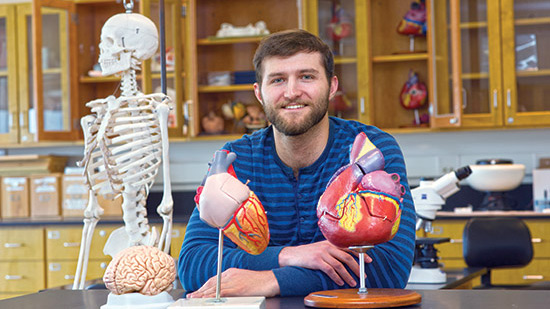
Student Work The Body in Art, Design and Medicine ITDI.300 The Body in Art, Design and Medicine will trace the history of documenting the human body from the perspective of anatomical correctness in art to the...
Read More about Honors Travel Seminar: The Body In Art, Design & Medicine
Curriculum for 2025-2026 for Medical Illustration MFA
Current Students: See Curriculum Requirements
Students are also interested in
Admissions and Financial Aid
This program is available on-campus only.
| Offered | Admit Term(s) | Application Deadline | STEM Designated |
|---|---|---|---|
| Full‑time | Fall | February 1 priority deadline, rolling thereafter | No |
| Part‑time | Fall | Rolling | No |
Full-time study is 9+ semester credit hours. Part-time study is 1‑8 semester credit hours. International students requiring a visa to study at the RIT Rochester campus must study full‑time.
Application Details
To be considered for admission to the Medical Illustration MFA program, candidates must fulfill the following requirements:
- Complete an online graduate application.
- Submit copies of official transcript(s) (in English) of all previously completed undergraduate and graduate course work, including any transfer credit earned.
- Hold a baccalaureate degree (or US equivalent) from an accredited university or college. A minimum cumulative GPA of 3.0 (or equivalent) is recommended.
- Satisfy prerequisite requirements and/or complete bridge courses prior to starting program coursework.
- Submit a current resume or curriculum vitae.
- Submit a personal statement of educational objectives.
- Submit two letters of recommendation.
- Entrance exam requirements: None
- Submit a portfolio. View portfolio requirements.
- Submit English language test scores (TOEFL, IELTS, PTE Academic, etc.), if required. Details are below.
English Language Test Scores
International applicants whose native language is not English must submit one of the following official English language test scores. Some international applicants may be considered for an English test requirement waiver.
Duolingo (DET): 120
IELTS: 6.5
LanguageCert Academic: 70
PTE Academic: 56
TOEFL: 79/4.5
International students below the minimum requirement may be considered for conditional admission. Deaf and hard-of-hearing test takers with significant hearing loss do not need to take the listening and speaking sections for the TOEFL and IELTS. Each program requires balanced sub-scores when determining an applicant’s need for additional English language courses.
How to Apply Start or Manage Your Application
Cost and Financial Aid
An RIT graduate degree is an investment with lifelong returns. Graduate tuition varies by degree, the number of credits taken per semester, and delivery method. View the general cost of attendance or estimate the cost of your graduate degree.
A combination of sources can help fund your graduate degree. Learn how to fund your degree
Additional Information
Prerequisites
Applicants must have one year of general or introductory biology (for biology majors), and a minimum of three advanced biology courses, such as vertebrate anatomy, physiology, neurobiology, cell biology, molecular biology, immunology, microbiology, genetics, developmental biology, or pathology.



Related News
-
August 5, 2024

James Perkins receives prestigious Brödel Award at AMI Conference
James Perkins, a distinguished faculty member at RIT, has been awarded the Brödel Award for Excellence in Education by the Association of Medical Illustrators, recognizing his outstanding contributions to medical illustration education.
-
July 3, 2024

Medical Illustration Podcast - RIT program faculty interview
PK Visualization's Medical Illustration Podcast talks to Jim Perkins, Department Head of Medical Sciences, Health and Management, along with Glen Hintz and Craig Foster, both associate professors in the School of Art, about the origins of RIT's medical illustration program the accreditation process that made it a Master of Fine Arts program.
-
May 7, 2024
Comics go to College
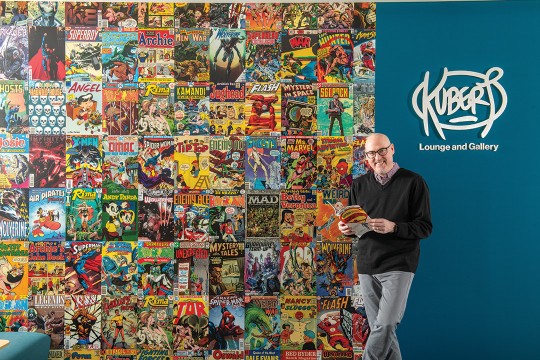
The comics collection at RIT is growing by leaps and bounds and the new Kubert Lounge and Gallery makes it a visible presence on campus. The interdisciplinary art form is right at home at RIT.
