
Building Supa Kuna: A Web & Mobile co-op with real-world impact
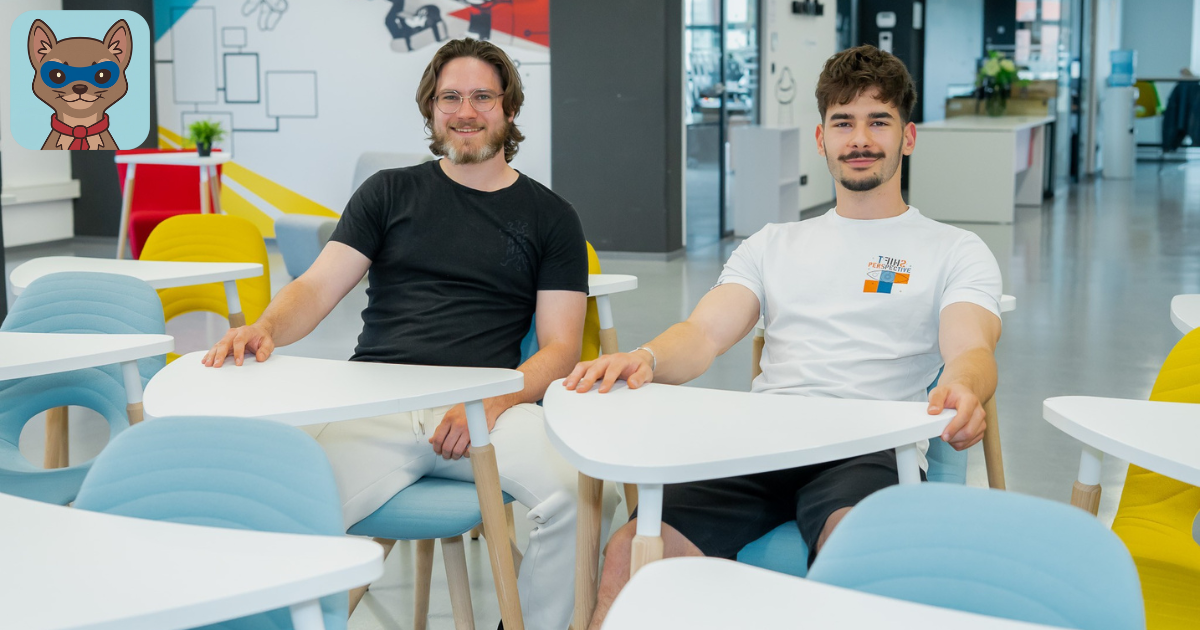
While most students seek co-ops at established companies, a group of Web and Mobile Computing students, Wisdom Anthony, Franko Fišter, Denny Adrian Lulak, Kristijan Ninčević, and Samuel Spence, chose a different path, turning their class project into a full-time startup.
That startup, Supa Kuna, is a platform that helps users compare grocery prices across major store chains. “We want to make shopping cheaper and easier,” says CEO and co-founder Franko Fišter. “The idea originated during Professor Alan Mutka’s class, where we tackled the challenge of collecting large-scale grocery data for a project. Even after the class ended, our passion for the concept kept us working on it.”
What started as a classroom assignment quickly turned into a co-op experience with real entrepreneurial impact. “Our biggest motivation is to help people combat the heavy inflation currently affecting Croatia, especially when it comes to groceries,” Franko explains. “When our coursework ended, we realized we were just getting started.”
A co-op built on code
The foundation of Supa Kuna lies in the technical skills the team developed during their studies. “The technologies and programming principles we learned both directly and indirectly are now the backbone of our platform,” Franko says. “This foundation has enabled us to build, iterate, and innovate quickly.”
Supa Kuna uses React for the frontend, Python for the backend, and Supabase as the database provider, cleverly reflected in the startup’s name. “React was chosen because it has one of the biggest ecosystems for web development and is supported by Capacitor, which translates our web app into a mobile app easily. Python was chosen because it’s great at handling large amounts of data and machine learning.”
And there's plenty of data to manage: the platform already tracks 29,500 products across 13 major store chains. “Preprocessing and sorting the data is definitely the biggest challenge,” Franko adds. “There’s always some ‘bad’ data that we want to remove from our database, and batch processing takes time.”
Building a startup culture
Beyond the code, it’s the way the team works together that defines their co-op. “We use a ‘first-come, first-served’ approach,” Franko shares. “All tasks are listed in ClickUp, and team members select what interests them most. This keeps everyone motivated and ensures people work on what they’re most passionate about.” Team meetings happen once or twice a week, and decision-making is democratic. “Everyone is encouraged to share their opinions. When dilemmas arise, we vote; having five members means there’s always a tiebreaker!”
Learning how to lead a team has been one of Franko’s biggest personal growth moments: “I had to quickly figure out how to keep everyone motivated without being overbearing. Striking the right balance between being supportive and ensuring progress has been challenging, but it’s a skill I’m grateful to be developing.”
Want to build something on your own? Go for it!
Supa Kuna is now approaching a major milestone: launching its closed beta. “For the beta, we’re focusing on providing quality data and a way to calculate the best store to go to with selected items in the shopping cart,” he says. “We already have testers lined up, including some VC partners who’ve shown interest. We get a lot of positive feedback from people at conferences who want to try it once it’s live.”
His message to other students thinking about launching something of their own is to go for it. “Your early 20s are the perfect time to take risks and pursue projects you’re passionate about. Even if it doesn’t work out, you’ll gain invaluable experience. And if it does, you’ll get to build something meaningful on your own terms.”