Co-op course helps students break into competitive industries
The course helps engineering students build skills and expand their networks

Adobe Stock
Mechanical engineering students Lord Yeshua Ramos and Antonio Johnson knew getting their first co-ops would be challenging.
But a preparation course through the Kate Gleason College of Engineering helped give them an advantage in securing their first work experience.
What is a co-op?
Co-op, or cooperative education, is a paid work experience related to a student’s field of study. Co-ops help students define career paths and advance both technical and soft skills—critical thinking, interpersonal communication, and teamwork.
Doreen Edwards, dean of the Kate Gleason College, and Matthew Marshall, associate dean, developed the Independent Professional Development (IPD) course to supplement the preparation and support services provided by RIT’s Career Services and Co-op team.
The course was developed last year to reflect fluctuations in the current job market and tailored to support students, who despite their best efforts, have not yet secured co-ops. Engineering students who complete IPD receive credit for one co-op block.
“The first half of the course provides job search enrichment as students continue searching for a co-op. Those who do not get a co-op transition from the job search to completing a professional development experience,” said Marshall.
In the past several years, entry-level positions in computer science, electrical engineering, and software engineering have been declining. In addition, companies are seeking higher-level skills that undergraduates may not yet have.
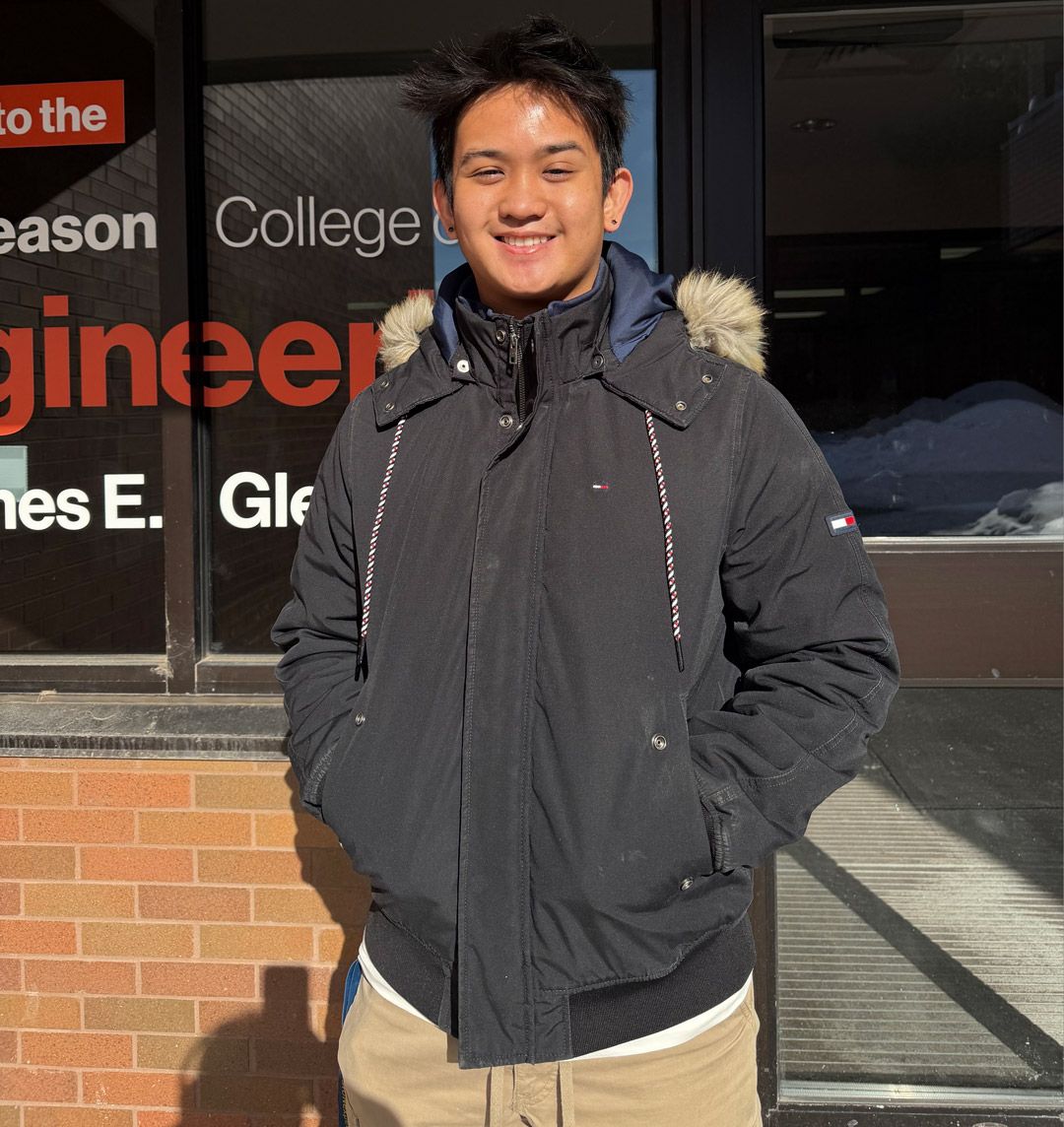
Lord Yeshua Ramos
The IPD course helps students widen their searches and develop interpersonal and technical skills to find success.
“During the course, I had to rethink my interview strategy and make my skills presentable to hiring staff at companies,” said Ramos, a third-year student. “I would get the interviews, but I could not close the deal on getting accepted for the job.”
Ramos said the course in the fall of 2025 gave him time and help rethinking his approach. He also recognized that he needed to develop his computer-aided design (CAD) skills to make him more marketable.
He created a professional development plan and was connected to Karin Wuertz-Kozak, a professor in RIT’s biomedical engineering department. He worked with her on an eight-week CAD project that will be featured at the 2026 Imagine RIT: Creativity and Innovation Festival on April 25. The project will teach kids about how viruses affect the body.
The professional development plan, which also included foundations for a CAD certification, satisfied his first co-op requirement.
“My professional development plan was very project based, designed to transform me into a technically specialized and confident project leader by combining advanced CAD/computer-aided engineering training, data-driven engineering analysis, and hands-on system design,” said Ramos.
Johnson had sent nearly 200 resumes to prospective employers in the auto and aerospace industries but had no luck until he started the supplemental course in the fall.
The third-year student, who also worked with co-op advisers, learned how to sharpen his interviewing skills. The day before his interview with Key Systems Inc., one extra mock interview made the difference, he said.
“I had to be able to tell my story better and show how I can connect my interests to work I’d do with the company,” said Johnson.
The extra preparation worked and Johnson started with the company last September.
To learn more
RIT students can learn more about co-op resources and the Independent Professional Development course through their academic advisers.