Biomedical Engineering Master's Capstone: AquaSpore
Coral bleaching is a major environmental issue caused by stressors that lead symbiotic zooxanthellae algae to leave coral tissue, resulting in loss of pigmentation, reduced coral strength, higher disease vulnerability, and increased mortality. RIT Master's students proposed a solution concept consisting of chitosan-based hydrogel system with immobilized laccase enzyme designed to degrade oxybenzone in marine environments.
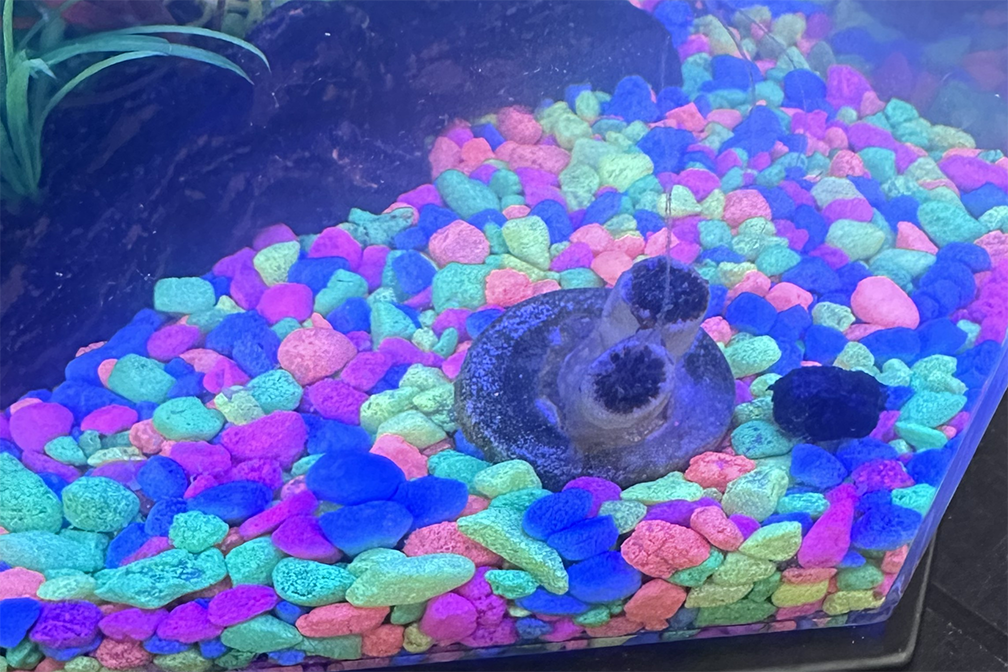
Coral bleaching is a major environmental issue caused by stressors that lead symbiotic zooxanthellae algae to leave coral tissue, resulting in loss of pigmentation, reduced coral strength, higher disease vulnerability, and increased mortality. Coral reef decline impacts not only marine ecosystems but also human communities by reducing coastal protection against waves and storm surges, disrupting fish habitats and food webs, and decreasing tourism and fisheries-based income. Coral bleaching is driven by several factors including rising seawater temperatures, ocean acidification, sedimentations, pollution, and harmful chemical exposure. In particular, oxybenzone, a common sunscreen ingredient, has been shown to contribute to coral bleaching by disruption coral developments and promoting oxidative stress mechanisms that interfere with zooxanthellae photosynthesis.
A Biomedical Engineering MS Capstone team - Haley Johnson, Cassidy Potter, Janessa Terry, and Will Wax - proposed a solution concept consisting of chitosan-based hydrogel system with immobilized laccase enzyme designed to degrade oxybenzone in marine environments. This approach provides a proactive pollutant mitigation strategy that addresses a root contributor to bleaching, rather than relying solely on reactive coral restoration methods such as transplantation of coral gardening. The hydrogel is intended to degrade oxybenzone while preventing harmful byproducts from diffusing into the surrounding environment. Additional design requirements include long term durability in high salinity conditions, resistance to ocean flow and biofouling, and modular scalability for deployment of multiple units in areas of high pollutant exposure.
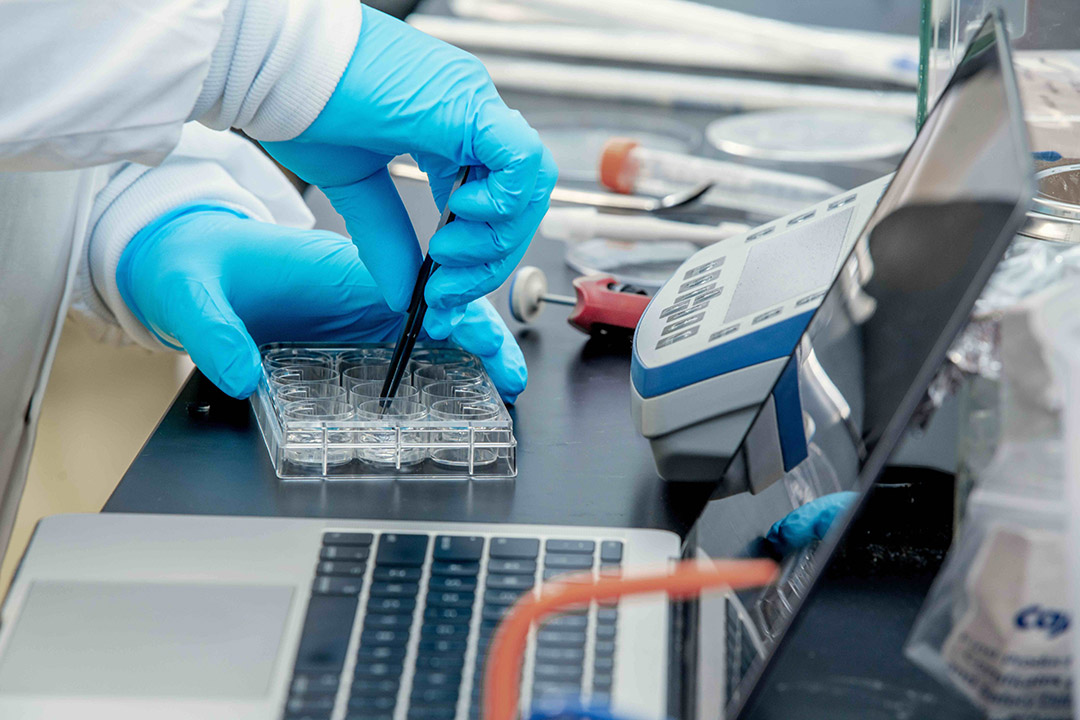
Initial technical feasibility tests focused on Congo red dye as a model compound because laccase is known to degrade it and its concentration can be measured reliably using absorbance methods. Hydrogels were constructed from chitosan gels and incorporated both laccase and copper chloride, since copper may improve enzyme activity and strengthen gel crosslinking. Succesful gel formation was successful and preliminary degradation testing showed an overall decreasing trend in Congo red concentration over time, indicating potential absorption and/or enzymatic breakdown. Overall, the results support proof-of-concept feasibility but future studies would require improved measurement methods and controlled testing to confirm oxybenzone-specific performance.
More Featured Profiles and Work