Department of Packaging and Graphic Media Science

Overview
Every product you buy, use, or consume depends on packaging that performs.
Packaging is one of the most critical engineering systems in the modern world. It protects products, enables global supply chains, extends shelf life, reduces waste, and serves as the direct interface between brands and consumers. At RIT, packaging science is taught as a rigorous, applied discipline focused on how systems actually work. The Department of Packaging and Graphic Media Science prepares students to design, analyze, and improve packaging systems through a combination of engineering fundamentals, material science, and hands-on experimentation. Students do not just learn concepts. They test them, measure them, and apply them in environments that reflect the realities of manufacturing and distribution. Our approach reflects how the field has evolved. Packaging today is not isolated from other technologies. It is deeply connected to manufacturing processes, printing and converting systems, product performance, sustainability, and the demands of increasingly complex supply chains. Students are trained to understand these connections and to develop solutions that perform across the entire system.
Research & Lab Innovation
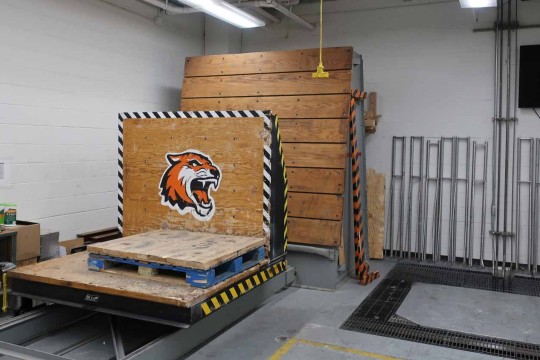
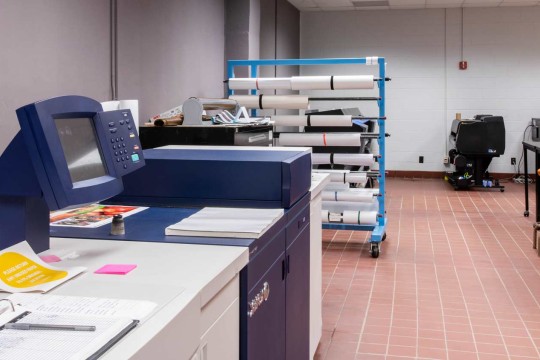
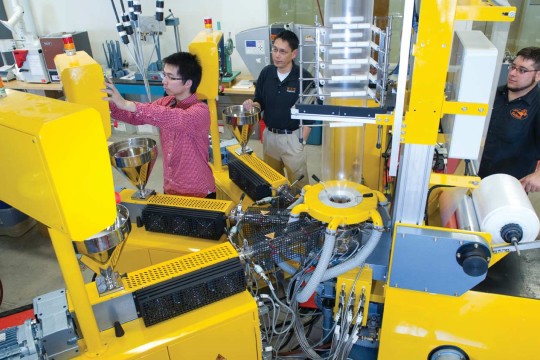
Research and lab work are central to this experience. Faculty and students engage in applied projects that examine transport dynamics, material behavior, package performance, and food system challenges. This work also includes printing and converting technologies, where package graphics, materials, and production processes are integrated to ensure performance, quality, and functionality. Together, these efforts support industry partners while advancing the understanding of how packaging systems behave under real conditions. The result is a program grounded in engineering, informed by industry, and focused on impact. Graduates leave with the ability to solve practical problems, improve system performance, and contribute immediately in roles that demand both technical depth and applied thinking.
Career Outcomes
Graduates of RIT’s Packaging Science program are working at leading companies across the global packaging, manufacturing, and consumer products industries, including Tesla, PepsiCo, Colgate-Palmolive, Johnson and Johnson, Kraft Heinz, Hasbro, Starbucks, Milwaukee Tool, and American Packaging Corporation. These organizations rely on packaging professionals to design systems that ensure product safety, performance, and sustainability across complex global supply chains.
5
Dedicated hands-on technology spaces to support learning and research
2
Paid co-op experiences provide graduates with real-world experience at major domestic and international companies
3500+
Active alumni working in industry and poised to help students and alumni in their career objectives
200+
Real industry student projects each year
8+
Possible focus areas: sustainable packaging, packaging design, biopolymers, shock and vibration, pharmaceutical, medical products, and food packaging
1
International Safe Transit Association Certified Packaging Dynamics and Research Lab
Latest News
-
September 4, 2026
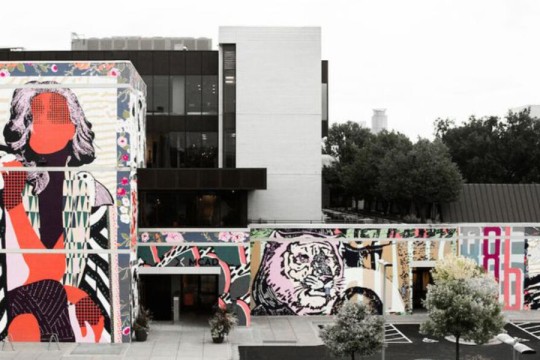
15 Unusually Cool College Degrees That Actually Exist
Unearth The Voyage includes RIT's packaging science program in its list of unusual degrees, citing competitive salaries and strong job placement rates.
-
September 3, 2026
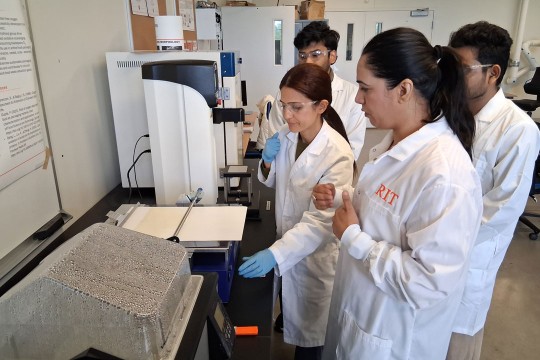
RIT researcher targets biopolymers as alternatives to laminates and plastics
Alternatives to plastics are being created by researchers at RIT using plant-based starch, a plentiful and highly sustainable material.
-
September 2, 2026
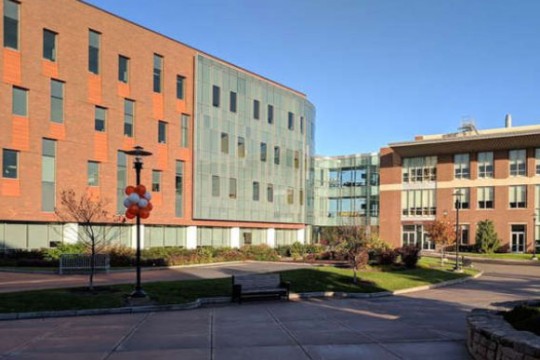
15 unusually cool college degrees that actually exist
MSN includes RIT's packaging science program in its list of unusual degrees, citing competitive salaries and strong job placement rates.
Featured Work and Profiles
-

RIT's Packaging Science makes MSN's list of cool degrees with strong ROI
Ranked in the top list of "unusually cool college degrees that actually exist" for its competitive salary and strong job placement rate.
Read More about RIT's Packaging Science makes MSN's list of cool degrees with strong ROI -

Designing for Net Zero: Student moves 100+ Products to Sustainable Solutions while on co-op
Undecided until he found Packaging Science, Ronnie quickly translated classroom skills into multiple co-op roles, driving sustainability and design innovation at top companies, Cummins and...
Read More about Designing for Net Zero: Student moves 100+ Products to Sustainable Solutions while on co-op -
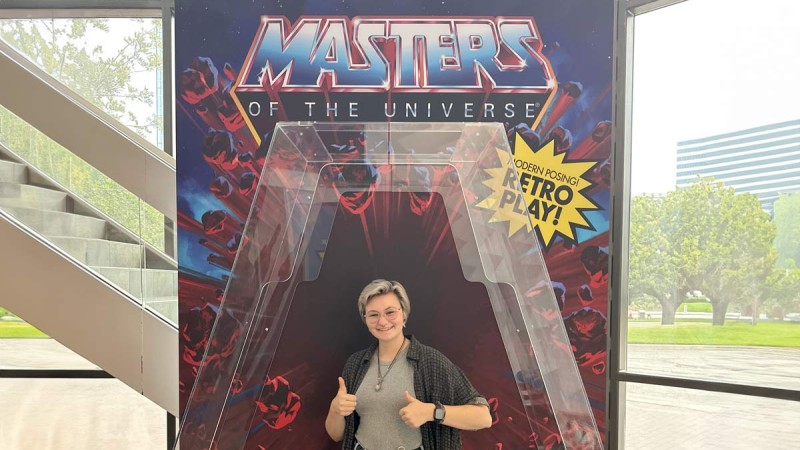
Beyond the Box: Discovering Packaging Science and Landing Co-ops with Kraft Heinz and Mattel
Kailey Gayton Initially undecided on a major, Kailey started in the CET's Exploration program and discovered Packaging Science. The unique blend of creativity and engineering ultimately led to co-ops with globally...
Read More about Beyond the Box: Discovering Packaging Science and Landing Co-ops with Kraft Heinz and Mattel -

Alumna Brews Success at Keurig Dr Pepper
Anna Valentine ’17 (packaging science) designs and develops packaging for Keurig Dr Pepper and helps with product development.
Read More about Alumna Brews Success at Keurig Dr Pepper -

Packaging students organize Packaging Jamboree national conference
The fourth-year packaging students volunteered to be co-chairs of Packaging Jamboree, the national event that will bring nearly 200 university students, faculty and regional packaging...
Read More about Packaging students organize Packaging Jamboree national conference -

Packaging Science Student places Top 3 in National Competition
Spectrum News highlights the team behind the packaging for Grovey Garlic, a sustainable hexagon-shaped structure created without glue.
Read More about Packaging Science Student places Top 3 in National Competition


Undergraduate Programs
You will not just study packaging. You will design it, test it, and see it perform in the real world. The undergraduate program is built for students who want to understand how packaging systems function across the entire product life cycle. From your first year, you are immersed in a curriculum that combines engineering, materials science, design, and applied problem solving. Learning happens through doing. Lab experiences are embedded throughout the program, giving students the opportunity to evaluate materials, build packaging systems, and test performance under real world conditions.
You will work on problems that directly impact industry, including:
- E-Commerce Logistics & Distribution Dynamics: Protecting products during distribution and e-commerce
- Food Quality & Consumer Safety: Maintaining food safety and shelf life
- Sustainable Packaging Design & Circular Economy: Designing efficient and sustainable packaging systems
- Smart Manufacturing & System Integration: Blending structure, materials, and graphics to ensure peak performance
Co-op Advantage
A defining feature of the program is the required co-op experience. Every student completes full-time professional work in the packaging industry, applying their skills in real environments and building a strong professional network before graduation. By the time you graduate, you are not just prepared to enter the workforce. You already have experience in it.
Graduate Programs
Move beyond application into discovery, innovation, and technical leadership. The graduate program is designed for students who want to deepen their technical expertise and solve more complex challenges in packaging systems. Students engage in advanced study focused on materials behavior, system performance, and applied engineering. Through research and project-based work, they explore topics such as distribution environments, packaging design, and emerging technologies. Graduate students work closely with faculty on projects that often involve direct collaboration with industry partners. This provides the opportunity to connect advanced theory with real world application while contributing to meaningful technical work. Whether your goal is to enter research and development, pursue engineering roles, or advance into technical leadership, the program prepares you with the depth of knowledge and experience required to move the field forward.
Student Resources
The Department of Packaging Science offers a variety of resources for our students such as:
- Academic Advisors
- Student Clubs and Organizations
- Change of Program Information
- CET Student Tech Guide
- CET Student Scholarships and Awards
- Packaging Science Student Resources
FAQ
What career paths can you pursue with a Packaging Science degree?
Graduates secure high-paying engineering, project management, and R&D roles at global companies like Tesla, PepsiCo, and Johnson & Johnson, focusing on supply chain logistics, sustainable materials, and structural design.
Does RIT require a co-op for Packaging Science?
Yes. Every undergraduate student completes a required, full-time paid cooperative education (co-op) experience, gaining real-world industry experience and building a corporate network prior to graduation.