
Eben Levey
Assistant Professor, History
Department of History
College of Liberal Arts
Office Location
Eben Levey
Assistant Professor, History
Department of History
College of Liberal Arts
Currently Teaching
HIST-130
Aztecs, Incas, and Conquistadors: Colonial Latin America, 1492-1820
3 Credits
This course surveys colonial Latin America, and the ways in which the era’s dynamics of plunder and exploitation, as well as societies structured by race, class, gender, and ethnicity, have continued to shape the contours of Latin American society to this day. We begin with the great indigenous societies that existed prior to European "discovery" and how their organizations, structures, and tensions transitioned into European colonial rule. In the colonial period, we will examine in detail the experiences of different groups of people, in particular, the subaltern - women of all social strata, indigenous peoples, enslaved and free people of African descent - to better understand how their perspectives, actions, and sometime resistance shaped relationships of power and domination. This course relies on a combination of primary sources, secondary sources, and textbook readings along with various visual materials to provide a broad view of colonial Latin American history and the connections between global forces and local experiences. As students in this class, you will be expected to integrate the variety of sources to craft your own critical interpretations of Latin American history and the threads that bind its past and present.
HIST-135
Introduction to Modern Latin American History
3 Credits
This course studies Latin America in the nineteenth and twentieth centuries, including independence movements, slavery and emancipation, political conflicts, revolutions, working class movements, populisms, state terrorism and dirty war, and the rises and falls of democracy. This course will explore how diverse individuals, including Europeans, indigenous people, Afro-Latin Americans, mestizos, men, women, military members, working classes, and members of the campesino classes have both shaped and experienced history differently. Through a combination of lectures, discussion, and written assignments, students will gain knowledge of modern Latin American history as well as proficiency in developing historical thinking and historical arguments. We will move beyond the "what happened" to explore the questions of why and how Latin American history has unfolded as it has, including how global forces have reverberated at the local level.
HIST-311
Soccer!: The Global History of Sport and Politics
3 Credits
Even the most avid American Football fan has probably heard of Lionel Messi and Cristiano Ronaldo, the two greatest players of the last 20 years. Beyond that, most folks in the United States may not know much about the game, its global spread, or the spectacle of the World Cup. This course follows the beautiful game from its roots in the nineteenth century to the present, exploring connections between the global and the local. But soccer is more than a mere game. It has started riots and wars. The game and the clubs that play it have been vehicles for democratization and social protest. It can be a sporting event, or a proxy competition in which nationalities and nationalisms vie for victory. The study of soccer brings us to a variety of topics, including but not limited to: world history from the late 19th century to the present, industrialization, labor movements, colonialism and imperialism, independence movements, race and gender, authoritarianism and state terrorism, fascism and neo fascism, the Cold War, neoliberalism, and global migration. We will explore how individuals from different nations and social classes experienced these events differently and offered varying perspectives on the significance of soccer.
HIST-402
Special Seminar in History
3 Credits
This upper-level small group seminar will focus on a specific theme or topic in history, chosen by the instructor, announced in the subtitle, and developed in the syllabus. All sections of this course are writing intensive. The topics of this course will vary, but the course number will remain the same, so be sure not to repeat the same topic.
In the News
-
January 12, 2026

Trump’s move on Venezuela is not only audacious, it’s also in direct conflict with MAGA
The Globe and Mail features comments from Eben Levey, assistant professor in the Department of History, and Sarah Burns, associate professor in the Department of Political Science. (This content requires a subscription to view.)
-
January 12, 2026
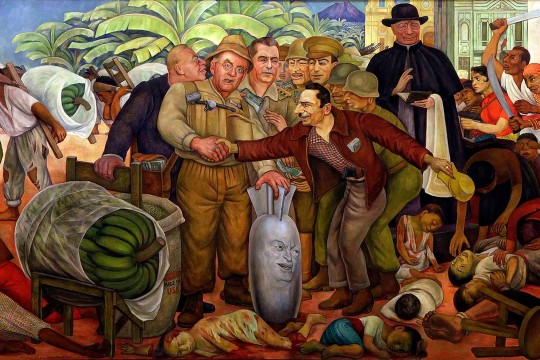
Understanding Trump’s Donroe Doctrine on Venezuela: What the Progressive Era Teaches us about US Imperialism
An essay by Eben Levey, assistant professor in the Department of History, published by Clio and the Contemporary.