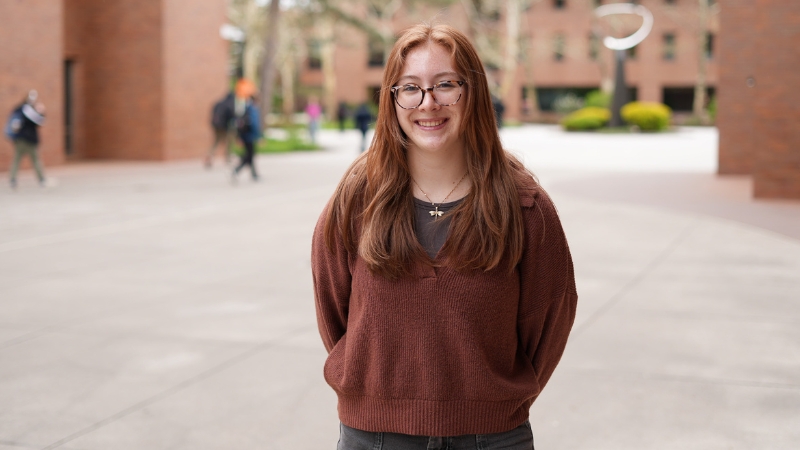
Faculty Researcher Spotlight: Kaitlin Stack Whitney, Ph.D., Associate Professor, Science, Technology, and Society
Bridging the gap between biological practice and social critique, Kaitlyn Stack Whitney, Ph.D., investigates how historical human assumptions about gender and behavior have shaped scientific knowledge and modern conservation. Her interdisciplinary approach reframes critical theory as a tool for innovation, demonstrating that more inclusive and reflective research frameworks lead to more effective, just environmental futures.
Research Focus
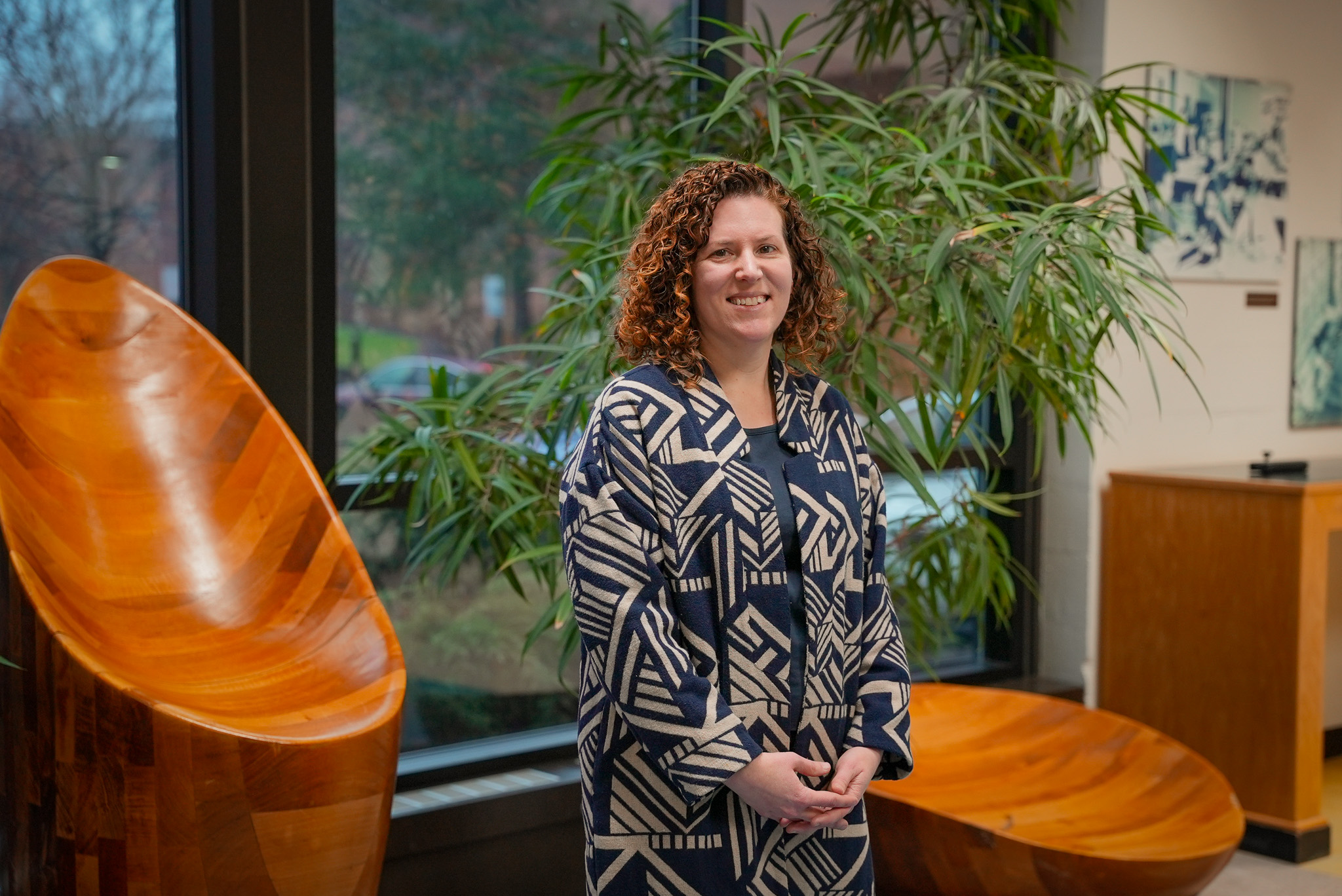
Currently collaborating to examine the history of biology and how human social assumptions were projected onto animal behavior, shaping scientific knowledge for generations. This work revisits foundational ideas in biology and the natural sciences, to better understand how scientific frameworks influence contemporary environmental research and future conservation strategies.
Special Expertise
Trained as both a biologist and a scholar of science, technology, and society, Kaitlyn Stack Whitney moves fluently between scientific practice and critical analysis. This interdisciplinary background enables her to ask questions that often remain invisible within disciplinary boundaries, such as how expertise is defined, whose observations count as data, and how values shape scientific tools and interpretations.
Additionally, Stack Whitney has earned several awards, including:
- National Science Foundation (NSF) Sustainable Regional Systems Research Networks, Senior Personnel, $15 million, 2021 – 2026, “SRS RN: Multiscale RECIPES (Resilient, Equitable, and Circular Innovations with Partnership and Education Synergies) for Sustainable Food Systems” led by American University.
- Sarah K. de Coizart Perpetual Charitable Trust, Primary Investigator (PI), $92,239, 2022 – 2024,“Adaptive Management of Monarch Butterflies in NY Highway Roadsides.”
- NSF Division of Biological Infrastructure, Co-PI, $86,735, 2020 – 2023“Developing online teaching tools for field ecology and data science through an EREN-NEON partnership.”
- UTRC/NYS Department of Transportation, PI, $225,000, 2018 – 2023, “Impacts of a Modified Mowing Regime in NY ROWs on Pollinators and Vegetation.”
- NSF Office of Advanced Cyberinfrastructure EAGER, Co-PI $175,624, 2018 – 2021, “Managing Our Expectations: quantifying and characterizing misleading trajectories in ecological processes.”
Innovation in Inquiry
Rather than treating critical perspectives as oppositional to science, Stack Whitney’s work shows how they can strengthen and improve scientific inquiry. By integrating feminist theory; disability studies; science, technology, and society; and environmental humanities into biological research, she reveals how long-standing assumptions—particularly about sex, gender, and behavior—have shaped scientific knowledge in ways that affect conservation outcomes, environmental policy, and sustainability planning. Her work reframes critique as a tool for building better, more inclusive science.
Exploring Sustainable, Inclusive Environmental Futures
At its core, Stack Whitney’s research asks how societies can build sustainable and inclusive environmental futures when the knowledge systems that guide them exclude certain perspectives or ways of knowing. She is particularly interested in how asking better questions—about assumptions, power, and relationships—can lead to more effective science and more just futures for both human and non-human communities.
Her work contributes to a broader shift in how science is understood: not as a static or purely objective system, but as a dynamic practice shaped by people, technologies, and social contexts. By demonstrating how scientific knowledge evolves through new tools, perspectives, and collaborations, Stack Whitney’s research supports more adaptive, reflective, and socially responsive approaches to addressing global challenges such as climate change, biodiversity loss, and environmental sustainability.
Stack Whitney’s interdisciplinary research on biology, gender, and environmental knowledge stands out for its ability to connect theory to practice. By showing how mischaracterizations of animal behavior can undermine conservation efforts, this work highlights why social and humanistic insights are essential—not optional—to scientific problem-solving.
Advice for Future Researchers
Embrace collaboration and remain open to questioning your own assumptions. Complex global challenges require interdisciplinary teams rather than individual experts, and learning to work across fields is a critical research skill.
Take a class with Kaitlyn Stack Whitney
For the latest listing of courses she's teaching, visit her directory profile.
More Featured Profiles and Work
Deborah Blizzard

Julia Resciniti