Research News
-
February 2, 2021

RIT professor co-designed drone imaging system that can determine grape farm health
WROC-TV highlights work by Jan van Aardt, professor in the Chester F. Carlson Center for Imaging Science.
-
January 26, 2021

RIT professor developing drone imaging systems to help farmers monitor grapevine nutrients
RIT Professor Jan van Aardt from the Chester F. Carlson Center for Imaging Science is receiving more than $357,000 in funding from the United States Department of Agriculture to help grape growers make data-driven nutrient-management decisions.
-
January 15, 2021

Astronomers dissect the anatomy of planetary nebulae using Hubble Space Telescope images
Images of two iconic planetary nebulae taken by the Hubble Space Telescope are revealing new information about how they develop their dramatic features. Researchers from RIT and Green Bank Observatory presented new findings about the Butterfly Nebula and the Jewel Bug Nebula at the 237th meeting of the American Astronomical Society on Friday, Jan. 15.
-
January 15, 2021
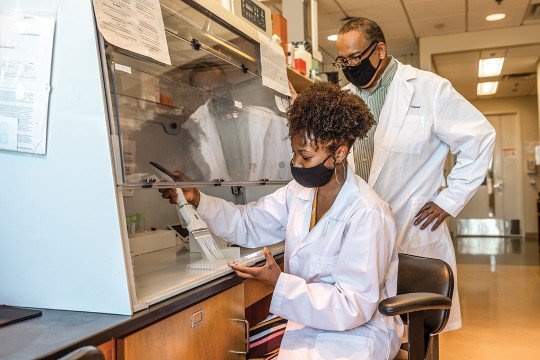
LSAMP and McNair Scholars programs provide important research opportunities
A record 15 students participated in fall research projects thanks to support from the Louis Stokes Alliance for Minority Participation (LSAMP) and Ronald E. McNair Post-Baccalaureate Achievement programs.
-
January 15, 2021

College of Science experiences boom in sponsored research
Several School of Physics and Astronomy faculty secured large grants as principal investigators during a banner summer.
-
January 15, 2021

Research takes flight at Tait Preserve
Scientists began conducting research at the Tait Preserve of RIT for the first time this summer. Researchers from the Digital Imaging and Remote Sensing Laboratory were the first to use the site, collecting data using imaging technology flown on unmanned aerial systems, or drones.
-
January 11, 2021

Measurements of pulsar acceleration reveal Milky Way’s dark matter density
Researchers have used pulsar measurements to help uncover new information about the density of dark matter in our home galaxy. In a new study led by RIT Associate Professor Sukanya Chakrabarti, researchers have now obtained the first direct measurement of the average acceleration taking place within the Milky Way.
-
January 6, 2021
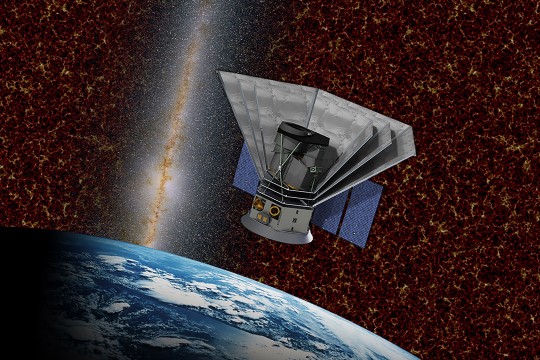
RIT’s Michael Zemcov helping to push new NASA space telescope toward launch
Michael Zemcov, assistant professor in the School of Physics and Astronomy, is part of the Spectro-Photometer for the History of the Universe, Epoch of Reionization and Ices Explorer (SPHEREx) mission, which will let scientists learn about the formation of galaxies and search for life-sustaining molecules in the clouds of material where stars and planets form.
-
January 6, 2021

Connections: Is Rochester becoming a hub for the field of textual science?
WXXI’s “Connections” program features Roger Easton, professor in the Chester F. Carlson Center for Imaging Science; Lisa Enochs, second-year student double majoring in motion picture science and imaging science; and Zoë LaLena, second-year imaging science student.
-
December 16, 2020

Scientists complete yearlong pulsar timing study after reviving long-dormant radio telescopes
While the scientific community grapples with the loss of the Arecibo radio telescope, astronomers who recently revived a long-dormant radio telescope array in Argentina hope it can help modestly compensate for the work Arecibo did in pulsar timing.
-
December 11, 2020

RIT imaging scientist receives funding to improve how LiDAR can be used to study forests
Imaging scientists at RIT have several new projects in the works to improve the way waveform LiDAR can be used to study forests. LiDAR currently does a good job of outlining the top portion of forests, but by using a more complex form of LiDAR, it can reveal much more detail about what lies beneath the forest canopy’s surface.
-
December 8, 2020
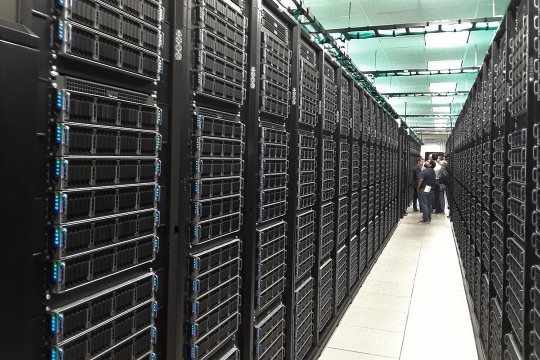
Dell Technologies and TACC Fuel Great Innovations
CIO Magazine mentions Manuela Campanelli, professor in the School of Mathematical Sciences, and her work with the TACC Frontera supercomputer.