More than just a semester away: The evolution of Erasmus+ at RIT Croatia
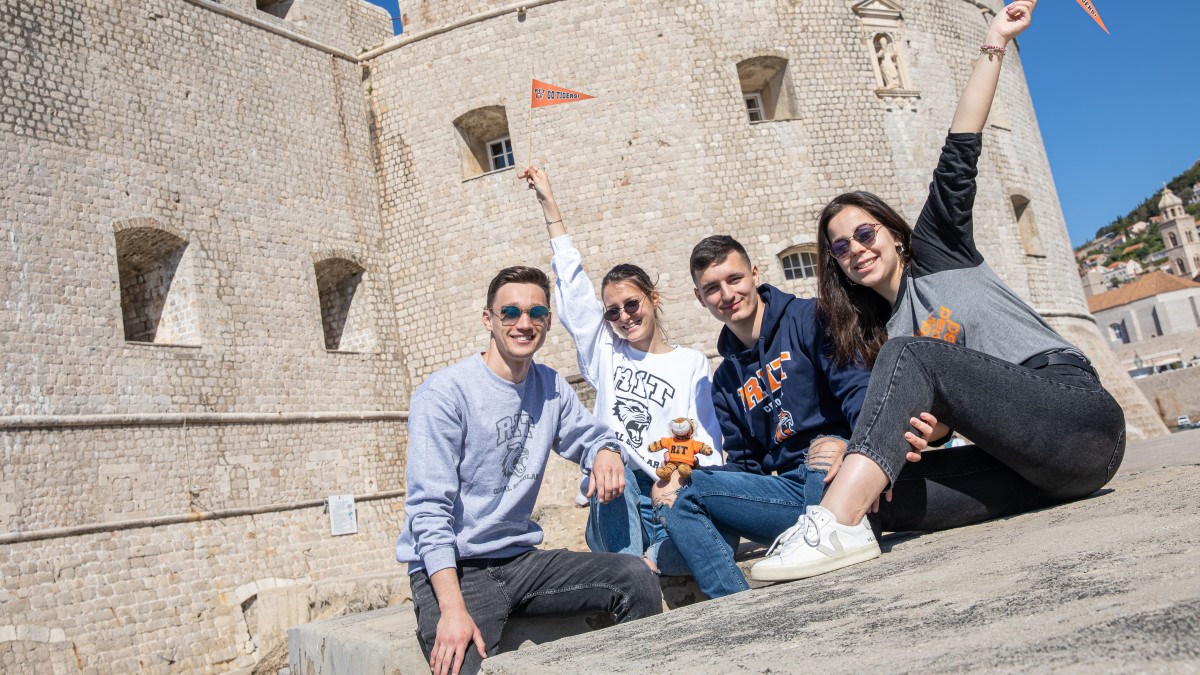
In the halls of RIT Croatia’s Dubrovnik and Zagreb campuses, the air feels a little more global this year. For the 2025/26 academic year, 30 new faces have joined the community through the Erasmus+ program, bringing with them perspectives from across the continent.
But according to Christina Pejić, Erasmus+ Manager and International Student Specialist, this isn't just about filling seats, it’s about a fundamental shift in how students view their education and their future.
The new "career-aware" explorer
The profile of the exchange student is changing. Five years ago, many students were "experience-first explorers", travelers looking for a change of scenery. Today, the vibe is different. "They are still seeking growth and adventure," Christina notes, "but they are increasingly career-aware, cost-conscious, and outcome-driven. They aren't just asking 'Where can I go?' but rather 'What will this experience bring to my future?'" This shift aligns perfectly with the RIT Croatia model. Incoming students aren't just coming for the Adriatic sunsets or Zagreb’s urban charm; they are drawn by the interactive classes and the supportive academic environment that RIT is known for.
Growth driven by word-of-mouth
The numbers tell a story of steady, organic growth. Over the last five years, incoming mobility has increased year-over-year. Interestingly, the biggest marketing tool isn't a glossy brochure; it’s the students themselves. "Word of mouth remains our strongest ambassador," says Christina. While students from France, Spain, and Ireland continue to arrive in high numbers, this year marked a milestone: the first arrivals from a new partner in Budapest. This expansion into Central Europe signals RIT Croatia’s growing reputation as a premier destination within the Erasmus network.
RIT Croatia’s own students are increasingly eager to pack their bags. The most popular destinations are Spain, France, Portugal, and Italy. For these students, a semester abroad is no longer seen as a "break" from their studies, but as an essential credential. In a globalized job market, having successfully navigated a different culture and university system is a major competitive advantage.
Quality over quantity
As for the future, the goal isn't necessarily to have hundreds of students, but to have the right partnerships. The Erasmus+ office is currently focusing on:
- New Specializations: Finding partners specifically for the New Media Design (NMD) program and the upcoming Cybersecurity program.
- Short-Term Mobility: Recognizing that not every student can leave home for four months, RIT is leaning into Blended Intensive Programs (BIPs). These short, high-impact trips allow working students or those with other commitments to still get a taste of international education.
Ultimately, Christina views Erasmus+ as a tool to deliver an internationally-oriented, American-style education right here in Croatia.
"Its real impact shows up less in credit mobility," she says, "and more in how it reshapes the day-to-day culture of the campus." For the domestic students who stay in Croatia, the presence of international peers brings the world to them, turning every classroom discussion into a global exchange of ideas.