RIT Croatia students design an app combining islands, olive harvesting, and a digital medical network
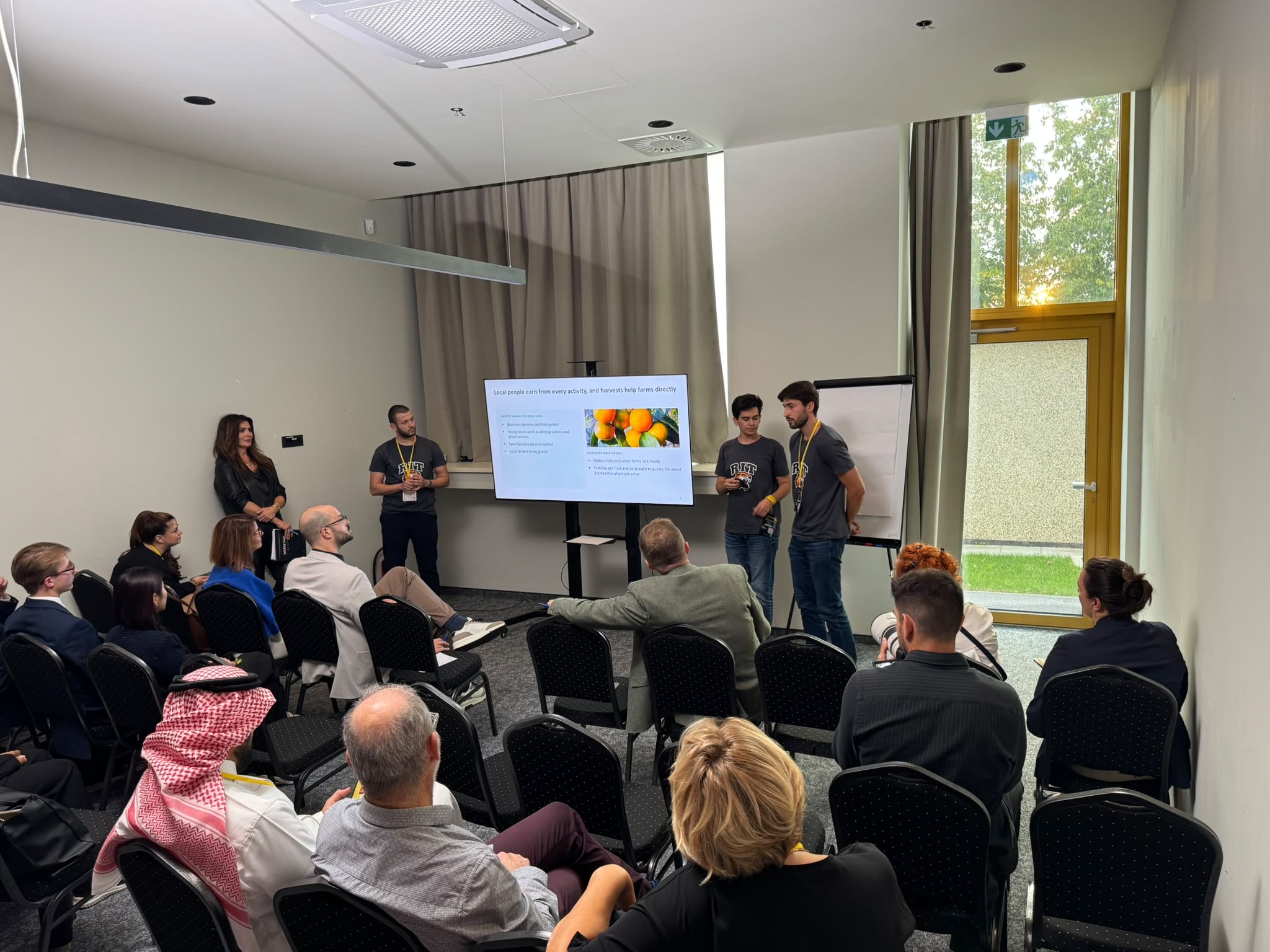
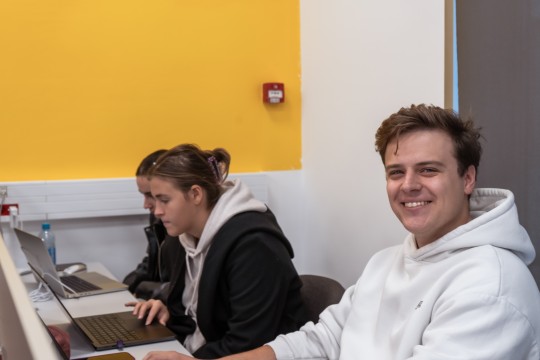
Photo: Students Danijel Kevo, Ivano Margaretić, and Patrick Gašparić (left to right) at the T365 Tourism Hackathon
Whenever Dubrovnik is mentioned in tourism discussions, the same topics inevitably arise: summer crowds, pressure on the old city core, and finding ways to attract guests during the winter months. However, at the 2nd International T365 Tourism Hackathon in Zagreb (October 5–7, 2026)—organized as part of the milestone 10th Trends and Future of Tourism conference—three students demonstrated that the younger generation is not waiting for solutions from above, but constructing them themselves.
Students from RIT Croatia, Danijel Kevo and Ivano Margaretić from Dubrovnik and Patrick Gašparić from Zaprešić, developed the innovative VitaNatura 365 concept and an accompanying application that directly addresses a key issue of year-round tourism in the south: the sense of medical and overall security for guests in rural and island environments during the off-season.
From a personal accident on Lokrum to a functional prototype
The best innovations often stem from real-life situations. That was also the case here.
"We came up with the idea when our instructor and mentor, Dr. Marlena Ćukteraš, got injured on Lokrum. Through conversation, we realized how much harder all of that would have been if she had been a tourist without a local person by her side. Since Ivano and I come from an IT background, we knew we wanted to build an application and our own AI agent for assistance and tailored planning," recalls Danijel Kevo, a Web and Mobile Computing student.
The application bridges two worlds. On one hand, it offers unique, authentic tours of the Dubrovnik region from October to May—such as photo safaris by traditional boat (lađa) in the Neretva delta, mandarin and olive harvesting, and tours of Ston, Konavle, and Mljet. On the other hand, a smart safety network operates in the background.
If a guest gets injured on an excursion, the digital assistant Vita locates the nearest medical facility, sends GPS coordinates and medical information in Croatian, and organizes alternative accommodation or transport, even automatically rearranging the rest of the itinerary.
"Off-season travelers often have more flexible schedules, and a sense of medical security is crucial there. To make everything simpler for the user, we also designed a smartwatch option with a pre-installed app that knows the guest's health risks and itinerary and responds if something happens. IT hasn't extinguished our love for Dubrovnik; rather, it gave us a logical way to help it continue growing and developing," explains his fellow Web and Mobile Computing student, Dubrovnik native Ivano Margaretić.
What particularly impressed the jury in Zagreb was that the students didn't show up with just a "fictional idea on paper."
"We integrated real data, such as medical facility locations and driving times to hospitals. Via a QR code, we allowed the jury to experience the application firsthand and literally test it out. The app even generates a special handoff document for doctors to shorten waiting times at reception. Our slogan was: You travel, we care," adds Kevo.
Synergy of technology and tourism: When different majors speak the same language
Behind the project's success lies RIT Croatia's educational approach, which connects academic knowledge with practical experience and career preparation. In this case, the value of interdisciplinary work proved especially clear: Web and Mobile Computing and Hospitality and Tourism Management students jointly developed the solution, each from the perspective of their own field.
A mixed team was sent to the hackathon—a blend of Web and Mobile Computing and Hospitality and Tourism Management students. This combination proved to be an ideal match.
"In the Hospitality and Tourism Management program, we are taught how to recognize tourists' desires and turn an ordinary off-season trip into an unforgettable experience. My colleagues from the Web and Mobile Computing program brought all those ideas to life technically. It was a challenge for me because I don't have a programming background, but I provided concrete inputs on how the app needed to look to be user-friendly for guests. We were under pressure, with lots of ideas and little time, but through open communication, we split tasks based on our strengths. What we do at RIT Croatia proves that we learn applicable skills—from year one, we learn teamwork and real-world problem-solving," highlights Patrick Gašparić, a Hospitality and Tourism Management student.
Their mentor, Dr. Marlena Ćukteraš, agrees, noting that combining the majors was a deliberate and strategic decision.
"My role was to apply the principles of problem-solving learning and design thinking. The key breakthrough happened when the students shifted from asking 'what to offer' to 'why guests don't choose such offers off-season.' They identified risk perception as the main barrier. Web and Mobile Computing students brought an understanding of technical architecture, while the Hospitality and Tourism Management student brought an understanding of the guest journey. Tourism needs technology that understands people, and hospitality that isn't afraid of technology. Their approach demonstrated analytical maturity that exceeds undergraduate expectations," emphasizes Dr. Ćukteraš.
Clash of ideas under the pressure of the stopwatch
The presence and support of faculty members on site was crucial for keeping the team focused. Dr. Kristina Šorić, who accompanied the students to Zagreb, describes the great energy and confidence the Dubrovnik students displayed on stage.
"The competition among higher education institutions was really strong, but our students stood out through their communication skills, interdisciplinary approach, and charm. They were the only interdisciplinary team, and that gave them a huge advantage. They commanded the stage without a trace of hesitation and answered questions across all areas—from digitalization and concept to the financial plan. They were a joy to watch," says Dr. Šorić.
The greatest takeaway from this competition isn't just the high ranking or professional recognition, but the proof that Dubrovnik students possess problem-solving skills ready for the most demanding market challenges.
As mentor Ćukteraš concludes, this isn't the end for them: "The VitaNatura 365 project lives on, and our goal is to develop it into a real service for Dubrovnik and the wider region in collaboration with local stakeholders. These young people show that they aren't waiting for the future of tourism—they are actively shaping it today."