RIT-based research aims to transform home-health monitoring for older adults
Developed by an RIT alumnus, the Casana Smart Seat measures cardiovascular health metrics during one of life’s most routine activities

Casana
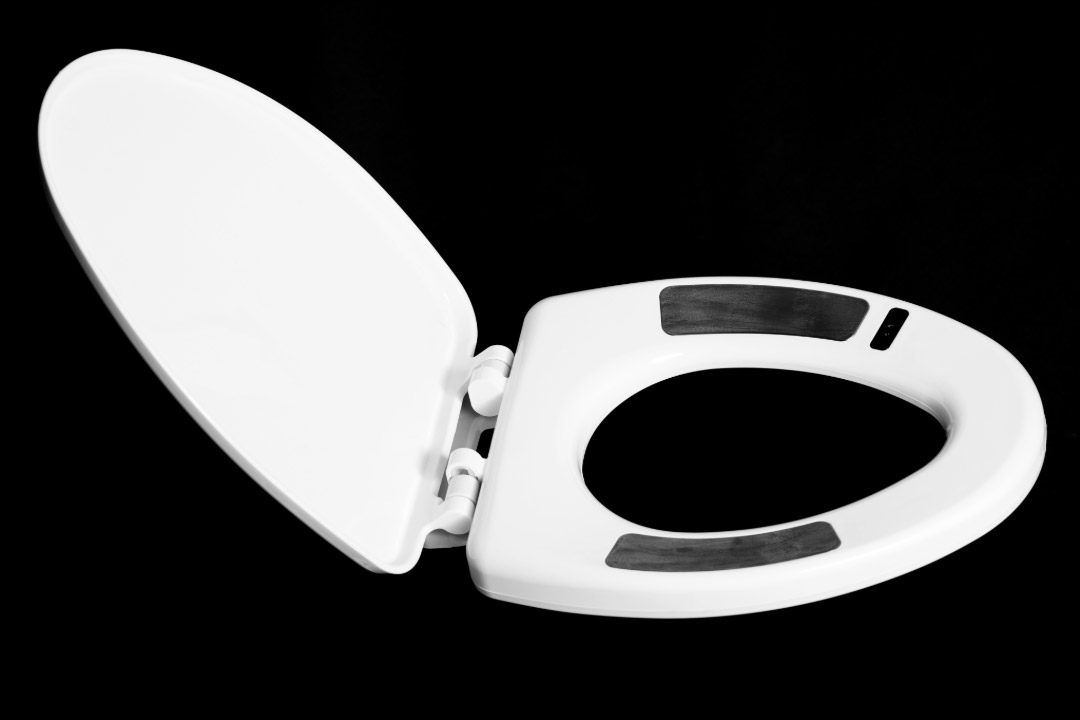
Developed from research that began at RIT, Casana’s Smart Seat transforms an ordinary toilet into a tool for monitoring home health, helping older adults age independently.
A research project that began with a student’s idea in an engineering laboratory at Rochester Institute of Technology (RIT) is now a commercial product designed to help older adults live independently while giving
Casana, a Rochester-based health technology company co-founded by RIT alumnus Nick Conn and led by RIT alumnus Austin McChord, has launched its Smart Seat, a next-generation device that automatically tracks blood pressure trends, heart rate, blood oxygen, stability, and respirat
How does the Smart Seat work?
Casana
Developed from research at RIT, Casana’s Smart Seat uses advanced sensors and software to passively measure blood pressure trends, heart rate, blood oxygen, respiratory rate, and stability during everyday use.
Unlike wearable devices, such as Apple Watch and Oura, that require charging and consistent use, the Smart Seat, which replaces a standard toilet seat, collects health information using a unique combination of software and science without requiring users to change their daily routines. The Smart Seat follows updated FDA guidance for low-risk general wellness products, and the system allows users to control whether their encrypted health data is shared with healthcare providers.
The technology arrives as healthcare providers continue seeking better ways to monitor patients between office visits. The Centers for Disease Control estimates that four in 10 adults with hypertension are unaware they have the condition, while many older adults hope to remain in their homes as they age. By integrating health monitoring into an activity people already perform every day, Casana hopes to make long-term
RIT entrepreneurship at work
For Conn, the launch represents the realization of an idea that first took shape while he was a graduate student in RIT’s Kate Gleason College of Engineering.
“The technology began as research at RIT, and seeing it become a product that can help people maintain their health at home is incredibly rewarding,” said Conn, who earned bachelor’s and master’s degrees in electrical engineering in 2011 and 2013, and a Ph.D. in microsystems engineering in 2016. “This milestone reflects years of collaboration among researchers, engineers, clinicians, investors, and entrepreneurs who believed this idea could make a meaningful difference.” Conn is now on the board of Casana, which is based in Rochester, N.Y.
RIT’s “maker mentality” and its commitment to cutting-edge research for the greater good plays a significant role in its ranking as a “Most Innovative” campus and one of the best undergraduate engineering programs, by U.S. News and World Report.
This research also emphasizes RIT as a leader in the emerging healthcare technology industry with students, faculty, and alumni developing innovations in medical imaging, AI-assisted diagnostics, and biomedical research that improve patient care.
Casana graduated from RIT’s Venture Creations incubator in 2022.
Helping transform Casana’s research into a successful company is McChord ’09, founder of Datto and one of RIT’s most generous benefactors. McChord, who created RIT’s competitive Gap Year Entrepreneurial Fellowship program for students who want