Analyzing Passive Cooling Method to Enhance Heat Dissipation for Data Centers with Computational Modeling
Ph.D. student, Divyprakash Pal, has carried out numerical simulation studies using Ansys Fluent as a tool to analyze passive cooling methods to enhance heat dissipation for data centers.
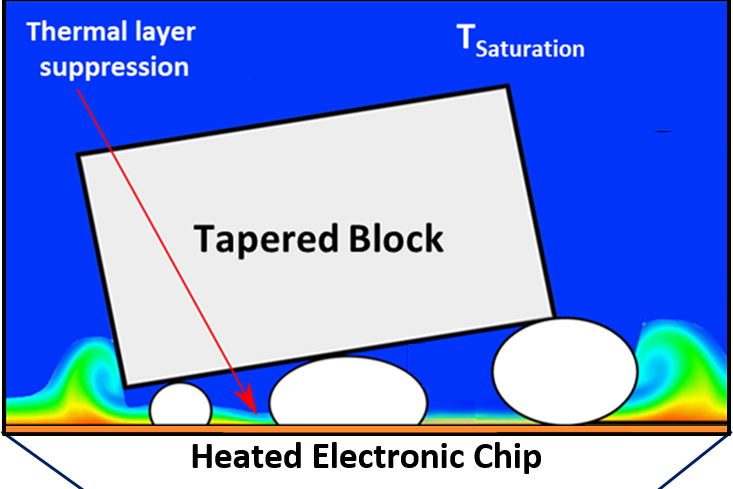
RIT Mechanical and Industrial Engineering Ph.D. student Divyprakash Pal, supervised by Dr. Isaac Perez-Raya, has carried out numerical simulation studies using Ansys Fluent as a tool to analyze passive cooling methods to enhance heat dissipation for data centers.
Cooling systems play a vital role across a wide spectrum of high-performance technologies, evolving steadily to match the increasing thermal demands of modern devices. Air cooling, since 1950s to early 2000s, was the standard due to its low cost and simplicity, remaining prevalent in consumer electronics and low-power applications but is ineffective for high heat fluxes exceeding 100 W/cm². Liquid cooling, since early 2000s, with its higher thermal capacity, is widely used in automotive systems, medical imaging devices, aerospace electronics, and power conversion equipment, capable of dissipating up to 300 W/cm². In sectors such as defense and research, where high-power laser diodes, particle accelerators, and nuclear reactors generate extreme heat in compact spaces, traditional cooling methods fall short. Here, phase-change systems like nucleate boiling excel. Utilizing the latent heat of vaporization, boiling can manage heat fluxes beyond 1000 W/cm² while maintaining component temperatures within tight thresholds. These attributes make boiling-based cooling ideal for applications demanding high reliability, thermal uniformity, and compactness.
The data center industry now faces a pivotal challenge as computing density and energy consumption surge, driven by AI workloads, cloud computing, and edge services. Conventional cooling approaches—airflow management, chilled liquid loops, and rear-door heat exchangers—are nearing their limits, both thermally and economically. Advanced two-phase cooling, particularly nucleate boiling, is emerging as a transformative solution for these high-density environments. It enables superior heat removal from localized hotspots on chips and GPUs, thus enhancing performance while minimizing energy overhead. Although challenges remain in terms of fluid control, long-term reliability, and system integration, the potential of boiling-based systems to revolutionize data center cooling is increasingly recognized. Among promising innovations is tapered microgap boiling. Tapered microgaps are wedge-shaped chambers that influence the bubble motion, growth, and quick removal of the bubble from the heated surface. This improves thermal uniformity and raises the heat removal capabilities of the system. Their adoption could significantly reduce operating costs and support the industry’s push toward carbon-neutral infrastructure.
The current work focused on improving data center cooling systems, by investigating the effectiveness of tapered microgap boiling using Ansys Fluent as a research tool. The preliminary results for the exhaustive tapered microgap study have proven to be instrumental in understanding the effects of parameters such as tapered angles, fluid properties, and operating conditions on the flow pattern of a vapor bubble. The tapered microgap enhances liquid supply, vapor escape, and nucleation activity, collectively leading to a high heat dissipation. Furthermore, the results show that the bubble growing over the heated surface creates fluid circulations and interfacial conditions that suppress the thermal boundary layer leading to an increased local heat transfer coefficient within a range of 1 mm from the interface. The maximum heat transfer coefficient for the study was 35000 W/m2K, 100 times better than air cooling and 3.5 to 70 times better than liquid cooling. It further highlights how efficiently heat is transferred between the hot surface and the fluid.
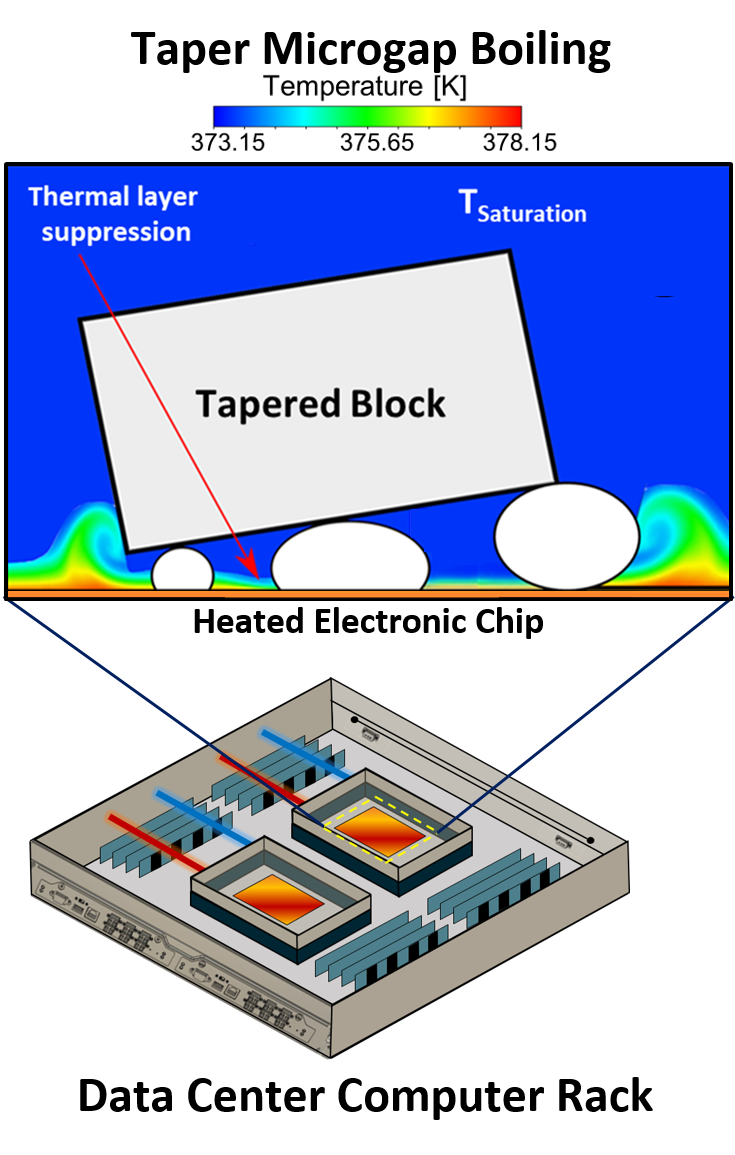
More Featured Profiles and Work
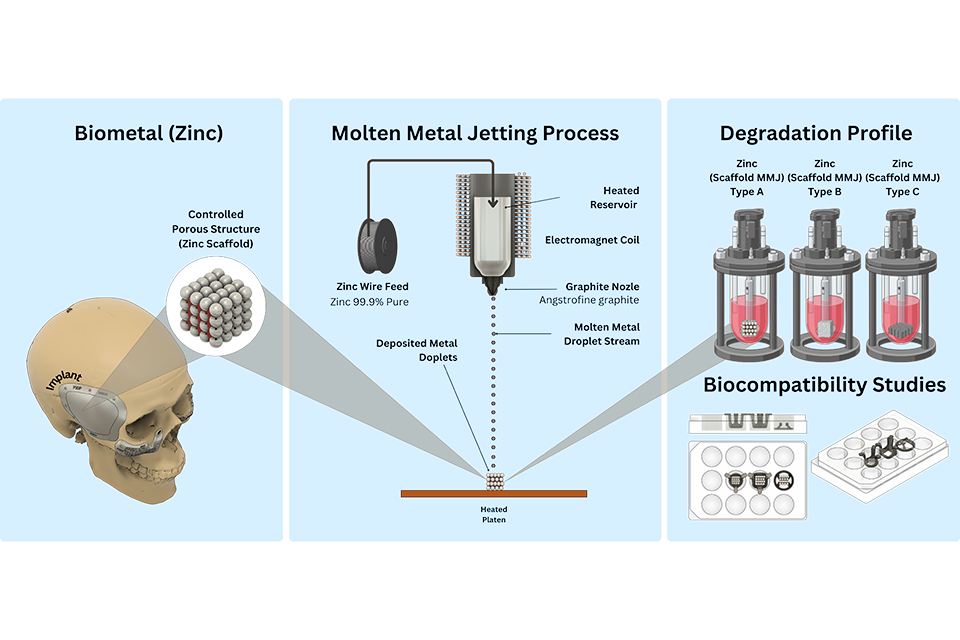
Valeria Marin-Montealegre
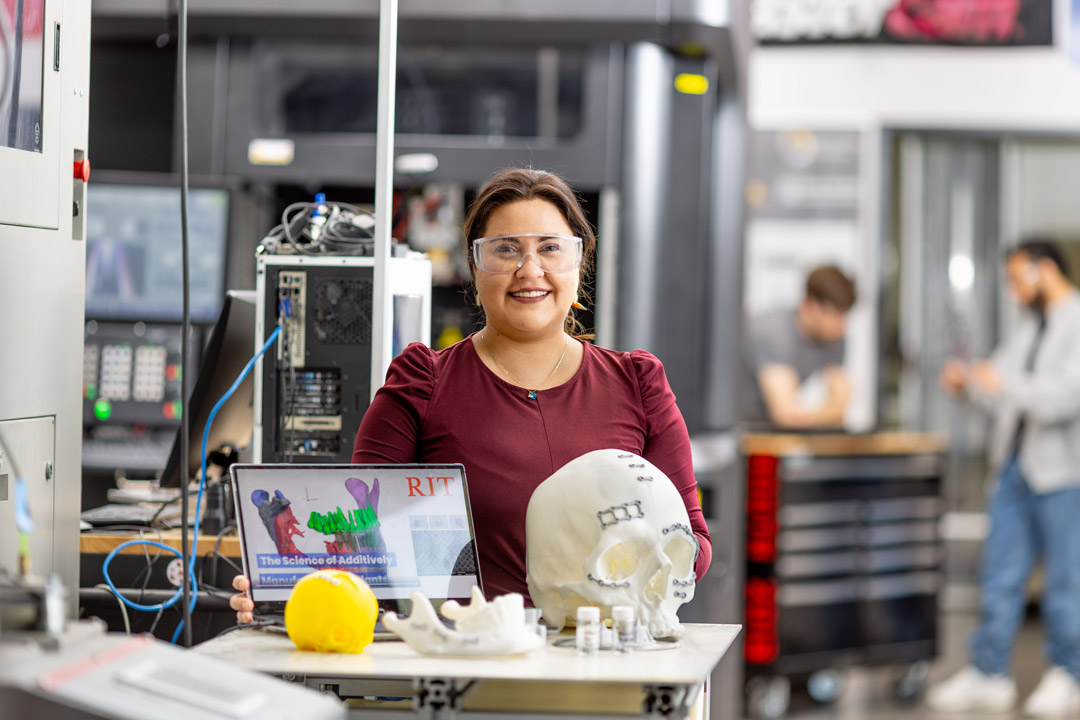
Valeria Marin Montealegre
Atik Faisal
Dumbari David Kabari