Investigating the Effects of Aging on Body Armor Fibers
New research aims to understand how soft body armor degrades over time due to real-world conditions like heat, humidity, and wear.
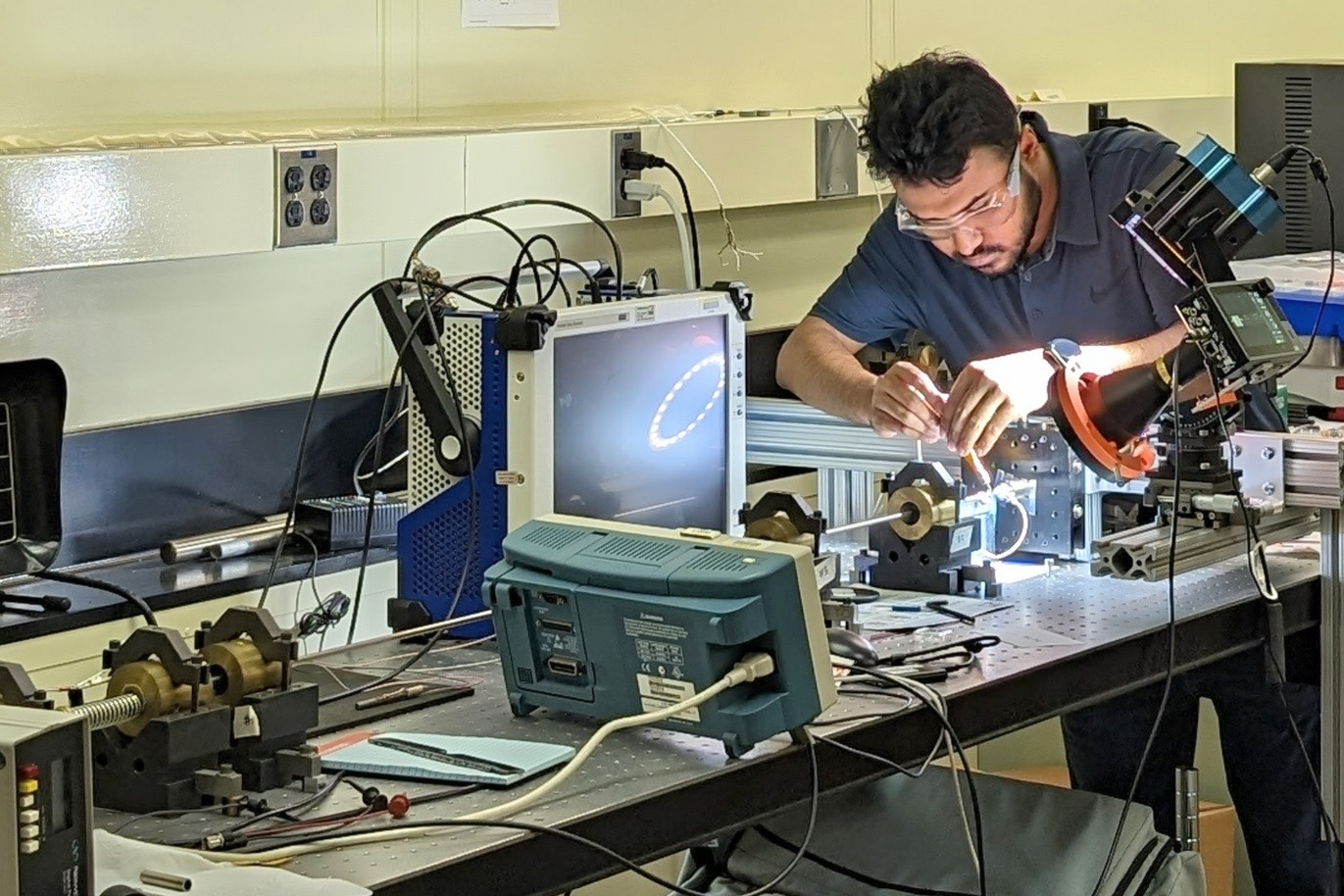
Ballistic-resistant soft body armor is crucial for protecting emergency personnel, such as police officers, firefighters, and medical responders, from high-speed ballistic impacts. However, armor materials can degrade over time due to exposure to heat, humidity, physical wear, and variations in how the armor is used and maintained. It is challenging to measure this degradation because armor experiences very different conditions and usage patterns in the real world.
A common way to evaluate armor effectiveness is by measuring its V50 velocity, the speed at which half of projectiles penetrate the armor. Unfortunately, directly measuring V50 requires destructive tests that ruin the armor, making this method expensive and time-consuming. Instead, researchers usually test the strength of armor fibers by testing the fibers at quasi-static conditions (slow strain rate tensile testing). However, this approach does not accurately represent real-world ballistic impacts, which occur at extremely high speeds (dynamic rate).
In our research, we are trying to address this limitation by testing individual fibers both at quasi-static and at high-strain rates. For high-strain rate testing, we have reassembled a specialized testing setup known as the Mini Kolsky Bar at the National Institute of Standards and Technology (NIST). To degrade the body armor fibers, we are artificially aging them by exposing them to accelerated conditions (70°C temperature and 76% relative humidity) to simulate years of field use in a shorter period. By comparing fiber behavior at both testing speeds after aging, our goal is to understand how degradation affects fiber strength at realistic ballistic conditions. Ultimately, this research will enhance the reliability predictions for soft body armor, improving the safety of emergency responders and guiding future armor maintenance and design.
More Featured Profiles and Work
Valeria Marin-Montealegre
Valeria Marin Montealegre
Divyprakash Pal
Dumbari David Kabari