News
-
January 22, 2021
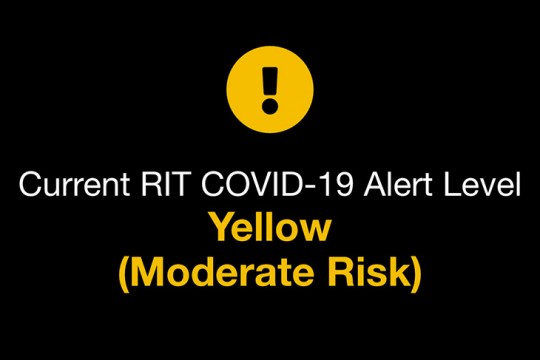
RIT COVID-19 Alert Level moves to Yellow
After careful consideration, we have made the decision to move our alert level on campus from Orange to Yellow, meaning that the prevalence of the virus on campus remains a moderate risk. While this changes our alert level closer to where we all would like to be, we must continue to be extremely vigilant. We must not let our guard down.
-
January 20, 2021

Asteroid or alien? RIT professor breaks down Harvard professor’s claim
WROC-TV talks to Michael Richmond, professor in the School of Physics and Astronomy, about observing objects in space.
-
January 15, 2021

Astronomers dissect the anatomy of planetary nebulae using Hubble Space Telescope images
Images of two iconic planetary nebulae taken by the Hubble Space Telescope are revealing new information about how they develop their dramatic features. Researchers from RIT and Green Bank Observatory presented new findings about the Butterfly Nebula and the Jewel Bug Nebula at the 237th meeting of the American Astronomical Society on Friday, Jan. 15.
-
January 15, 2021
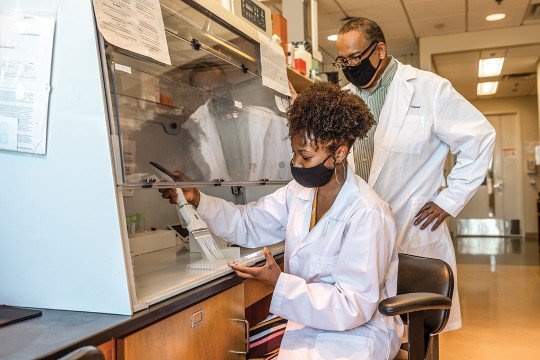
LSAMP and McNair Scholars programs provide important research opportunities
A record 15 students participated in fall research projects thanks to support from the Louis Stokes Alliance for Minority Participation (LSAMP) and Ronald E. McNair Post-Baccalaureate Achievement programs.
-
January 15, 2021

College of Science experiences boom in sponsored research
Several School of Physics and Astronomy faculty secured large grants as principal investigators during a banner summer.
-
January 15, 2021

Research takes flight at Tait Preserve
Scientists began conducting research at the Tait Preserve of RIT for the first time this summer. Researchers from the Digital Imaging and Remote Sensing Laboratory were the first to use the site, collecting data using imaging technology flown on unmanned aerial systems, or drones.
-
January 15, 2021

Strategic updates to campus will last beyond the pandemic
RIT spent more than $8.2 million to make RIT’s campus as safe and clean as possible so that students, faculty, and staff could study and work confidently and comfortably. The university’s Infrastructure and Health Technologies Task Force implemented a variety of changes to RIT’s academic settings, housing, and dining designed to fight the spread of the coronavirus.
-
January 15, 2021

New economy majors connect with emerging careers
Analytical thinking, complex problem solving, creativity, resiliency, and flexibility are among the top skills needed for emerging careers by 2025. Anticipating these rapid changes in the workplace—further accelerated by lessons learned from the COVID-19 pandemic—RIT is seizing on the opportunity to guide students to “new economy majors” that are multidisciplinary, transformative, and future-focused.
-
January 12, 2021
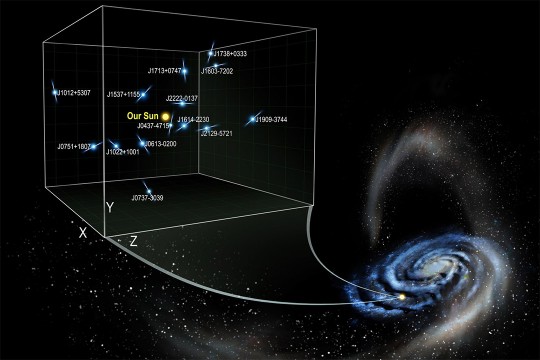
Scientists are getting closer in race to find gravitational wave background and dark matter
Space.com features work by Sukanya Chakrabarti, associate professor in the School of Physics and Astronomy.
-
January 11, 2021

Measurements of pulsar acceleration reveal Milky Way’s dark matter density
Researchers have used pulsar measurements to help uncover new information about the density of dark matter in our home galaxy. In a new study led by RIT Associate Professor Sukanya Chakrabarti, researchers have now obtained the first direct measurement of the average acceleration taking place within the Milky Way.
-
January 7, 2021

Gift from Delta Environmental helps RIT establish environmental education program at Tait Preserve
The citizen science nonprofit Delta Environmental is establishing a new endowment at RIT to create an environmental education program at the Tait Preserve of RIT.
-
January 6, 2021
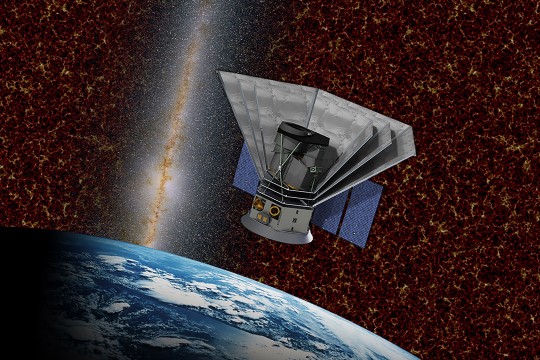
RIT’s Michael Zemcov helping to push new NASA space telescope toward launch
Michael Zemcov, assistant professor in the School of Physics and Astronomy, is part of the Spectro-Photometer for the History of the Universe, Epoch of Reionization and Ices Explorer (SPHEREx) mission, which will let scientists learn about the formation of galaxies and search for life-sustaining molecules in the clouds of material where stars and planets form.