Urban Ecology
Location: Malmo, Sweden
Course Discipline:
- Environmental Science
- Ecology
- Science
Credits: 3
Program Type: RIT Faculty-Led
Term(s): Spring/Summer
Language of Instruction: English
Undergraduate, Graduate
RIT Students only
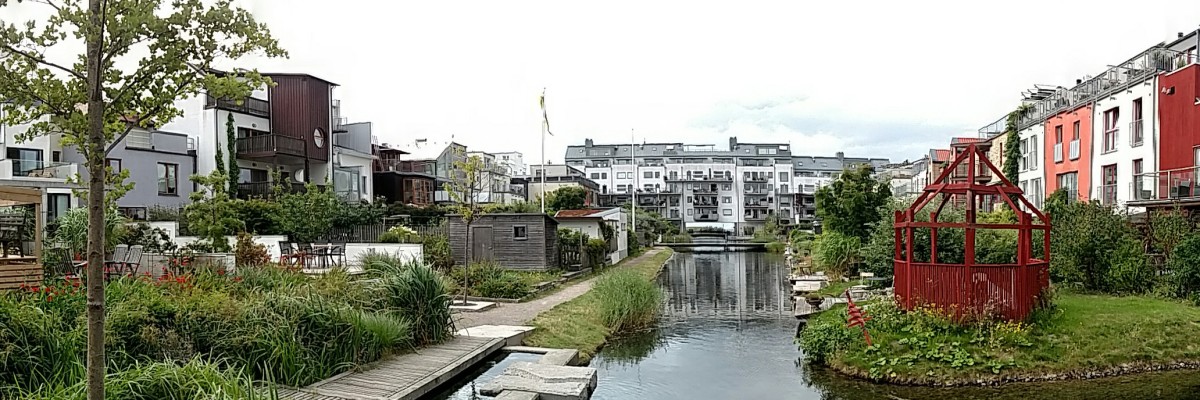
- Explore innovative sustainable practices in one of the leading green regions of the world.
- Compare Malmo's post-industrial sustainable reinvention to Rochester and identify key practices Rochester could adopt toward more eco-friendly urban living.
- Participate in interactive field studies, workshops, and site visits, and create a final project using Storymaps.
- Collaborate with local students at Malmo University.
Note: the application deadline for the spring/summer 2026 program has been reached. To inquire about next year's program, email global@rit.edu.
This course focuses on ecosystems, environmental science, and sustainability in a global urban setting. Malmö is a post-industrial city, much like Rochester, that has had to reinvent itself after losing major industry. The city has embraced many "green" infrastructure aspects, an example of how cities can move toward sustainable urban living. The eco-center developments of Malmö provide examples for Rochester to consider as it embarks on creating an eco-center in the High Falls area. You will explore topics including transportation, recycling, restoration ecology, green infrastructure, and more.
In this interactive field course, hosted by Malmö University, you will collect field data and spatial information linked to site visits and tours, which you will use to create a final project. You will also participate in academic excursions in/near Copenhagen and Malmö to locations such as the Western Harbor, Fastrerbo (bird banding station), reclaimed brownfields (lime quarry), Augustenborg, Hyllie, and many urban gardens and green spaces.
No Swedish language is required - program is taught in English.
Course Term: Spring 2026 course, with travel to Sweden in early summer
2026 Travel Dates: May 11-29, 2026
Credits: 3
Course Details:
- ENVS 305: Urban Ecology (undergraduate)
- ENVS 798: Advanced Independent Study (graduate)
Students will take a spring 2026 class in Rochester, and will travel to Sweden in early summer. No course pre-reqs.
For undergraduate students, the course can count as an Environmental Science major elective, Environmental Science minor, Urban Studies immersion, GE: Scientific Principles Perspective, or Free Elective. All applicants should discuss how credits will count towards their degree program with their RIT academic advisor.
Program is open to all undergraduate and graduate majors (2nd year students and above will be given priority), 2.5 cumulative GPA or above.
Application deadline: Applications are closed
Program Cost & Financial Aid
Program Cost: Student budget worksheet - Urban Ecology in Sweden spring/summer 2026 - outlines all program costs. Students should bring a copy of the budget worksheet to a meeting with RIT financial aid to determine how aid may apply (see instructions below).
Financial Aid:
Financial aid may cover some program costs. As you review the budget worksheet, please remember that it does not include your RIT financial aid or scholarships, which may cover some of the program costs. The purpose of the budget worksheet is to show all the costs associated with your study abroad program, which will help your RIT Financial Aid Assistant Director determine how your aid and scholarships may be applied.
To understand how your financial aid and scholarships may apply to your program costs:
- Make an appointment with your financial aid assistant director (call Financial Aid at 585-475-2186) and mention that you are calling for a study abroad appointment
- Upload a copy of your budget worksheet(s) via the Financial Aid upload portal at https://join.rit.edu/register/FA_upload (at least 48 hours prior to your scheduled meeting so they have time to prepare)
- Please rename the file name of your budget worksheet before uploading it to the Financial Aid portal based on the instructions provided in the portal (adding your name and student ID)
To find out the name of your financial aid assistant director for your degree program visit: https://www.rit.edu/admissions/aid/contact#counseling-team
We recommend you meet with Financial Aid before the application deadline to understand how your aid will apply. The RIT financial aid office is located in Bausch and Lomb Center (Bldg. 77), 2nd floor, 2125.
-
RIT Education Abroad Travel Grants ($500-$1,000)
All students with pending applications in the RIT Study Abroad Compass for this program will be automatically considered for an RIT Education Abroad Travel Grant. You will be informed of your scholarship status shortly after the application deadline. Scholarships are awarded based on financial need, as determined by financial aid and your FAFSA on file. -
Additional Scholarships
RIT scholarships and national scholarships for study abroad are good options to explore for scholarship funding. Make sure you are checking scholarship eligibility requirements and take note of scholarship deadlines.
To Apply
Applications are currently closed (application deadline has been reached)
Watch this video, which goes over all important application steps for RIT Faculty-Led Programs
Contact
Elizabeth Hane
Professor, Thomas H. Gosnell School of Life Sciences
College of Science
enhsbi@rit.edu
Susan Pagano
Associate Professor, Thomas H. Gosnell School of Life Sciences
College of Science