
Kristin Bain
Associate Professor, Behavioral Science/IB/Strat Management
Department of Management
Saunders College of Business
Office Location
Kristin Bain
Associate Professor, Behavioral Science/IB/Strat Management
Department of Management
Saunders College of Business
Select Scholarship
Invited Article/Publication
Bain, K., Coll, K., Kreps, T., & Tenney, E. (2025). Silenced by Incivility. Journal of Business Ethics 198. 107-125.
Coll, K., Bain, K., Bonner, B., Talbot, T., & Shannahan, D. (2024). When Power and Expertise Collide, How do Groups Decide?. Small Group Research 55. 847-883.
Bonner, B., Shannahan, D., Bain, K., Coll, K., & Meikle, N. (2022). The Theory and Measurement of Expertise-Based Problem Solving in Organizational Teams: Revisiting Demonstrability. Organization Science 33. 1452-1469.
Bain, K., Kreps, T., Meikle, N., & Tenney, E. (2021). Amplifying voice in organizations. Academy of Management Journal 64. 1-25.
Invited Keynote/Presentation
Smith, K., Bain, K., Hanna, A., & Coll, K. (2025). Assessing the Risks of Breaking Gender Rules: Validation of the Expected Gender Backlash Scale. Academy of Management.
Stillwell, A., Liu, C., Bain, K., Chen, J., & Tenney, E. (2025). Navigating the Labyrinth: Women's Responses to Potential Gender Backlash.. Annual Academy of Management Conference.
Bain, K., (2025). Knowledge is Power: Motivated Information Sharing. INGRoup.
Bain, K., Brykman, K., & Guzman, F. (2025). Beyond the supervisor-subordinate dyad: The role of social context in voice research. Academy of Management.
Bain, K., Guler, K., & Hull, C. (2024). How gender and expectancy violations affect host performance on the Airbnb hospitality platform. Academy of Management Conference.
Bain, K., Brykman, K., & Guzman, F. (2024). Beyond the supervisor-subordinate dyad: An integrative review of voice within groups. INGRoup.
Bain, K., (2023). Examining the Group Context: How Peer Responses to Voice Affect Endorsement. Academy of Management Annual Conference.
Bonner, B., Shannahan, D., Bain, K., Coll, K., & Meikle, N. (2023). When Power and Expertise Collide, How Do Groups Decide?. INGRoup.
Bain, K., (2023). Examining the Group Context: How Peer Responses to Voice Affect Endorsement. INGRoup.
Coll, K., Bain, K., Kreps, T., & Tenney, E. (2023). Fighting incivility one amplified idea at a time: Increasing willingness to voice in uncivil groups. Western Academy of Management Conference.
Bain, K., Coll, K., Kreps, T., & Tenney, E. (2023). Silenced by Incivility: Women are More Silent than Men in Uncivil Groups. Society for Personality and Social Psychology Conference.
Bain, K., Coll, K., Brimhall, C., Shannahan, D., & Talbot, T. (2022). Theoretical Model of Gamification in Groups. INGRoup.
Coll, K., Bain, K., Kreps, T., & Tenney, E. (2022). Silenced by incivility: People, especially women, voice less in uncivil groups. INGRoup.
Bain, K., Coll, K., Kreps, T., & Tenney, E. (2021). Silenced by incivility: People, especially women, voice less in uncivil groups. Academy of Management Annual Conference.
Coll, K., Bain, K., Kreps, T., & Tenney, E. (2020). Battling incivility: Increasing willingness to voice through amplification. Academy of Management Annual Conference.
Bain, K., Kreps, T., Meikle, N., & Tenney, E. (2019). The amplification technique. INGRoup.
Bonner, B., Bain, K., Shannahan, D., & Coll, K. (2019). What's in the jar?: Effects of demonstrability and decision power on use of expertise in group decisions. INGRoup.
Coll, K., Dodson, S., Shannahan, D., Brimhall, C., & Bain, K. (2019). Here's a badge! A theory driven approach to understanding gamification in organizations. Academy of Management Annual Conference.
Bonner, B., Shannahan, D., Bain, K., & Meikle, N. (2019). A model of expertise utilization in teams. Academy of Management Annual Conference.
Kreps, T., Bain, K., Meikle, N., & Tenney, E. (2019). Using The Amplification Technique to Correct Status Disparities. Academy of Management Annual Conference.
Bain, K., & Shannahan, D. (2019). Barley, hops, yeast, water & identity: Brewing up cooperation between competitors. Society for Personality and Social Psychology Conference.
Shannahan, D., & Bain, K. (2019). That's fake news! The role of demonstrability in argument evaluation and resistance to persuasion. Society for Personality and Social Psychology Conference.
Coll, K., Bain, K., & Shannahan, D. (2019). Workplace team behavioral preferences and state level motivational orientation.. Society for Personality and Social Psychology Conference.
Bain, K., & Shannahan, D. (2018). Just your opinion, man? Demonstrating the dimensions of demonstrability: Scale development and validation. INGRoup.
Shannahan, D., & Bain, K. (2018). That's fake news! The role of demonstrability in argument evaluation and resistance to persuasion. INGRoup.
Bain, K., & Shannahan, D. (2018). Barley, hops, water, yeast, & identity: Brewing up cooperation between competitors. International Association for Conflict Management.
Bain, K., Kreps, T., Meikle, N., & Tenney, E. (2017). The amplification technique: A strategy for improved group processes. Academy of Management Annual Conference.
Full Length Book
(2024). Group and Team Decision Making. Bain, K.,
(2018). The Oxford Handbook of Advice. Bonner, B., Meikle, N., Bain, K., & Shannahan, D.
Book Chapter
(2024). How Groups can Overcome Barriers to Communications: A Case for Amplification. Group and Team Decision Making. Bain, K.,
(2018). Business advice: A demonstrability perspective. The Oxford Handbook of Advice. 299–320. Bonner, B., Meikle, N., Bain, K., & Shannahan, D.
Published Conference Proceedings
Bain, K., Guler, K., & Hull, C. (2024). How Gender and Expectancy Violations Affect Host Performance on the Airbnb Hospitality Platform. Academy of Management Annual Meering.
Bain, K., Coll, K., Kreps, T., & Tenney, E. (2023). Silenced by Incivility: Women are More Silent than Men in Uncivil Groups. Society for Personality and Social Psychology Conference.
Bain, K., Coll, K., Kreps, T., & Tenney, E. (2023). Fighting incivility one amplified idea at a time: Increasing willingness to voice in uncivil groups. Western Academy of Management Conference.
Bain, K., Coll, K., Kreps, T., & Tenney, E. (2020). Battling incivility: Increasing willingness to voice through amplification. Academy of Management, Annual Meeting.
Currently Teaching
MGMT-215
Organizational Behavior
3 Credits
As an introductory course in managing and leading organizations, this course provides an overview of human behavior in organizations at the individual, group, and organizational level with an emphasis on enhancing organizational effectiveness. Topics include: individual differences, work teams, motivation, communication, leadership, conflict resolution, organizational culture, and organizational change.
MGMT-310
Leading Cross-Cultural & Virtual Teams
3 Credits
Taught in an experiential, team-based format, this class focuses on leading cross cultural and virtual teams, with an emphasis on developing strong team dynamics for effective performance in a global environment. Thus, class topics will center around understanding team development and leading teams, while considering varying relevant factors such as cultural differences, virtual communication, managing conflict, and team climate/trust, among others. The course will provide hands-on experience in leading and participating in teams as students will be assigned to a team and will take on different roles, including team leader. When possible, the class includes a virtual team project with students at RIT’s global campuses.
MGMT-787
Executive Leadership Development
3 Credits
This course focuses on the role of the general manager as a leader in an organization. The course addresses analytical and behavioral strategies and techniques for leadership by examining problem-solving models, personal values, and communications. The emphasis is on the interpersonal skills needed to express different leadership styles and behaviors, as well as increasing leadership self-awareness, and building a personal leadership identity. Cases, exercises, leadership assessments, and class discussions will be used to examine and explore opportunities for managers to become more effective as leaders in modern organizations.
MGMT-821
Organizational Behavior & Creativity
3 Credits
This PhD seminar explores those topics in organizational behavior that explicate our understanding of creativity in organizations. This course draws upon trending as well as classic organizational behavior research to expose students to topics that are especially relevant to creativity, but it is not restricted to creativity literature. The objective of this course is to equip students with conceptual frameworks and analytical approaches that will serve as micro- and meso-level foundation to their understanding of organizational creativity and, ultimately, innovation.
In the News
-
October 6, 2026
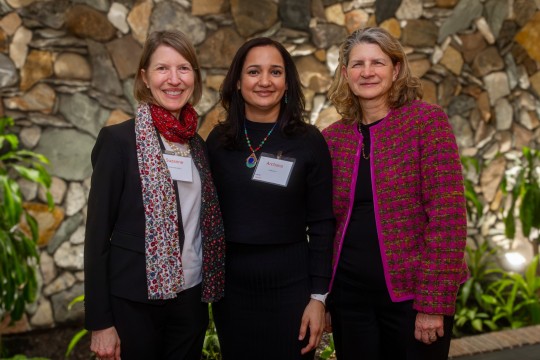
Saunders Faculty and Staff Go Above and Beyond
Saunders College of Business recognizes the accomplishments of its outstanding employees.
-
June 30, 2026

2025-26 Saunders Faculty and Staff Go Above and Beyond
Saunders College of Business recognizes the accomplishments of its outstanding employees.
-
July 1, 2024

2023-24 Saunders Faculty and Staff Go Above and Beyond
Saunders College of Business recognizes the accomplishments of its outstanding employees throughout the 2023-24 academic year.
Featured Work

Research Insights: When silence is not golden
Kristin Bain
How incivility silences women