Get to work - Applied Learning

Set Yourself Apart

What’s different about studying business at RIT? It’s the opportunity to co-op and intern with top companies in every single business sector. You’ll earn more than a degree. You’ll gain real-world experience from full-time, paid cooperative education and internships.

Stand out from your competitors with career experience before you graduate.

100%

Participation

All business majors participate in co-op

95%

Outcomes Rate

Business students employed, in grad school, or pursuing military service/volunteering within six months of graduation

$17.18

Median Average Hourly Salary

Across All Business Co-ops

Jump to Section

Cooperative Education

An integral experience for all Saunders College students is the opportunity for real-world work experience before leaving the classroom. Cooperative education, or co-op, provides the opportunity to gain meaningful work experience before you graduate, helps you further define your career path, and allows you to fully realize the value of what you are learning in the classroom. Work with your Academic Advisor and Career Services Advisors to plan a time and scout potential co-op employers. View co-op spotlights to see the great companies, positions and locations Saunders students work.

Learn more about one of the oldest and largest cooperative education programs in the U.S

Co-op Spotlights

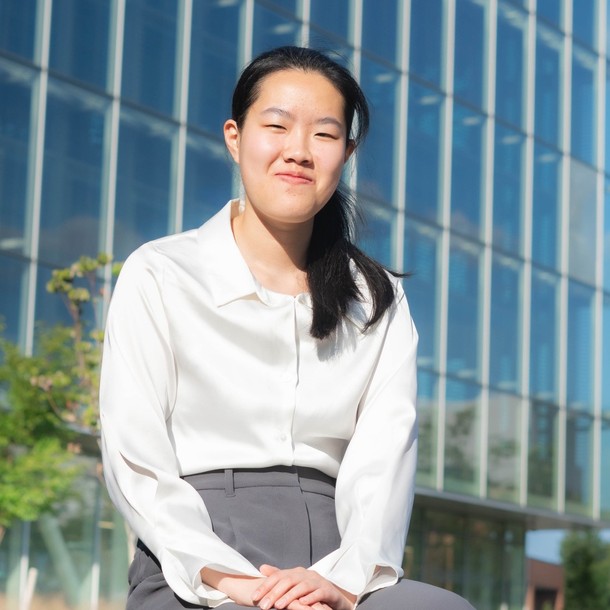
Ericka Chen
Major: Accounting and Management Information Systems
Co-op: KPMG US

"Other than my degree, I graduated with leadership experience, close friendships, and a network of professors, alumni, and peers who genuinely wanted to see me succeed. Those experiences taught me just as much as my classes did."

Karalin Jenitha Jayakumar
Major: Masters of Business Administration
Co-op: Aerosplit

"Saunders has given me the confidence to tackle ambiguity. The biggest advantage has been learning how to take an idea, challenge it, refine it, and shape it into something that is both innovative and practical."

Halle Wagner
Major: Supply Chain Management
Co-op: Gulfstream Aerospace

"The most distinctive advantage of my Saunders experience is the school's size and the favorable student-to-faculty ratio that allowed me to maximize my education. The environment at Saunders feels personalized, so I wasn't just another face in a lecture hall."

Undergraduate & Graduate Research

RIT is one of the top universities in the nation working at the intersection of technology, the arts, and design with close ties to industry and alumni. By collaborating across all nine RIT colleges students have a wide range of research opportunities to pursue.

Both undergraduate and graduate students are frequently included in academic research initiatives. Saunders students have opportunities to work with faculty in advancing their research initiatives. In addition to faculty research, RIT is home to many dynamic research centers that allow students to explore additional research interests.

Undergraduate Research

Saunders opens research to undergraduate students. Get a step ahead conducting research assignments that students at other universities often don’t do until graduate school. By providing undergraduates the opportunity to do genuine research work, students learn hands-on skills that become the foundation of scientific research.

Graduate Research

Make an impact as the world needs collaborative thinkers who seek pressing problems and propose innovative, game-changing solutions. RIT’s researchers explore galaxies and help set the pace for a future in photonics. They are the creativity behind discoveries to sustain the planet; they provide medical technologies designed to help individuals overcome obstacles. They are solving some of the current challenges in cybersecurity and imaging to protect people and organizations.

Faculty

RIT combines a rich history of applied learning with a commitment to research excellence. Faculty combine industry experience and academic knowledge to augment theoretical training. By combining theory and practice, courses are designed for students to learn from real-world experiences. Teaching methods include case studies, seminars, simulations, and independent work. Faculty choose the method most appropriate to the material and their individual styles. 

Visit our Research Page for more information

Resume Building Experiences

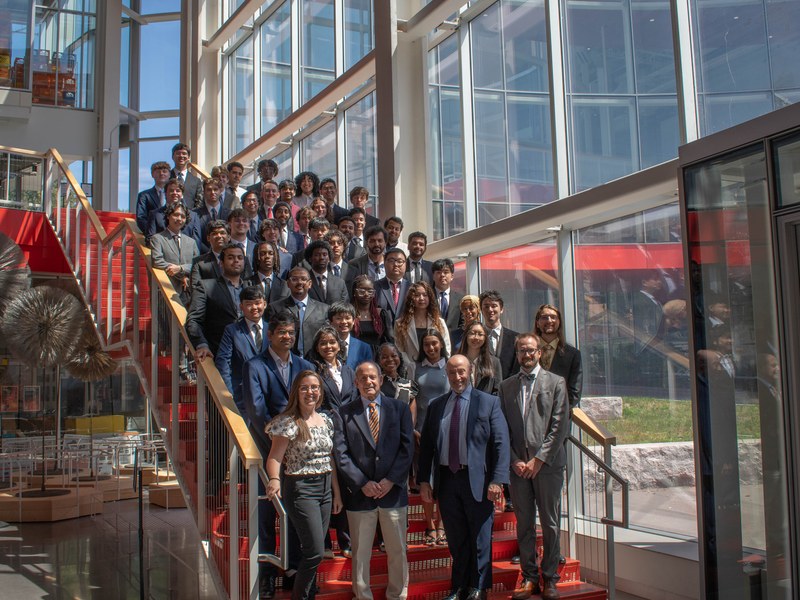
large group of people in business attire standing on staircase

Student competitions

Saunders students have many competitions to participate in. Through Saunders or via affiliated centers like the Albert J. Simone Center for Innovation & Entrepreneurship, programs and competitions put students in touch with real venture capital professionals. They offer investment opportunities and expertise through pitch sessions, mentorships, and judging at several competitions conducted throughout the year. 

Saunders Students participate in many competitions centered around various fields with the opportunity to win cash and prizes while practicing their class-learned skills in an intensive setting.

 Recent examples include:
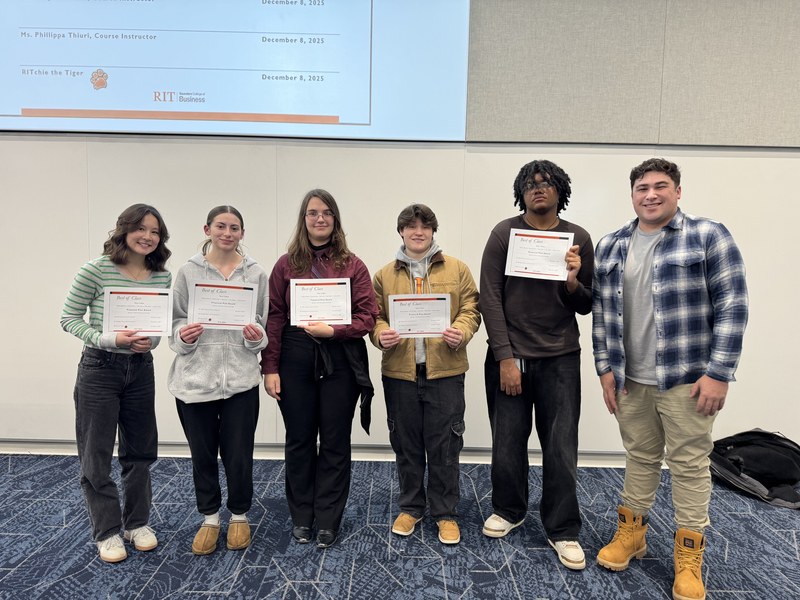
students with certificates

Biz 1+2

All freshman and incoming transfer students begin The Freshman Experience: Biz 1+2 their first two semesters. As a cohort program, business students get to know each other right from the start in an immersive program. This is distinctive as often students in other business schools pursue general education electives at the beginning and may not even take their first business class until their second or third year. Furthermore, in developing a business idea from concept to commercialization, Biz 1+2 students gain exposure to all business disciplines within their first two semesters, giving them the experience needed to find and ensure the right fit for their ultimate business majors and minors.

Visit The Freshman Experience: Biz 1+2 Page for more information

Capstone projects

Graduate Capstone

Companies submitting capstone projects tap the resources of a team of Saunders graduate students and faculty expertise — valuable free resources for the client, and real-world experience for students. Over the course of a semester, students work in teams with faculty oversight to address challenges and identify opportunities for a client organization, quickly getting up to speed on a new content area while sharpening project management, teamwork, and data analysis skills.

Teams define the problem or opportunity, determine the techniques needed to address it, and deliver a professionally written report and client presentation covering fact-based analysis, recommendations, and implementation strategies. Clients provide a short written assessment of the team's work, which factors into the students' final grade.

Students often present their capstone work at Imagine RIT, in front of community members and other interested parties.

EMBA Capstone

Working in teams, Saunders Executive MBA students address specific business problems or assess potential opportunities for client companies. Projects are selected to meet specific learning objectives and provide a rigorous learning experience for students and value added outcomes for client companies. Projects are sourced from a broad range of company types—from multinationals to smaller not-for-profits. Unlike other graduate capstones which last for one semester, EMBA capstones are completed over five to six months.

For more information, review the Executive MBA Capstone page and check out an overview of the EMBA capstone process and impact on our blog.

Past Graduate Capstone Projects

Capstone team members: Omar Rahmaan, Maria DeFilippo, Yordalis Corporan, Andrew Tobin

Kodak Alaris is an independent global technology company focused on exposing the power of images and information for businesses and consumers. This group of RIT seniors explored possibilities to break into the 3D printing market with Kodak Alaris. Although the group’s core competency was photo printing and imaging, they learned valuable skills first-hand for the workplace, such as schedule coordination, time management, and how to communicate with a global client across time zones.

“I plan on going into management for my undergrad so I can subsequently go into team management and consultancy for a career. I have learned that teamwork is vital. Some things you can’t do alone, but you can with the support of a good team.” - Andrew Tobin    

Capstone team members: Patrick Reynolds, Ray Zayas, Llesy Alcantara, Silvia Carbello, Susan Hansen

Arc of Monroe is a local organization that provides a variety of programs and services to those with intellectual and/or developmental disabilities and their families. The Arc works to enhance the quality of life and self-esteem of people in their programs by providing meaningful social development, supported employment, residential community living, and enrichment opportunities.

This group of student consultants worked for Arc of Monroe on an abandoned project within the organization. Their main objective was to create a new business model to revive the program. They did this by breaking down and assessing each aspect of the Arc’s current business model and creating an updated business model template that allows the program to be conducted consistently and successfully.

Capstone team members: Sarah Baris, Nikhil Srivastava, Michael Simeone, Meagan Kidder, Evan Zachary

BioWorks Inc. is a bio-based company focused on biological manufacturing in New York. The company creates environmentally responsible solutions for controlling insects and plant diseases. The main objective of this group of student consultants was to identify competitors for BioWorks Inc. and to update the road map for a new market.

“I picked this project with the intention of developing the economic and financial aspect of sustainability. Programs often fail to market this aspect and I feel like this project has given me the opportunity to explore that.” - Evan Zachary

Capstone team members: Jeff Kosakowski, Ty Clauss, Dakota Clay, Stella Ravariere, Taurance Robnett

The Black Box group was tasked with a classified project for RIT’s College of Liberal Arts, with the main objective of improving efficiency. The College of Liberal Arts at RIT offers a unique, technology-infused approach to the traditional Liberal Arts education while emphasizing global education, student-centered research, and social justice.

The Black Box team faced challenges with information and data gathering due to limited resources. However, the group was able to overcome their obstacles and ultimately gain great insights into the consulting side of business.

“Currently, we are able to tackle this by using available resources like ProQuest as much as possible, as well as asking and consulting experts on and off campus.” - Dakota Clay

Capstone team members: Meghana Reddy Vennapusala and Chaitanya Kshirsagar

Haiti, like many other third world countries, lacks a reliable means of disposing human waste. This leads to contamination of water supplies and the spread of disease. In Haiti, only one in five families have any kind of toilet. Studies indicate that investments in sanitation can deliver a financial return of 700% by improving the health and environmental standards of the area.

An arborloo is a moveable pit latrine that composts human feces into organic fertilizer to provide nutrients for a fruit-bearing tree. It is relatively cheap and easy to install in the earth, allowing for a safe and dignified place to defecate. This should help halt the spread of pathogens present in human feces while providing nutrients for its tree. This device is portable and light enough to be transferred between multiple pits. 

A team of RIT students from the Kate Gleason College of Engineering, has designed a product that is modular, easily assemblable, and can be fabricated using local Haitian materials. Thus, the objective of this project is to develop an optimized supply chain and manufacturing operation suitable for the resources available in Haiti.

“As business students, we are working in something that is completely different from what we were expecting. This makes it different but also a good learning experience for us."
Chaitanya Kshirsagar
 

Capstone team members: Karla Roedan, Hugo Nuñez and Aman Jot Kaur

3D printing is a technology that has begun a revolution in the way we create objects. Manufacturing companies have taken advantage of 3D printing for rapid prototyping and product development. 

The objective of the project was to develop a market opportunity analysis to understand the future use of 3D printing. They also sought to  find out whether it would be profitable for companies that manufacture simple parts to switch from traditional manufacturing techniques to 3D printing.

The company that this group is working for is confidential, but we can tell you that it is an American technology company that concentrates on imaging products. The team worked to collect secondary research on 3D printing and, with help from Professor Les Moore, set forth a plan of action.

"It is a valuable experience. Coming from a design background, I did not have any experience with the business field, so this Capstone is giving me a chance to explore opportunities and learn new things before entering into the corporate world." -Aman Jot Kaur

Capstone team members: Jelisse Rodriguez, Diana Rodriguez and Joshua Schussler

Motorized pediatric standers, a product developed by RIT students from the Kate Gleason College of Engineering, provide upright mobility opportunities for young people with certain types of disabilities. This device allows the user to move and interact in a way that is more natural than a standard wheelchair, improving quality of life while also allowing the user’s legs to support weight.

The main objective of the Capstone project was to develop a plan for commercialization of this new product.To accomplish this, the team met with members of CP Rochester and researched information about the market, competitors, and the target to which they would focus all their strategies.

“I really like this because it is a real world application, in which we want to succeed. It’s something that can be applied immediately in our industry." - Joshua Schussler

This Capstone team was featured among a larger, campus-wide interdisciplinary team with students from engineering and design majors. Together, the full team presented their concepts at Imagine RIT 2016 in Dr. Destler's Access and Inclusion Technology Challenge. The challenge featured projects dedicated to the research and development of state-of-the-art technologies that improve access and promote inclusion for people with disabilities; specifically, this team made a device that made it easier for physically disabled people to travel and shop. 

This team's Motorized Pediatric Stander took first prize! Their proposal included a kit and accompanying app that was developed by the 13-member team of industrial design, business, and engineering students. The device allows children with cerebral palsy to explore their environments and learn to move in a standing position.

Capstone team members: Aleyca Y. De Leon Roman, Julissa M. Pozo Nunez, Asim Wankhade, Vineeth Ramajayam

Markin Tubing, a tube pipe manufacturing company in Rochester, NY, is one of the leading suppliers of small-diameter steel tubing worldwide. Markin’s success today is due to several decades of partnership and collaboration with their customers. 

This group of RIT seniors were faced with the problem of generating new revenue streams for Markin Tubing, which they projected could be done by using scrap metals as raw materials. The group worked as a team and through researching and consulting with field experts and determined the most viable business solution for the company.

“As masters of supply chain management students, we believe this project would be of great experience for us, especially going into the industry after graduation. We are constantly learning new skills and different ways to solve a problem.”  - Aleyca Y. De Leon Roman
 

6 Reasons Why Co-ops and Internships Launch Business Careers


High Employment
There’s a reason 95% of RIT’s business students are employed or in grad school within six months of graduation. It’s all due to co-op. With co-op required in all of our business majors, you’ll gain valuable hands-on experience that builds a resume that employers will notice.


Career Experience–Early and Often
Business students have the flexibility to begin co-ops and internships in nearly any semester. You’ll begin to apply your business knowledge early in your course work, which broadens your insights and allows you to see connections between class work and real-world applications. 


Explore a Range of Business Careers
Explore different career paths, try different industries, and test out work environments. With co-op, you’ll not only gain hands-on experience, but you’ll learn more about the types of work you love and environments where you’ll thrive.


Earn a Full-Time Salary
Earn a full-time salary as you gain experience on co-op. This can be used to support your tuition and help offset college expenses, or it can set you up for financial independence after graduation.


Connections That Lead to Success
You’ll interact with business experts, explore work environments, broaden your hands-on knowledge, connect with professionals and alumni, and apply your skills in real world settings. You’ll amass solid, career-focused experience that positions you for outstanding employment opportunities.


Develop Your Soft-Skills
RIT will teach you the technical, theoretical, and analytical skills that make you a competitive job applicant. But the soft skills–leadership, decisiveness, conflict-resolution, etiquette awareness, professionalism–are the competencies that truly set you apart, and the skills that can only be learned on the job.

RIT’s Outstanding Hiring Partners

We have a growing list of 3,400 hiring partners at Saunders. Here’s a sample of some of the places around the world where you might find yourself employed for co-ops or internships.

Bank of America

Canter Fitzgerald

Colgate-Palmolive

Intuit

JP Morgan Chase & Co.

Mozilla

Nike, Inc.

KPMG, LLP

Oracle

PricewaterhouseCoopers, LLP

United Airlines

Walt Disney Company

Business Co-op/Internship Schedule

All business majors complete at least one co-op or internship. Co-ops and internships can begin as early as the summer after your second year of study. You’ll also be encouraged to complete more than one co-op or internship experience. Students may complete a co-op in any semester, however a majority do so in the summer following their second and/or third year. This sample schedule shows you how co-ops and internships are built into your education.

*Accounting students typically complete a co-op in spring term of their junior year.

Sample Schedule

One or Two Blocks


Fall

Spring

Summer

Year 1

Classes

Classes


Year 2

Classes

Classes

Co-op/Internship

Year 3

Classes

Classes

Co-op/Internship

Year 4

Classes

Classes