Department of Science, Technology, and Society
Department of
Science, Technology, and Society
- RIT/
- College of Liberal Arts/
- Academics/
- Schools and Departments/
- Department of Science, Technology, and Society
Contact
Chintana Phetphanh
Sr. Staff Specialist
585-475-5291
cpuwp@rit.edu
Overview
The Department of Science, Technology, and Society offers coursework and programs that bridge the humanities, social sciences, natural sciences, and engineering to provide a better understanding of the ways in which these fields are mutually interacting forces in our world. The department teaches how to analyze the socio-cultural, historical, political, economic, environmental, ethical, scientific, and/or technological factors that impact the ways in which we live, as well as how these forces impact one other. We are motivated by the belief that understanding science and technology, past and present, is both socially important and intellectually challenging.
Latest News
-
June 1, 2026
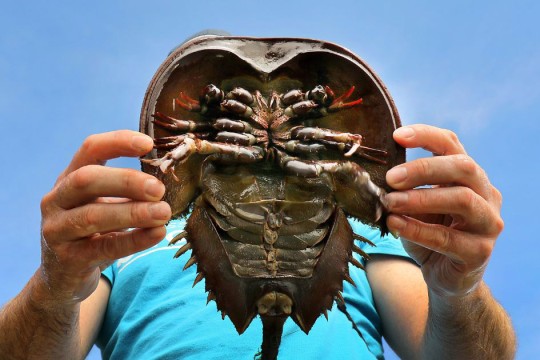
Why the U.S. Still Bleeds Horseshoe Crabs Despite a Lab-Made Alternative
Sentient features insights from Kristoffer Whitney, associate professor in the Department of Science, Technology, and Society, on the continued use of horseshoe crab blood in pharmaceutical safety testing and the challenges slowing adoption of synthetic alternatives in the United States.
-
May 6, 2026

College of Liberal Arts names Romiere Horace and Olivia Croteau as 2025-2026 Commencement Delegates
Recognizing two students whose academic excellence, leadership, research, and service reflect the breadth of impact possible through a liberal arts education.
-
April 30, 2026
History grad has her eyes set on law school
History major Julia Resciniti is headed to law school in the fall, bringing her one step closer to her career goal of becoming a disability rights lawyer and policy advocate.
Featured Work and Profiles
-
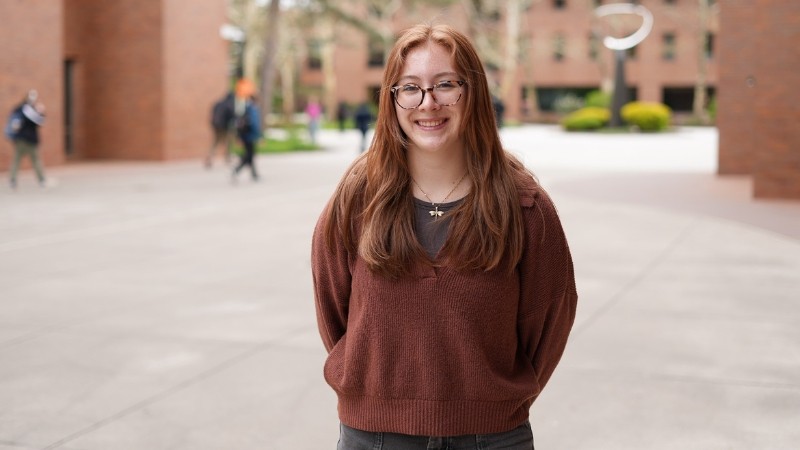
Zoe Gray finds confidence, connection, and purpose across disciplines at RIT
Zoe Gray is reflecting on a college experience defined by ambition, curiosity, and a willingness to embrace every opportunity that came her way.
Read More about Zoe Gray finds confidence, connection, and purpose across disciplines at RIT -

Recent grad headed to law school
Julia Resciniti ’26 Resciniti says the writing intensive courses and research opportunities available through the Department of Science, Technology, and Society helped her prepare for the academic workload she will...
Read More about Recent grad headed to law school -
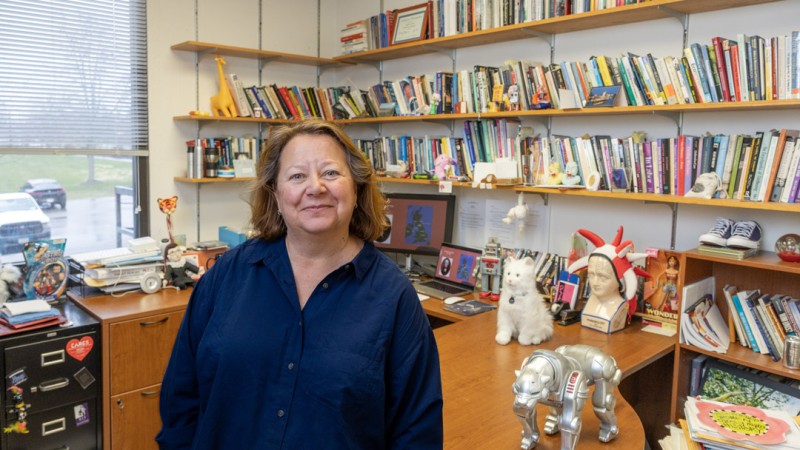
Faculty Spotlight: Deborah Blizzard, Professor, Science, Technology, and Society
Deborah Blizzard Professor Deborah Blizzard earned the Eisenhart Award for Outstanding Teaching for her compassionate, curiosity-driven approach that fosters an engaging and inclusive learning environment.
Read More about Faculty Spotlight: Deborah Blizzard, Professor, Science, Technology, and Society -
Faculty Researcher Spotlight: Kaitlin Stack Whitney, Ph.D., Associate Professor, Science, Technology, and Society
Kaitlin Stack Whitney Bridging the gap between biological practice and social critique, Kaitlyn Stack Whitney, Ph.D., investigates how historical human assumptions about gender and behavior have shaped scientific knowledge...
Read More about Faculty Researcher Spotlight: Kaitlin Stack Whitney, Ph.D., Associate Professor, Science, Technology, and Society -
RIT Grad to Lead Accessibility Engineering Innovations
Carter Sargent will join WW International as an accessibility engineer, focusing on creating inclusive digital experiences for users with disabilities, thanks to his specialized RIT training and co-op...
Read More about RIT Grad to Lead Accessibility Engineering Innovations
Minors and Immersions
The AI in society immersion introduces students to the study of how artificial intelligence and related algorithmic technologies are both reshaping, and being shaped by, society. Using real-world cases and insights from science and technology studies, the humanities, and social sciences, students will explore a wide range of AI applications in the context of historical, social, cultural, ethical, policy, and environmental perspectives in order to analyze AI’s ubiquitous, transformative, and disruptive integration into modern life.
Learn more about the AI in Society Immersion programThe AI in society minor enables students to explore how artificial intelligence and related algorithmic technologies are reshaping, and being shaped by, society. Using real-world cases and insights from science and technology studies, the humanities, and social sciences, students will explore a wide range of AI applications in the context of historical, social, cultural, ethical, policy, and environmental perspectives in order to analyze AI’s ubiquitous, transformative, and disruptive integration into modern life.
Learn more about the AI in Society Minor programThe environmental studies immersion is an examination of the basic environmental problems we face, how environmental resource depletion and energy issues are related, and what kind of environmental ethics and/or values we have today and have had in the past. The immersion also explores the economic, legislative, and regulatory framework within which most environmental decisions are made. Since most technological areas are associated with significant environmental implications, it is essential that students have an understanding of and a well-thought-out value orientation about such environmental consequences.
Learn more about the Environmental Studies Immersion programWith an emphasis on sustainability and holistic thinking, the environmental studies minor provides students with opportunities for the in-depth analysis of global and regional environmental issues, their causes, and their potential solutions. In particular, a required 500-level seminar serves as a capstone experience, helping students to integrate knowledge from several disciplinary perspectives, including socio-cultural, historical, political, economic, ethical, scientific, and/or technological factors. Having completed the minor, students will possess a high level of environmental literacy, an important component of many professional fields within the sciences, engineering, law, journalism, and public affairs.
Learn more about the Environmental Studies Minor programThe science, technology, and society immersion examines some of the major impacts of science and technology in the contemporary world. Special preference is given to American concerns. Students gain an overall appreciation of the social nature of science and technology as they have developed in the past, as they exist today, and as they may affect society in the future under various scenarios. Science and technology have become social systems in their own right and have made possible increasing freedom, a fantastic variety of choice, and, paradoxically, the growing interdependence of all segments of world society. A new level of public awareness and concern is crucial to understanding and dealing successfully with these consequences.
Learn more about the Science, Technology, and Society Immersion programThis minor integrates the studies of human society, science, and technology in their social content and context. The minor bridges the humanities and social sciences to provide better understanding of the ways in which science, technology, and society are mutually interacting forces in our world. Students learn how to analyze the social institutions, the built environment, and their role in creating them. This minor enhances a student’s ability to contribute to the development of science and technology in ways that are historically, culturally, and ethically informed.
Learn more about the Science, Technology, and Society Minor programThe Aberg Family Fellowship
The Aberg Family Fellowship is an annual award consisting of up to $5000 to cover expenses incurred between a faculty member in the Department of Science, Technology, and Society and a student mentee to allow for an enhanced learning experience.
The fund is established by the Aberg family to commemorate their daughter Ashley Aberg's experiences as an undergraduate completing a minor in Science, Technology, and Society.
Due to the diversity of learning experiences, awards may cover expenses of:
- One-time events, including but not limited to conference travel and participation;
- Long-term events, including but not limited to funding student research with a mentor.
Learning experiences are not limited to the RIT campus and may take place remotely. A final determination of award will be made by the Aberg Family Fellowship Review Committee and submitted to the department.
Students do not need to be enrolled in an STS program; however, faculty mentors' home department must be STS.
In the event that two or more students are working together with one mentor, the award may be split between the students at the discretion of the faculty member, the Review Committee, and the department.
Students initiate the application process by submitting to the mentor a one-page statement of reason that outlines how the learning experience fits into the student's program of study. The one-page document must clearly demonstrate the advantages to the student's education and/or professional goals.
A second budgetary page must demonstrate how both parties will utilize the amount requested.
Together, the student and mentor will submit the entire application to the Chair of the Aberg family Fellowship Review Committee.
Within 30 days of completing the learning experience the student must submit a one-page summary on the experience to the Chair of the Review Committee, who will keep an electronic copy on file and who will share it with all faculty in the Department of Science, Technology, and Society, and with the Aberg family.