DINAMIC Danube hosts first international study visit in Zagreb
The DINAMIC Danube project, a €2.4 million EU co-funded initiative, brings together 17 partners from 13 countries with a shared goal of revitalizing small family farms across the Danube region through education, innovation, and collaboration. Focused on sustainability, rural development, and empowering underserved groups, particularly women, the project addresses key challenges such as depopulation, aging farmers, and limited access to modern technologies.
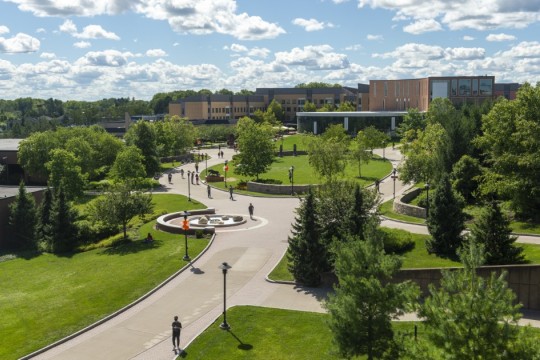
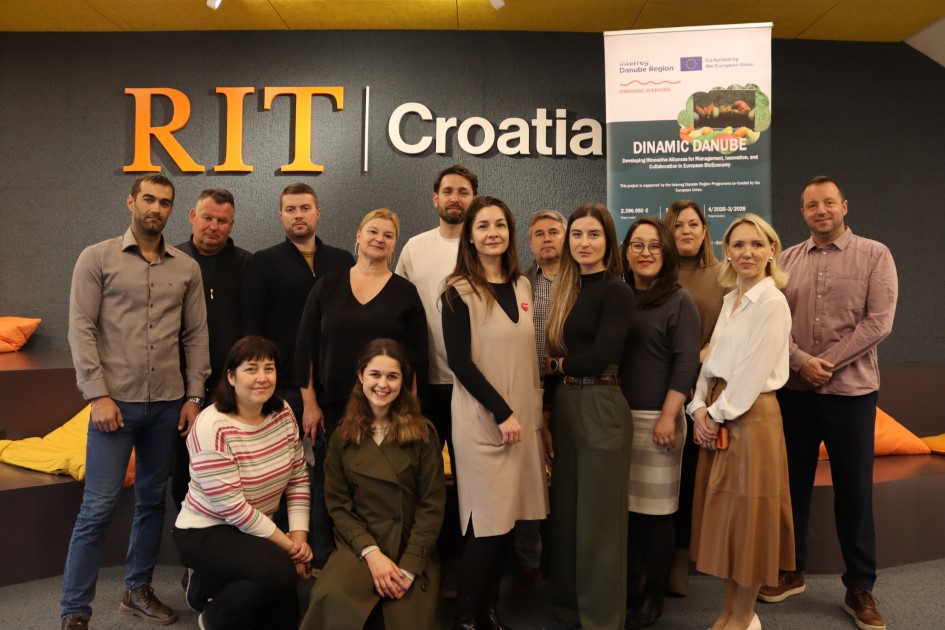
As part of these efforts to turn strategy into practice, from March 17 to 19, the project organized its first international study visit at our Zagreb campus. Organized in collaboration with project partners, the visit brought together experts and representatives from Croatia, Slovenia, Montenegro, and Romania, creating a dynamic environment for knowledge exchange and collaboration.
The three-day program combined academic insight with hands-on experience. The first and third days were held at the Zagreb campus, where participants took part in lectures and workshops covering topics such as smart agriculture, food distribution models, traceability, and innovative agri-tech solutions. As highlighted by Dr. Kristina Šorić, these moments of exchange are essential: “By learning from real-life cases and practical applications, participants can better understand how to implement modern solutions in their own contexts.”
Building on these discussions, the second day shifted the focus to the field, which took participants to the Zrno organic farm, the first certified organic farm in Croatia. Participants explored how sustainable agriculture functions as an integrated system, combining production, education, and hospitality, while also gaining insight into the tools and practices used in organic farming. Reflecting on the visit, Dr. Kristina Šorić emphasized the role of innovation: “Organic farming is increasingly connected with technology and creative business models, enabling producers to remain competitive while preserving environmental values.” She added that “success in this field lies in differentiation, continuous innovation, and the integration of multiple activities within a single agricultural system.” This combination of structured learning and real-life examples also encouraged active participation and exchange among attendees. Participants actively exchanged experiences and explored opportunities for future collaboration, reinforcing the project’s goal of building a strong, transnational network.
As project coordinator, Dr. Martin Žagar explains, what sets the DINAMIC Danube apart is its practical and connected approach: “We’re building a knowledge network, developing a real curriculum, and putting technology directly on farms.” He emphasizes that bridging the gap between theory and practice is essential, adding, “We don’t go directly from a university lecture to a farmer’s field. Instead, we work through local organizations that already understand farmers’ realities and needs.”
To support this approach long-term, the project is also developing a Danube-wide bioeconomy network, which serves as the foundation for collaboration and knowledge exchange across countries. As Dr. Žagar highlights, “that network is the backbone for everything else, it’s where knowledge circulates, where best practices are documented, and where stakeholders come together.”