
Dr. Peter Schmidt shares teaching insights at an international Bitcoin education conference in the US
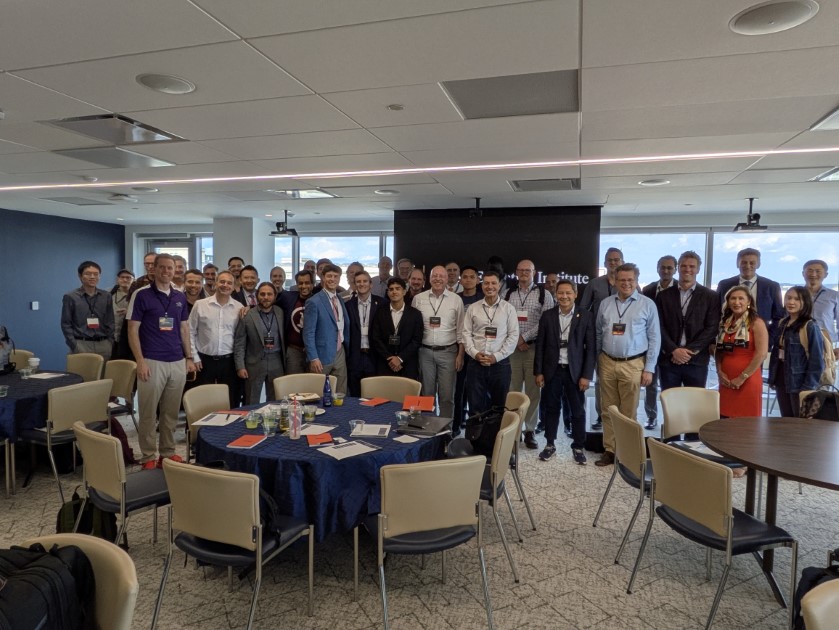
As Bitcoin continues to attract attention across financial markets, its role in education and research is also growing. Recently, Dr. Peter Schmidt participated as a speaker at the inaugural Bitcoin Education Institute (BEI) conference in Washington, D.C., sharing his experience teaching Bitcoin through the lens of money. The conference brought together experts from fields including economics, finance, business, mathematics, computer science, law, and engineering, highlighting the interdisciplinary nature of Bitcoin.
One of the most valuable takeaways was seeing how educators from different disciplines approach the same subject. “It was the width of perspectives on the topic,” Dr. Schmidt says, noting that some of these approaches will enrich his teaching and research interests in the future.
The conference ultimately reinforced his view that Bitcoin is a subject that reaches far beyond finance. Its connections to technology, economics, business, and society make it an increasingly relevant topic for students seeking to understand the systems that shape both their professional and everyday lives.
What role does money play in society?
This interdisciplinary approach was also reflected in Dr. Schmidt’s session at the conference, “Orange-Pilling the Curriculum: Lessons from Teaching Bitcoin as Money.” Drawing on nine iterations of his seminar, he shared an approach that begins not with Bitcoin itself, but with a more fundamental question: what is money, and what role does it play in society?
“The key ideas that I have developed are that students need to understand the purpose of money in social interaction,” he explains. From there, students examine today’s fiat monetary system before exploring how Bitcoin represents a fundamentally different monetary system. A key part of the seminar is helping students understand the technology behind this alternative. They explore Bitcoin as a system of monetary accounting that, in Dr. Schmidt’s words, “cannot be controlled by anyone, yet is available to everyone, without any middlemen.” For him, understanding these differences requires students to challenge assumptions about money that are deeply ingrained in everyday life.
This perspective also connects directly to the role of money in business and finance. As Dr. Schmidt explains, “Students study business and finance, and never once question the foundation of it all: measuring value in dollars or euros.” Studying Bitcoin, therefore, gives students an opportunity to examine not only new technology, but the monetary foundations of the systems they are preparing to work within.
Preparing students for a changing business environment
That understanding could become increasingly relevant as Bitcoin finds its way into different areas of business. Dr. Schmidt expects demand for Bitcoin-related knowledge and skills to grow. “Bitcoin will pop up more and more often everywhere in business life,” he says. “Handling Bitcoin in business use cases will require a deep, competent understanding of the underlying technology, because Bitcoin puts a strong emphasis on individual responsibility.” Beyond the professional perspective, Dr. Schmidt also believes that understanding money is important for everyone. “This should be taught at the high school level to everyone, not just to economics and business students,” he says.