The Princeton Review cites RIT as a top university for career outcomes
Game design programs ranked No. 4 nationally
Traci Westcott/RIT
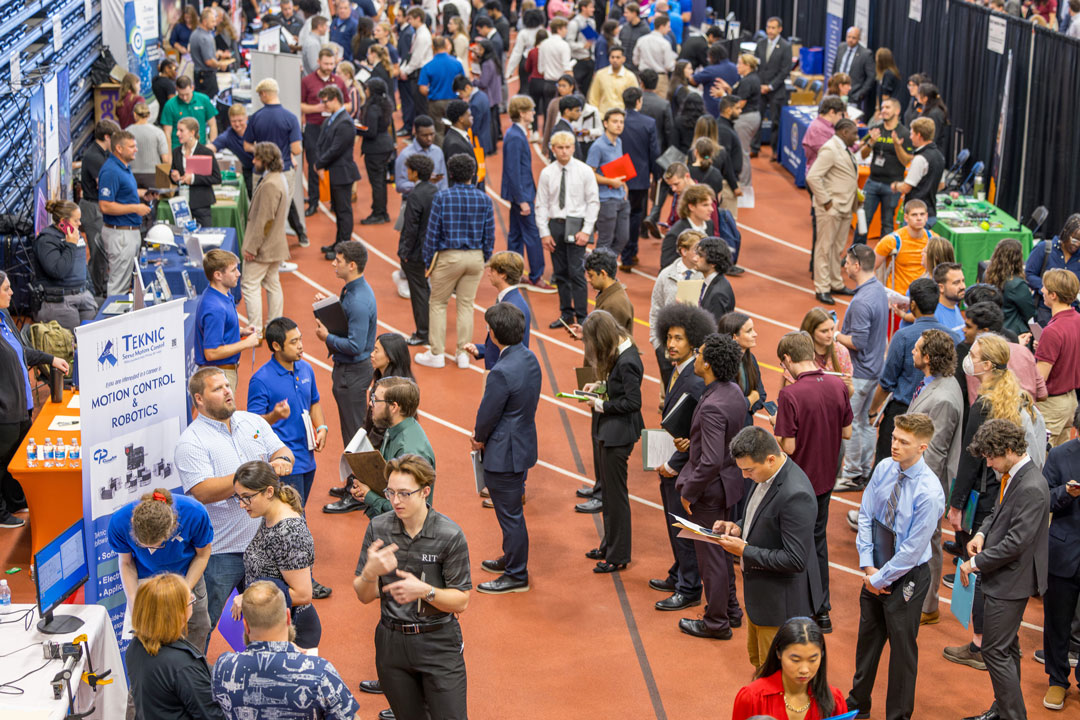
Hundreds of students attend RIT’s Fall University-Wide Career Fair, meeting with company representatives accepting resumes for co-op and after-graduation positions nationwide. The Princeton Review once again cites RIT as one of the top universities that create futures for students in its annual report.
Rochester Institute of Technology once again made The Princeton Review Best Colleges list and was ranked among the top 50 schools for “Colleges that Create Futures” in its Best 392 Colleges 2027 edition.
That designation is for the top colleges that empower students to discover practical applications for their talents and interests through experiences that complement classes and coursework.
Although schools are not individually ranked in most categories, RIT’s co-op program, which is one of the oldest and largest in the nation, along with students’ ability to assist in research, gives RIT students “tons of opportunities to gain the professional experience they need to launch great careers,” as noted in the guide.
RIT this year is also ranked No. 4 nationally for best undergraduate and graduate game design programs. In addition, RIT made the list for “Best Northeast Colleges,” a separate ranking by region and for colleges considered academically outstanding, and “Best Green Colleges” recognizing those that emphasize sustainability in practice.
The annual rankings are based on responses from 172,000 college students.
Gabrielle Plucknette-DeVito
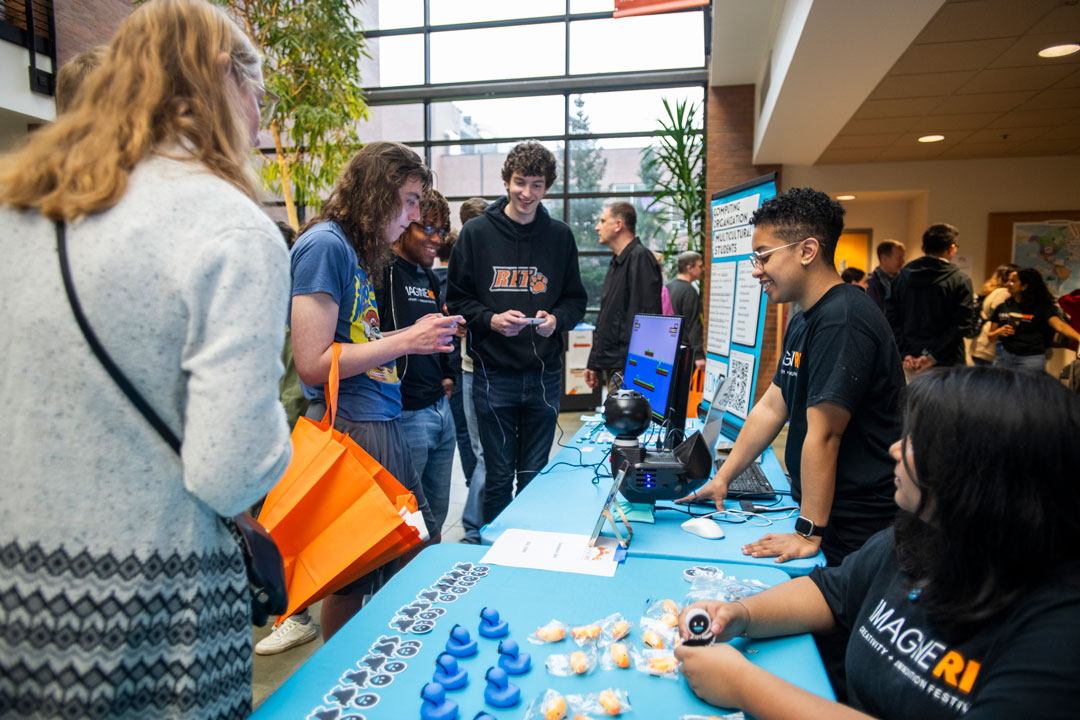
Gaming students from RIT’s Golisano College of Computing and Information Sciences show Quackbox 360 to visitors to last spring’s Imagine RIT: Creativity and Innovation Festival. The Princeton Review cites RIT’s game design and development program as one of the top in the nation.
Among the responses, students said RIT is laser-focused on “creating students that are more than prepared to enter the job force,” and faculty that keep lectures work-related and place emphasis on “how you would use what we are learning on the job site.”
One RIT mechanical engineering major said: “Professors work with the students and see them as equals. When I’m in the classroom, I feel like I’m learning and that I have a voice.”
RIT students also enjoyed the variety of options available to spend their free time on campus, including joining one of the more than 300 clubs. One student said: “RIT has a culture for everybody,” so if you are interested in a broad topic like computing, “there are a dozen different clubs/societies that you can join to learn more about whatever niche topic interests you.”
Students also cited RIT’s diverse community, especially with hundreds of students at the National Technical Institute for the Deaf, the first and largest technical college in the world for deaf and hard-of-hearing students.
The listing also quotes RIT admission leaders: “We shape the future and improve the world through creativity and innovation. As an engaged, intellectually curious, and socially conscious community, we leverage the power of technology, the arts, and design for the greater good.”
Founded in 1829, RIT welcomes more than 20,000 students to its main campus for studies in undergraduate, graduate, and Ph.D. programs, in addition to global campuses in Croatia, Dubai, and Kosovo. With more than 154,000 graduates worldwide, RIT is driving progress in industries and communities around the world.
A hallmark of an RIT education is cooperative education. Nationally ranked No. 5 by U.S. News and World Report, its co-op program is designed to provide students with career experience—early and often—in a variety of industries and environments. With co-ops and internships built into most programs, and available and encouraged in all majors, these opportunities are designed for students to deploy their skills and knowledge in authentic, real-world settings.
The Princeton Review is one of several national and international rankings received by RIT.
Since 1992, the guide highlights the best in undergraduate academics. It features only about 15 percent of all U.S. four-year colleges and universities and uses survey information and comments from students to assess rankings with a focus on categories important to prospective students and families. The range of comments and high marks were in categories from campus life and academic programs to admissions and financial aid.
