
Soon Hyeok Choi
Assistant Professor, Real Estate
Soon Hyeok Choi
Assistant Professor, Real Estate
Education
BA, Bowdoin College; MPS, MA, Ph.D., Cornell University
Bio
Professor Soon Hyeok Choi is an Assistant Professor of Real Estate Finance at the Saunders College of Business in RIT. He is a real estate and financial economist.
Professor Choi studies how contracts, prices, and networks interact in real estate and finance. He develops arbitrage-free methods to value contingency options such as retail co-tenancy and policy-triggered early termination options in federal leases and maps their ripple effects into mortgage-backed security bond prices, property valuation, and spillover effects.
Related work decomposes the mortgage–cash premium using the post-pandemic mortgage innovations. He investigates bubbles and overvaluation (equities, crypto, and housing), showing how competitive bidding generates a “winner’s curse” that depresses later returns and raises mortgage default risk, especially for vulnerable buyers.
A third line models how early ties in broker networks shape survival and performance. Across projects, he pairs structural theory with credibly identified empirics and LLM/neural-network tools to deliver policy-relevant insights.
Professor Choi holds a Ph.D., MA, MPS from Cornell University and AB from Bowdoin College
Select Scholarship
Publication
- “Applying the Local Martingale Theory of Bubbles to Cryptocurrencies” (with Robert A. Jarrow), International Journal of Theoretical and Applied Finance, 2022, Vol. 25 No. 03 2250013 1-25.
Working Papers
- “Pricing Government Contract Risk Premia: Evidence from the 2025 Federal Lease Terminations" (with Cameron LaPoint)
- “Contingency or Liquidity: Cash Transactions in Housing Markets” (with Patrick Smith), Working Paper.
- “The Importance of Networks for Career Success: Evidence from the Real Estate Industry” (with Patrick Smith, Ali Tosyali), Working Paper.
- “Pricing the Upside Potential to Downside Risk” (with Robert A. Jarrow, Daniel Lebret, Crocker H. Liu), Working Paper.
- Semifinalist for Best Paper Award, Financial Intermediation & Institutions, Financial Management Association 2023
- Best Practitioner Research Award (Non-residential), $2,500 sponsored by BOMA International, American Real Estate Society 2023 - “Is the Current Bull Market A Bubble? An Empirical Investigation” (with Robert A. Jarrow), Working Paper.
- “The Winner's Curse in Housing Markets” (with Adam Nowak, Patrick Smith, Alexei Tchistyi), Working Paper.
Work-in-Progress
- "Decline in Residential Mortgage Lending by National Banks: Who Are Affected?" (with Dongshin Kim)
- “Is Nifty Going Up Too Quickly? The Case of the Indian Stock Bubble” (with Robert A. Jarrow), Working Paper.
- “A Theory of Durable Asset Leasing” (with Crocker H. Liu), Working Paper.
- “Selling Houses as Minority Broker: Quantifying Diversity Discount”, Working Paper.
- Innovative Thinking Award - "Thinking Out of the Box", sponsored by Greenfield Advisors, American Real Estate Society 2024
Non-Peer Reviewed Column
- "Delayed negotiations in housing markets", LinkedIn, 2025.
- "The $10 lease that outlived Sears", LinkedIn, 2025.
Currently Teaching
In the News
-
October 6, 2026
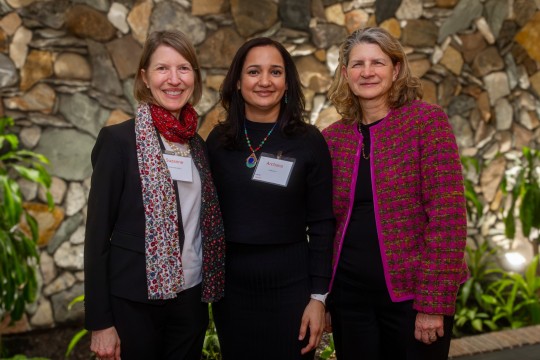
Saunders Faculty and Staff Go Above and Beyond
Saunders College of Business recognizes the accomplishments of its outstanding employees.
-
June 30, 2026

2025-26 Saunders Faculty and Staff Go Above and Beyond
Saunders College of Business recognizes the accomplishments of its outstanding employees.
-
October 23, 2025

The dangers of overbidding on a house
Soon Hyeok Choi, assistant professor in the Saunders College of Business, appeared on Connections with Evan Dawson to speak about rising home costs and the danger of bidding wars.
-
September 29, 2026
Choi recieves 2026 CoStar Data Award
-
April 1, 2026
Choi serves on GRCSBC SBS Connects Panel
-
March 23, 2026
Choi recieves Housing Research Manuscript Award