News
-
June 12, 2026
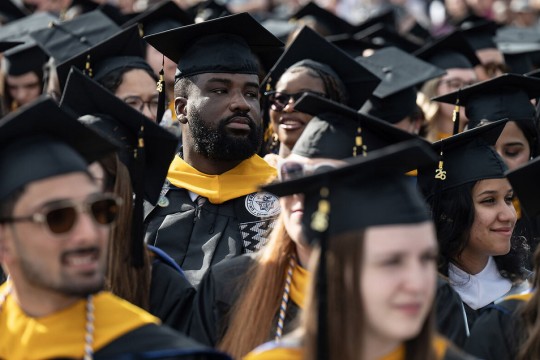
Some students jeered AI at college graduations. But it’s the elephant in the classroom.
The Christian Science Monitor examines how colleges are expanding artificial intelligence programs and features commentary from incoming student Remington Ochoa, who chose to pursue AI studies at RIT after seeing the technology as a tool that can augment human skills rather than replace them.
-
June 11, 2026

RIT researchers get design inspiration from rescuing neglected media
Like Indiana Jones, researchers at RIT’s Interaction, Media, and Learning Lab hope to save pieces of history before they disappear so that people can learn from the designs.
-
June 10, 2026

Students Remain Higher Ed’s Cybersecurity Weak Link
Inside Higher Ed speaks to Ben Woelk, governance, awareness, and training manager, on the importance of cybersecurity education for students, highlighting RIT’s efforts to prepare students for threats such as credential theft, job scams, and visa-related fraud.
-
June 9, 2026
Anthropic called for a pause in the development of the most advanced models and Trump established greater federal control over their launch
The Chilean newspaper, El Mercurio, interviewed Christopher Schwartz, research scientist in the Department of Cybersecurity, about Anthropic’s recent call to slow or halt AI development if serious risks emerge, alongside the Trump administration’s executive order highlighting AI-related national security concerns. (This content is in Spanish and will require a subscription to read.)
-
June 8, 2026
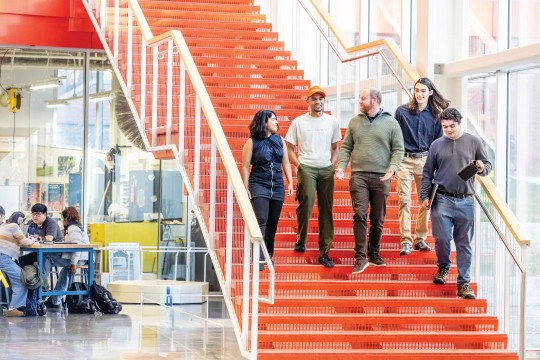
Got big ideas? RIT Gap Year fellows do
Hridiza Roy followed a summer internship at Disney Studios, with a fall position in the Gap Year Entrepreneurial Fellowship. The RIT program gave her a block of time and a stipend to advance her passion project—Painterly, an animation software tool.
-
June 1, 2026

Masked men, gun threats, and a Cash App: What Rochester should know about a video text extortion scam
WHEC-TV speaks to Jonathan Weissman, principal lecturer of cybersecurity, about a fear-based extortion scam involving threatening videos sent via text message and steps people can take to protect themselves from cybercriminals.
-
May 29, 2026
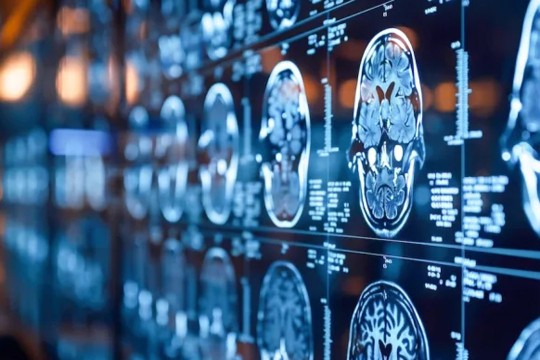
Radiology in the age of AI
Rochester Beacon examines how artificial intelligence is being integrated into radiology workflows at regional health systems, featuring insights from Ashique KhudaBukhsh, assistant professor in the Department of Software Engineering, on the risks, limitations, and reliability challenges of AI systems in health care.
-
May 26, 2026
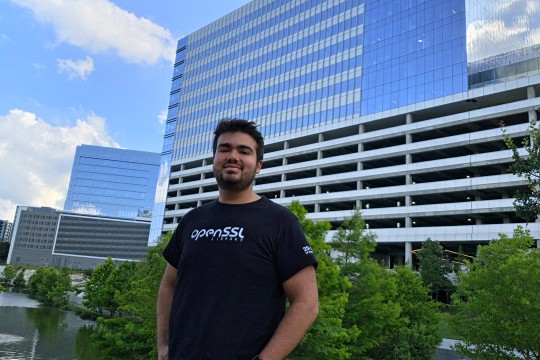
RIT students tackle OpenSSL issues to help keep the internet encrypted
RIT students are helping ensure that internet communications stay secure by using a free and open-source library and toolkit that provides encryption for computer networks. Many of the student’s submitted code changes have been merged into the critical library that powers about two-thirds of all websites and internet servers.
-
May 19, 2026
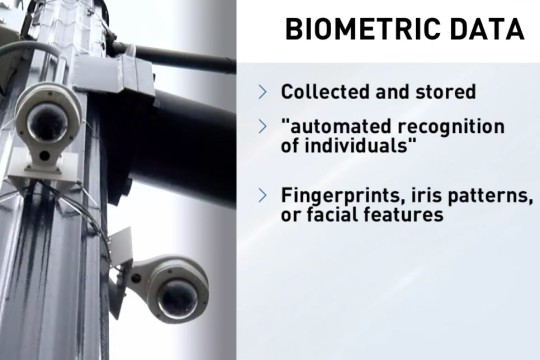
Syracuse lawmakers weigh limits on biometric surveillance amid privacy concerns
WSTM-TV speaks to Jonathan Weissman, principal lecturer of cybersecurity, about privacy and cybersecurity concerns tied to biometric surveillance technology as Syracuse lawmakers consider new restrictions on facial recognition and biometric data collection.
-
May 18, 2026

NSF CAREER Awards spotlight RIT research shaping the future of AI
RIT faculty members are tackling some of AI’s most pressing challenges with support from the National Science Foundation’s prestigious CAREER Award program, which recognizes early-career scholars who integrate cutting-edge research with student education.
-
May 18, 2026
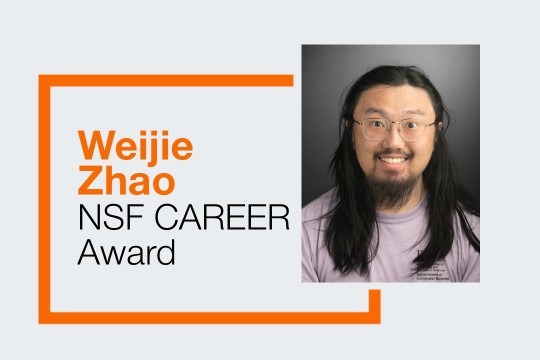
Professor earns NSF CAREER Award to defend AI models from attackers
RIT computer science professor Weijie Zhao has earned a National Science Foundation CAREER Award to defend machine learning from adversarial threats.
-
May 18, 2026

You can persuade AI models to accept falsehoods as truth, study shows
The Conversation features a column by Ashique KhudaBukhsh, assistant professor in the Department of Software Engineering, examining how conversational pressure can cause AI chatbots to accept and reinforce false information, revealing vulnerabilities in large language models.