Electrical Engineering Bachelor of Science Degree

With RIT’s electrical engineering BS, you’ll integrate science, tech, math, and hands-on skills into advanced electronics, robotics, and smart energy systems.
Overview for Electrical Engineering BS
Why Study RIT’s Electrical Engineering BS Degree
Gain Hands-On Experience: Four blocks of cooperative education offer opportunities to gain real-world experience through engineering co-ops.
Five Highly-Focused Options: Choose from five electrical engineering options: artificial intelligence, clean and renewable energy, computer engineering, robotics, or microelectronics.
Strong Career Paths: Companies hiring our students for co-ops and full-time employment include Advanced Micro Devices, Apple, Collins Aerospace, Corning Inc., IBM, Intel, Lockheed Martin, Texas Instruments, and more.
Accelerated Bachelor’s/Master’s Available: Earn both your bachelor’s and your master’s in less time and with a cost savings, giving you a competitive advantage in your field.
STEM-OPT Visa Eligible: The STEM Optional Practical Training (OPT) program allows full-time, on-campus international students on an F-1 student visa to stay and work in the U.S. for up to three years after graduation.
The electrical engineering undergraduate degree addresses the high-technology needs of business and industry through a rich academic major taught in state-of-the-art facilities that include topics such as:
- Analog and digital integrated circuits
- Digital signal processing
- Radiation and propagation
- Power electronics
- Circuit theory
- Computer-aided design
- Solid-state devices
- Microelectromechanical systems (MEMs)
- Robotics
RIT’s Electrical Engineering BS Curriculum
The electrical engineering major is a five-year program designed to prepare you for exciting careers within the electrical engineering and allied disciplines. In addition to a comprehensive curriculum, you will spend nearly a year on co-op, where you will gain invaluable hands-on experience in industry. Your co-ops will begin after your second year of study. .
- Years 1 and 2: Establish a foundation in mathematics and the physical sciences, which is essential to the study of electrical engineering. In other courses, you will learn about electrical engineering principles such as circuits and digital systems. Practicum courses introduce you to electrical engineering practice and computer-aided design (CAD) tools that are used throughout the program.
- Years 3 and 4: Focus on the subjects that form the core of electrical engineering. Courses in circuits, electronics, linear systems, electromagnetic fields, semiconductor devices, communication systems, control systems, and microelectromechanical systems are taught.
- Year 5: Specialize in an area of professional interest and complete a senior design project as part of the graduation requirements
Learn more about the Student Learning Outcomes and Program Educational Objectives for the Electrical Engineering BS.
Electrical Engineering BS Options
You may select one of the following options, which provide in-depth study in a focused area of electrical engineering:
- Artificial Intelligence: The artificial intelligence option teaches you how agents work while understanding the ethical implications and societal impacts of their designs.
- Clean and Renewable Energy: The clean and renewable energy option provides an in-depth education into the development of clean electrical energy and the increased efficiency of existing electrical generation and distribution systems.
- Computer Engineering: The computer engineering option educates you in areas such as C programming, object-oriented programming, and logic design.
Microelectronics: The microelectronics option combines specific courses focused on semiconductor processes and devices with a solid foundation in electronics, programming, and systems design, making it an excellent complement to RIT's bachelor's degree in electrical engineering. - Robotics: The robotics option provides you with the theoretical and practical skills required to design robots and robotic devices.
Hands-On Experience in Electrical Engineering
Multidisciplinary Senior Design: A highlight of the applied engineering experience is the senior project. You will work on a challenging project under the tutelage of an experienced faculty advisor. While experiencing the satisfaction of completing an interesting project and exploring the latest in technology, students develop engineering management and project organization skills, learn to communicate their ideas effectively within a multidisciplinary team, and present their project and ideas to a diverse audience of students, faculty, and industrial partners. Explore our students’ multidisciplinary design projects.
What’s The Difference Between Engineering and Engineering Technology?
It’s a question we’re asked all the time. While there are subtle differences in the course work between the two, choosing a major in engineering or engineering technology is more about identifying what you like to do and how you like to do it.
Furthering Your Education in Electrical Engineering
Today’s careers require advanced degrees grounded in real-world experience. RIT’s Combined Accelerated Bachelor’s/Master’s Degrees enable you to earn both a bachelor’s and a master’s degree in as little as five years of study, all while gaining the valuable hands-on experience that comes from co-ops, internships, research, study abroad, and more.
- Electrical Engineering BS/MS: In the combined accelerated electrical engineering BS/MS, you'll synthesize science, mathematics, technology, and application-oriented designs into world-class consumer products, timely microprocessors, state-of-the-art computers, advanced electronic components, robotics, smart energy systems, and much more. As part of your studies in the electrical engineering master's degree, you may also engage in innovative research to investigate and explore solutions to industrial and business challenges.
- Electrical Engineering BS/Microelectronic Engineering MS: This accelerated dual degree allows students to deepen their knowledge of semiconductor processes and devices and perform leading-edge research in several technology areas such as nanoelectronics, integrated photonics, power electronics, and photovoltaics. MS courses in microelectronic engineering are a perfect complement to courses in analog and digital IC design offered in the electrical engineering BS program, preparing students for jobs as design, process, device, and test engineers.
- Electrical Engineering BS/Science, Technology and Public Policy MS: The synergy between the electrical engineering BS and the science, technology, and public policy MS can help produce engineers with a keen awareness of their role in society and develop policy experts and researchers ready to tackle some of society's most complex problems. With an emphasis on critical, informed, and data-driven research, the dual degree can help students become socially informed technologists with a full appreciation for the societal context of their work. The BS/MS degree will produce policy experts and researchers with a solid undergraduate grounding within their area of electrical engineering.
-

Apply for Fall 2027
Early Decision I and Early Action deadlines are November 1.
-

Meet Us on Campus
Learn about academics, co-op and internships, financial aid, and more at one of our on-campus open houses.
October 12 | October 24 | November 14
Careers and Cooperative Education
Typical Job Titles
| Electrical Engineer | Robotics Engineer | AI Engineer |
| Controls Engineer | Research Engineer | Design Engineer |
| Manufacturing Engineer | Test Engineer | Project Engineer |
| Systems Engineer | Embedded Systems Engineer | IC Design Engineer |
Industries
Cooperative Education
What’s different about an RIT education? It’s the career experience you gain by completing cooperative education and internships with top companies in every single industry. You’ll earn more than a degree. You’ll gain real-world career experience that sets you apart. It’s exposure–early and often–to a variety of professional work environments, career paths, and industries.
Co-ops and internships take your knowledge and turn it into know-how. Your engineering co-ops will provide hands-on experience that enables you to apply your engineering knowledge in professional settings while you make valuable connections between classwork and real-world applications.
Students in the electrical engineering degree are required to complete four blocks (48 weeks) of cooperative education experience.
Featured Work and Profiles
-

Alumna Harshala Patil leads semiconductor development at Samsung
Alumna Harshala Patil ’15 (electrical and microelectronic engineering) is leading semiconductor development and manufacturing initiatives at Samsung Austin, one of the top three global computer chip...
Read More about Alumna Harshala Patil leads semiconductor development at Samsung -

Amazon Exec Empowers Next-Gen Cybersecurity Talent
Amazon executive and RIT alum Arthur Deane ’08 (electrical engineering) is helping cybersecurity students unlock opportunities in the rapidly growing tech sector.
Read More about Amazon Exec Empowers Next-Gen Cybersecurity Talent -
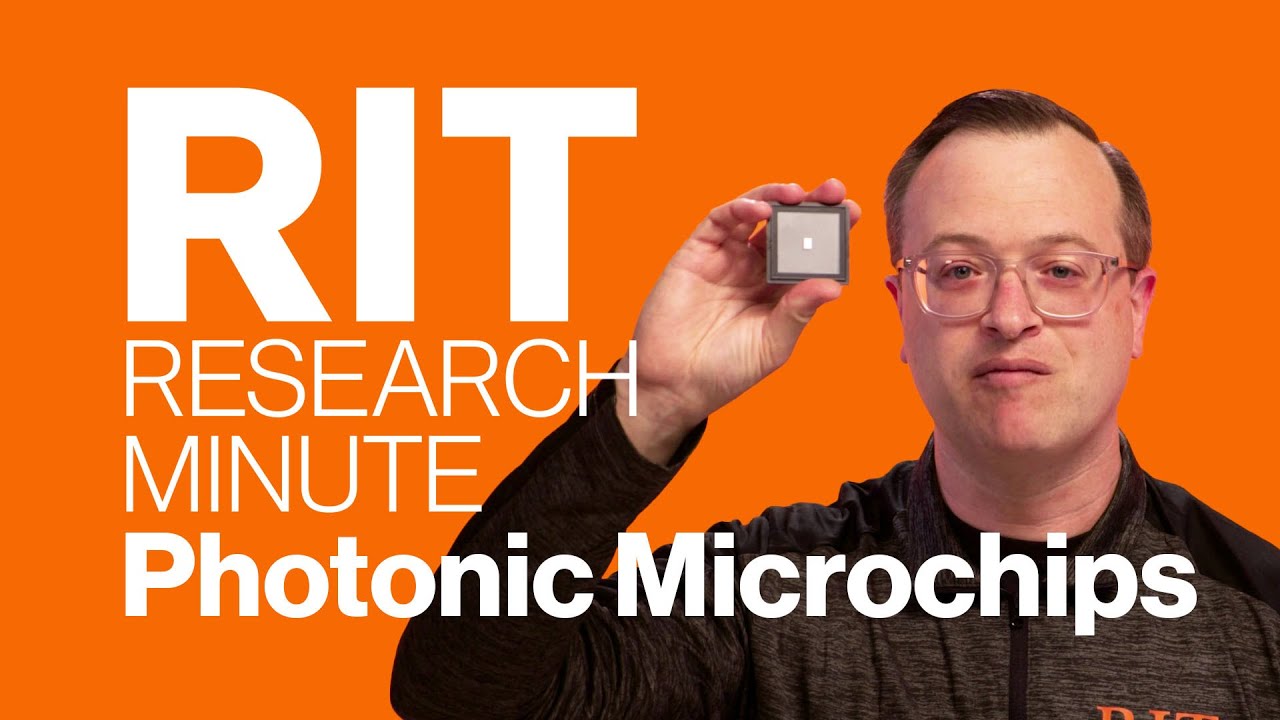
RIT Research Minute: Photonic Microchips
Stefan Preble Professor Stefan Preble and his research team are developing the next generation of photonic chips to improve fields like quantum computing and health care.
Read More about RIT Research Minute: Photonic Microchips -
RIT Research Minute: Photonic Microchips
Stefan Preble Professor Stefan Preble and his research team are developing the next generation of photonic chips to improve fields like quantum computing and health care.
Read More about RIT Research Minute: Photonic Microchips -

What's Being Made in the SHED
Making at RIT has hit a new level now that several makerspaces in the Student Hall for Exploration and Development (SHED) have opened. Learn what's being created.
Read More about What's Being Made in the SHED -
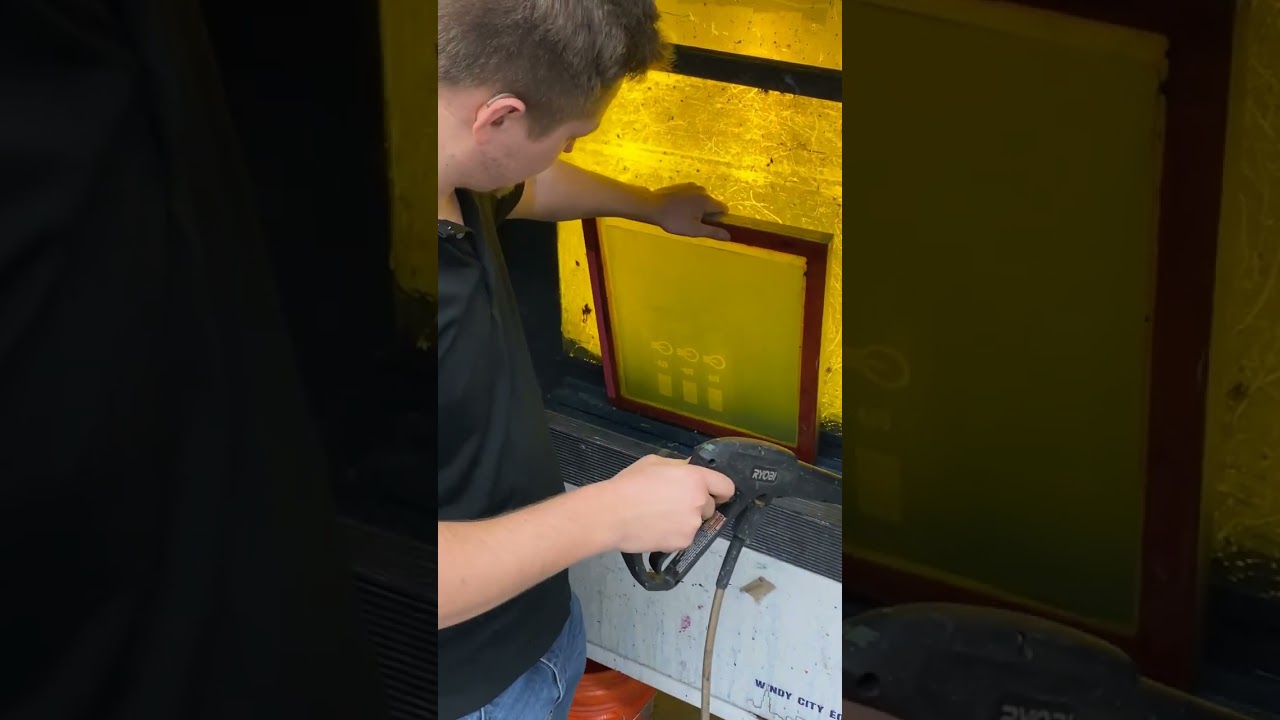
Student Merges Art and Engineering to Revolutionize Glucose Monitoring
Dylan Bennish ’24 BS, MS (electrical engineering) blends art with engineering to screen print textile antennas capable of tracking glucose levels with more cost-effective and less invasive methods.
Read More about Student Merges Art and Engineering to Revolutionize Glucose Monitoring
Curriculum for 2026-2027 for Electrical Engineering BS
Current Students: See Curriculum Requirements
Admissions and Financial Aid
This program is STEM-OPT Visa Eligible when studying on campus and full time.
First-Year Admission
First-year applicants are expected to demonstrate a strong academic background that includes:
- 4 years of English
- 3 years of social studies and/or history
- 4 years of math is required and must include algebra, geometry, algebra 2/trigonometry, and pre-calculus. Calculus is preferred.
- 2-3 years of science. Chemistry and physics are required.
Transfer Admission
Transfer applicants should meet these minimum degree-specific requirements:
- A minimum of pre-calculus is required. Calculus is preferred.
- Chemistry and physics is required.
Financial Aid and Scholarships
100% of all incoming first-year and transfer students receive aid.
RIT’s personalized and comprehensive financial aid program includes scholarships, grants, loans, and campus employment programs. When all these are put to work, your actual cost may be much lower than the published estimated cost of attendance.
Learn more about financial aid and scholarships


Research
The faculty and students in the electrical and microelectronic engineering department conduct research in a wide range of interdisciplinary fields including, but not limited to, digital and computer systems, signal processing, electromagnetics, power and energy systems, robotics, telecommunications, machine learning, analog and mixed-signal electronics, mechatronics, microelectromechanical systems, semiconductor devices, advanced integrated circuit manufacturing. Research is externally supported by an array of federal, state, and industry sponsors, such as the National Science Foundation, the U.S. Air Force, and the U.S. Navy. Learn more about electrical engineering research opportunities. Visit individual faculty profiles for a more complete list of research advisors in the program.

Related News
-
September 30, 2026
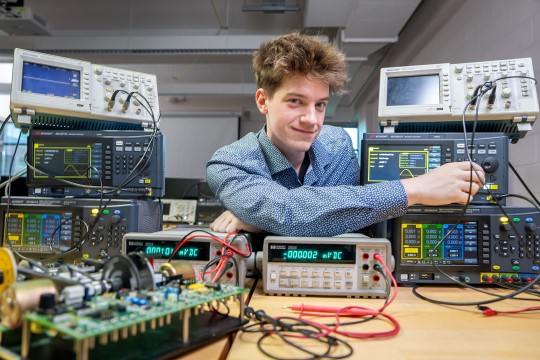
RIT student’s co-op, coursework lead to prestigious scholarship
RIT undergraduate electrical engineering student Aiden Morris has received a prestigious SMART Scholarship which he hopes will position him for a civilian career with the U.S. military.
-
September 29, 2026

RIT Baja Racing finishes season No. 2 in North America
RIT's Baja team captured first place at the Baja SAE Ohio competition, outperforming 83 collegiate teams from around the world. The win positions RIT Baja No. 2 in North America for the 2026 season.
-
September 23, 2026
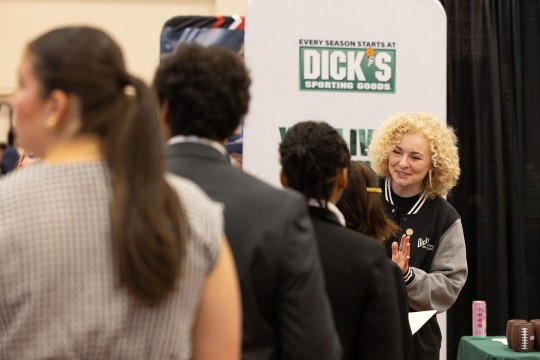
What RIT alumni recruiters want students to know
To help students stand out in a competitive job market, RIT alumni recruiters attending the University-Wide Career Fair on Sept. 23 shared advice on networking, showing initiative, and building confidence. The Career Fair featured more than 200 local, regional, and national companies.
Contact

Department of Electrical and Microelectronic Engineering