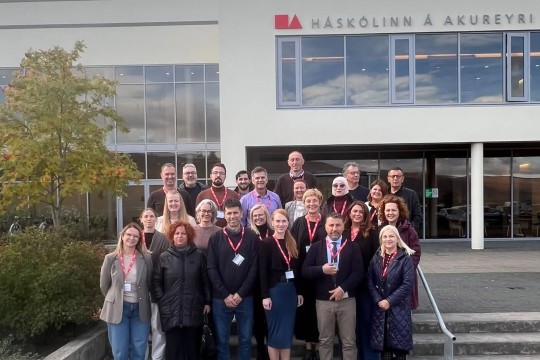
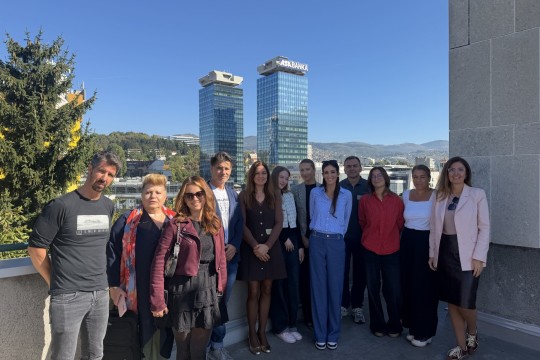
RIT Kosovo Faculty Development Center Hosts Spring 2026 Workshop Series on Artificial Intelligence in Higher Education
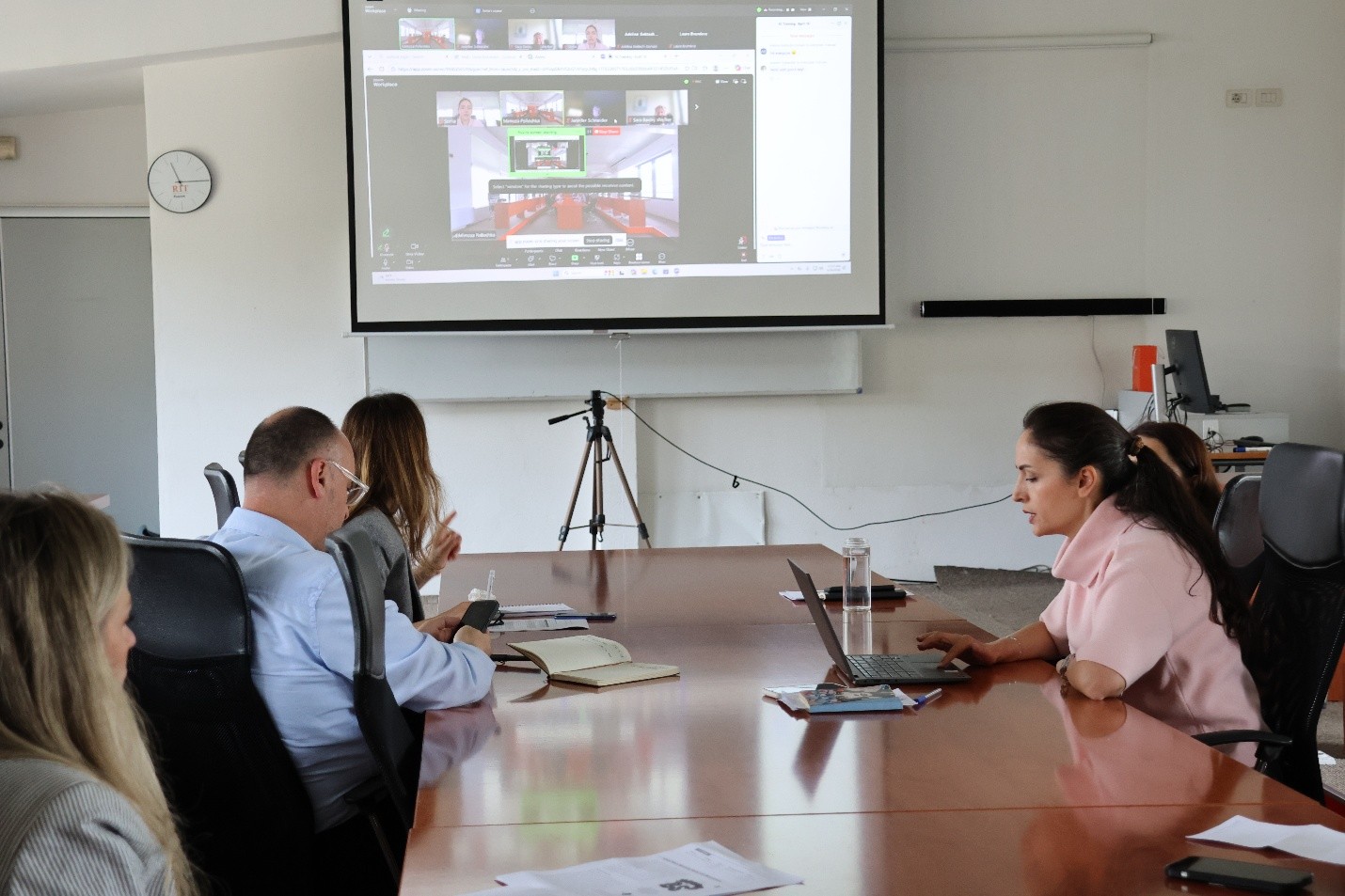
The Faculty Development Center at RIT Kosovo (A.U.K.) successfully organized a series of hybrid faculty development workshops during the Spring 2026 semester, bringing together faculty members from both the RIT Kosovo and AATT campuses to explore the evolving role of artificial intelligence in teaching, learning, and assessment.
The workshop series focused on helping educators critically examine the opportunities and challenges presented by AI in higher education while equipping them with practical tools and strategies to strengthen student engagement, academic integrity, and meaningful learning outcomes.
The first workshop, “When AI Scaffolds Fail – Lessons for Learning, Bias, and Policy Across Disciplines,” was conducted as a Community of Practice session led by faculty member Sara Baxley (Writing and Ethics). The session examined findings from an action research study conducted in a first-year Writing Seminar course, exploring how students interacted with instructor-designed AI prompts. Discussions highlighted how students often relied on AI as a shortcut rather than as a tool for deeper thinking, while also identifying more productive applications of AI in brainstorming, outlining, and prewriting activities. Faculty participants engaged with topics such as Socratic prompting, bias in AI-generated outputs, assignment design, academic integrity, and institutional policy considerations.
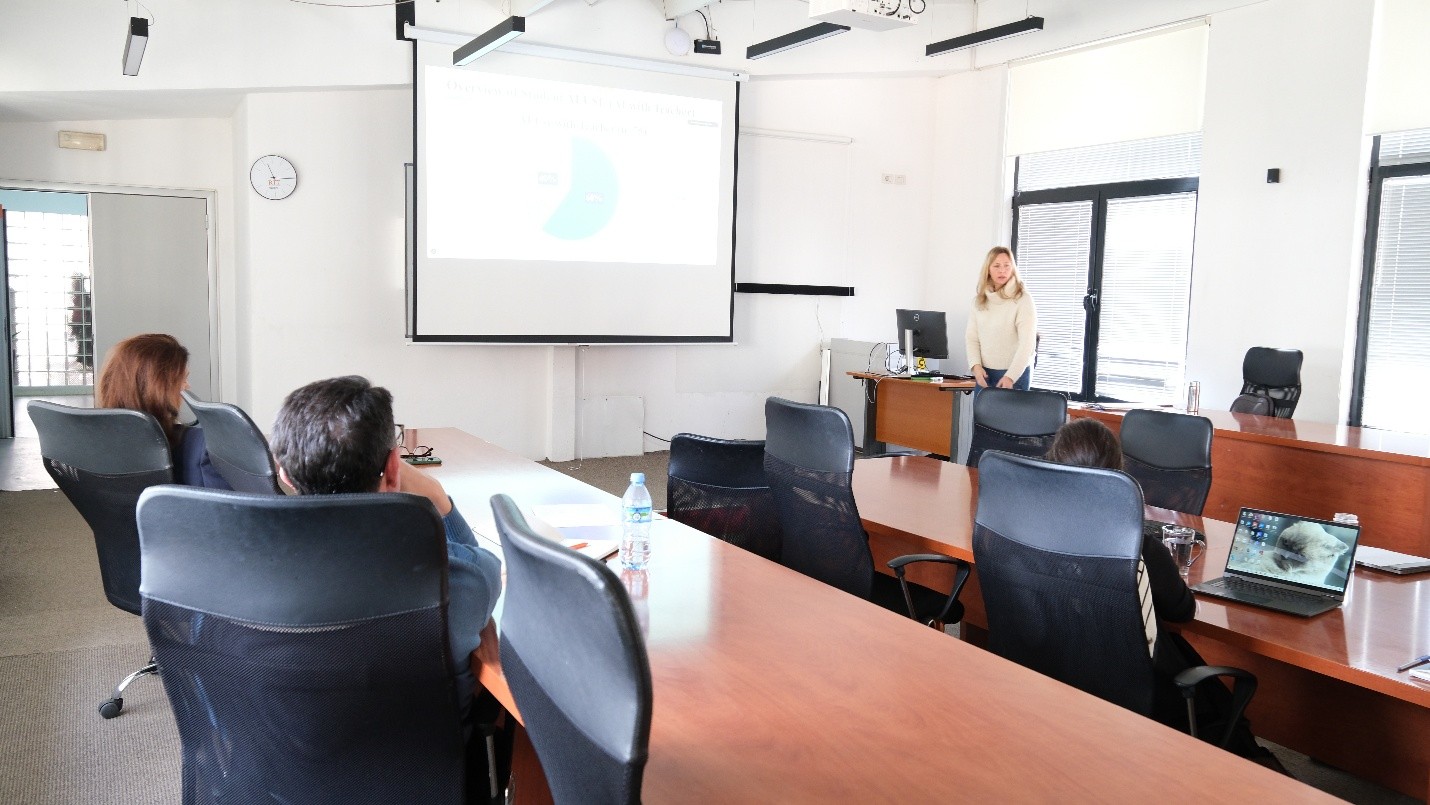
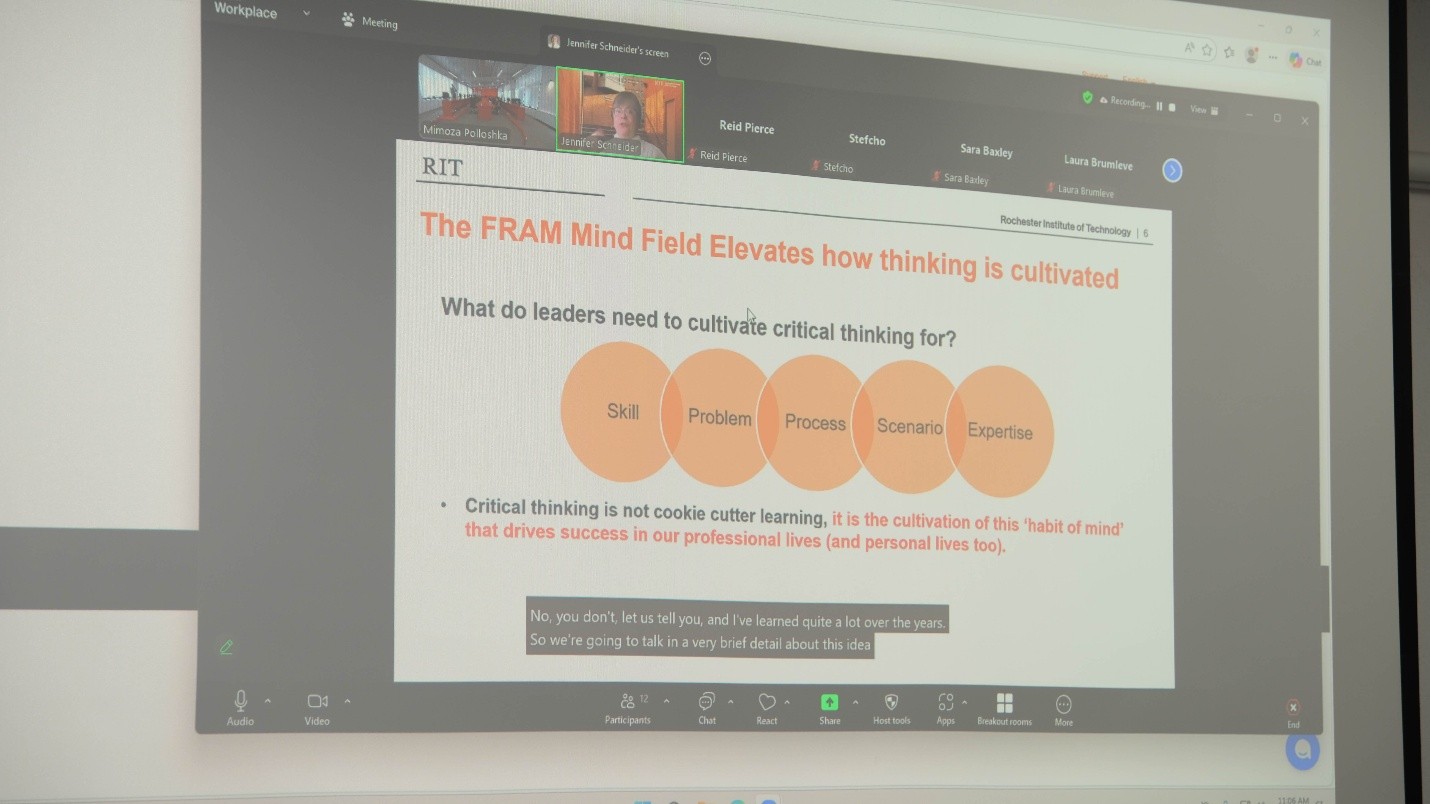
The second workshop, “The Value in the Mess – Making Progress in Assignment Design & Assessment in an AI World,” focused on practical strategies for designing assignments that surface student critical thinking in AI-rich learning environments. The session was led by RIT Fram Chair Jennifer Schneider in collaboration with RIT Kosovo faculty members Laura Brumleve (Technical Communications), Sonia Beikzadeh (Chemistry/Biology & Lab Applications), and Sara Baxley (Writing and Ethics). Faculty participants explored approaches such as flipped Bloom’s taxonomy, AI minis, and mapping techniques, while working through concrete examples for redesigning assignments that remain effective even when traditional instructional scaffolding is challenged by AI tools.
Building on the previous session, the third workshop, “Continuation – The Value in the Mess,” provided faculty with deeper engagement in assignment design and assessment practices. Participants examined real classroom examples, explored flexible rubrics for AI integration, and tested the ACT Socratic tutor agent. The session fostered collaborative dialogue and the exchange of teaching ideas and practical experiences, reinforcing a community-driven approach to navigating the impact of AI in higher education.
This workshop series reflects the Faculty Development Center’s continued commitment to supporting innovation in teaching and learning while maintaining academic rigor and integrity. By addressing AI-related challenges directly and constructively, the workshops encouraged faculty to view AI not as a replacement for human teaching, but as a powerful educational resource that can strengthen students’ learning capacity, improve efficiency, and better prepare graduates for the evolving demands of the future workforce.