INTRABUILD Bootcamp and Study Visit in Graz Foster Innovation and Collaboration
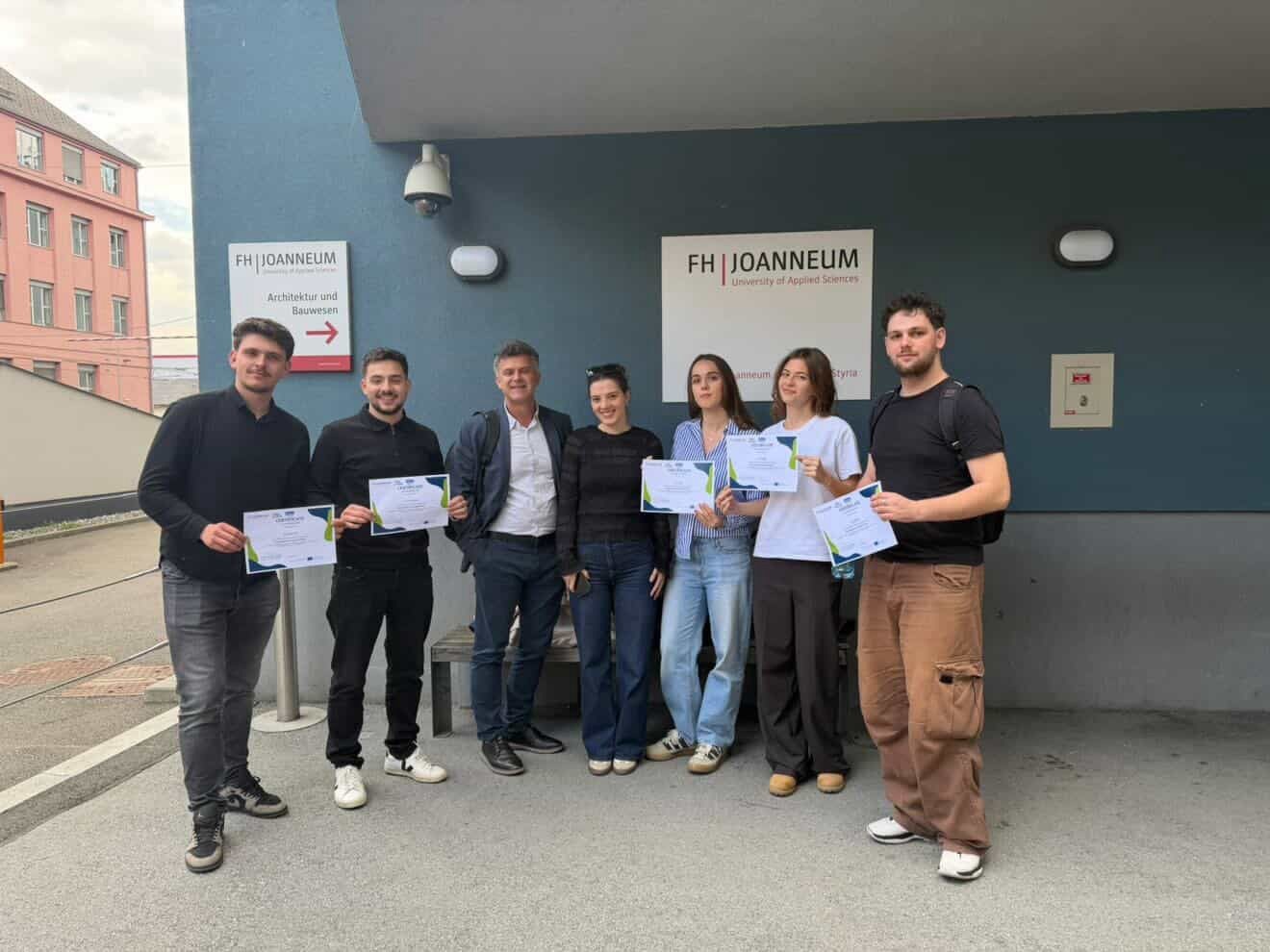
In April 2026, the INTRABUILD project brought together students, academic staff, and consortium partners in Graz for a dynamic week of learning, collaboration, and innovation. Hosted at FH JOANNEUM, the INTRABUILD Bootcamp was successfully integrated into the Green Business Transformation Spring School, taking place from 13–17 April 2026.
The event gathered around 80 students from diverse national and academic backgrounds, creating a vibrant and interdisciplinary environment. Throughout the week, participants engaged in intensive, hands-on learning focused on key topics shaping the future of sustainable business. These included green business transformation, risk assessment, carbon management, green logistics, and lean startup approaches within the circular economy framework.
Working in teams, students collaborated to develop innovative ideas and practical solutions, culminating in final project pitches presented at the end of the program. The bootcamp not only strengthened participants’ technical knowledge but also fostered creativity, teamwork, and entrepreneurial thinking.
As part of the program, consortium members also had the opportunity to expand their learning experience beyond the classroom through a study visit to Science Park Graz. Recognized as Austria’s largest technology park, Science Park Graz plays a vital role in supporting startups, researchers, and innovators in transforming ideas into impactful ventures. The visit offered valuable insights into how structured support systems, mentorship, and collaboration between academia and industry can drive innovation and entrepreneurship.
A highlight of the visit was the engaging discussion on the future of space activities. Participants exchanged perspectives on emerging opportunities, innovation pathways, and the importance of interdisciplinary collaboration in advancing this rapidly evolving field.
Overall, the activities in Graz reinforced the INTRABUILD project’s mission to equip students and partners with the knowledge, skills, and networks needed to contribute to a more sustainable and innovation-driven future.

Disclaimer: Co-funded by the European Union. Views and opinions expressed are however those of the author(s) only and do not necessarily reflect those of the European Union or European Education and Culture Executive Agency (EACEA). Neither the European Union nor the granting authority can be held responsible for them.