Criminal Justice Bachelor of Science Degree

A criminal justice bachelor’s degree that explores issues of law and justice as you evaluate the intended and unintended consequences of criminal justice policies and decision-making.
Overview for Criminal Justice BS
Why Study Criminal Justice at RIT?
Future-Focused Approach: A combination of theoretical perspectives with practical experience will provide you with the problem-solving skills necessary to address today’s most pressing social issues facing criminal justice.
Hands-On Experience: Get real-world career experience that sets you apart from the competition by completing Field Experience, a required internship practicum. You will also have the option to pursue additional co-ops, internships, and research in the field.
Career Readiness: Attain the skills necessary to advance into a wide range of careers in federal and local criminal justice agencies.
Teaching Partnership Program Available: 4+1 or 3+2 programs enable you to earn your bachelor’s degree at RIT and a master’s degree in education at one of our partner universities.
RIT’s Criminal Justice BS
Majoring in criminal justice provides you with a broad education that speaks to your interest in law and justice. You will be prepared for a wide range of careers in federal and local criminal justice agencies. The major also provides continuing education for professionals already employed in criminal justice positions and offers a strong academic foundation for graduate or law school. The criminal justice BS is unique in its broad core curriculum, the scope of professional course offerings, an intensive field experience where students blend knowledge gained in the classroom with a career-oriented internship, and opportunities for cooperative education.
Criminal Justice Curriculum
In the criminal justice bachelor's degree, you will develop your understanding of crime and the criminal justice system responses. You will explore contemporary public safety issues, especially those involving technology, and evaluate the intended and unintended consequences. This framework offers opportunities to consider policy responses and engage in hands-on research in local agencies. A focus on theory and social science provides you with the problem-solving skills necessary for addressing today’s most pressing social issues.
RIT's approach to the bachelor's degree in criminal justice combines theoretical perspectives with practical experience. The emphasis within the areas of crime, criminal behavior, social control mechanisms, administration, planning, and management is on problem-solving techniques based on the growing body of research in the field as well as students' own guided research.
Advising
Students are assigned a faculty advisor who assists in formulating career goals and planning a field of study to achieve professional aspirations. Through core courses, students are exposed to the widest possible range of perspectives from which to view crime and the nature of criminal justice administration, thus broadening their career options.
Center for Public Safety Initiatives
The Center for Public Safety Initiatives is housed in the criminal justice department and works with the Rochester Police Department and other community groups. Several students work at CPSI and gain valuable experience working with crime mapping, data gathering, and data analysis. Students work closely with faculty on various projects, including Operation IMPACT, Ceasefire and Project Safe Neighborhoods, and the Rochester Police Department. The CPSI supports the development, implementation, and evaluation of criminal justice and community-based anti-crime and anti-violence interventions.
RIT’s Pre-Law Program
Law schools welcome applications from students majoring in a wide range of academic programs. RIT’s pre-law program will help you navigate the admission process for law school, explore a range of legal careers, and guide you through course selection to ensure you build the skills and competencies required of competitive law school applicants. The program is open to students in all majors who are interested in pursuing a career in law.
Furthering Your Education in Criminal Justice
+1 MBA
Students who enroll in a qualifying undergraduate degree have the opportunity to add an MBA to their bachelor’s degree after their first year of study, depending on their program. Learn how the +1 MBA can accelerate your learning and position you for success.
3+3 Accelerated BS/JD Programs
RIT has partnered with Syracuse University’s College of Law and University at Buffalo School of Law to offer accelerated 3+3 BS/JD options for highly capable students. These programs provide a fast track to law school where you can earn a bachelor’s degree at RIT and a Juris Doctorate degree at Syracuse University or University at Buffalo in six years. Interested students may apply to the option directly, with successful applicants offered admission to RIT and conditional acceptance into either Syracuse University’s College of Law or University at Buffalo School of Law.
RIT's criminal justice degree is one of the approved majors for the 3+3 option.
Learn more about Accelerated Law 3+3 Programs.
RIT’s Teaching Partnership Programs
Whether your goal is to go into early childhood or elementary education, become a secondary education teacher with a content area specialty at the middle or high school level, or work in the higher education or counseling fields, RIT’s partnership programs with local universities provide a guided pathway to a career in teaching.
These 4+1 or 3+2 programs enable you to earn your bachelor’s degree at RIT and a master’s degree in education at one of our partner universities. As you progress, you’ll benefit from focused academic advising, career exploration opportunities, and resources for research, learning, and skill development.
RIT's criminal justice degree is eligible for RIT’s Teaching Partnership Programs.
Careers and Experiential Learning
Careers in Criminal Justice
Many graduates are engaged in law enforcement careers in agencies at all levels of government, including the Federal Bureau of Investigation, Secret Service, U.S. Marshals Service, Naval Intelligence Service, U.S. Customs and Border Patrol, Immigration and Naturalization Service, Centers for Disease Control, Department of the Interior, and the National Park Service, among others. The Rochester Police Department, Monroe County Sheriff's Department, and suburban departments throughout the greater Rochester area employ our graduates. A number have advanced in rank to positions of command, including several chiefs and deputy chiefs.
Other alumni who have earned a criminal justice BS work as correctional officers, counselors, probation officers, and parole officers; with many advancing to administrative positions. A significant number of alumni have used the program as a foundation for law school and have entered the legal profession as prosecutors, public defenders, and private practice lawyers. Many graduates serve in U.S. Attorneys General offices. Others serve the legal profession as investigators or paralegals.
Consistent with the liberal arts/social science nature of the major, some graduates have attained advanced degrees in related areas and entered teaching careers at the secondary and college levels. Others have become psychologists, social workers, drug and alcoholism counselors, youth service specialists, and victim assistance/rape crisis counselors. Many have completed advanced degrees in business, public policy, public administration, criminology, and criminal justice.
Typical Job Titles
| Federal Law Enforcement Agent | State/Local Police Officer | Youth Advocate |
| Grant Specialist | Paralegal | Probation/Parole Officer |
| Crime Investigator | Security and Risk Analyst | Dispute Resolution Coordinator |
| Information Security Engineer | Legal Intern for Immigration | Women and Youth Crisis Center worker |
| Corrections Officer |
Industries
Cooperative Education and Internships
What’s different about an RIT education? It’s the career experience you gain by completing cooperative education and internships with top companies in every single industry. You’ll earn more than a degree. You’ll gain real-world career experience that sets you apart. It’s exposure–early and often–to a variety of professional work environments, career paths, and industries.
Co-ops and internships take your knowledge and turn it into know-how. A liberal arts co-op provides hands-on experience that enables you to apply your knowledge in professional settings while you make valuable connections between course work and real-world applications.
Field Instruction
During your senior year, you have the opportunity to complete an internship at a number of agencies and organizations in the areas of law, law enforcement, institutional and non-institutional corrections, courts, juvenile advocacy and counseling programs, and security. For one semester, you may work 25-hours-a-week under an agency field supervisor and meet regularly with advisors and peers who are doing field placements in other agencies. Internships are individualized to fit a student's career objectives.
Featured Work and Profiles
-

Ava Douglas turns experience into purpose through criminal justice, research, and leadership
Ava Douglas graduates from Rochester Institute of Technology with a long list of accomplishments, a clear sense of direction, and a college experience shaped by saying yes to opportunity.
Read More about Ava Douglas turns experience into purpose through criminal justice, research, and leadership -

A Goal in Flight: How Jillian Antol Turned a Freshman Tradition into a Global Mission
At RIT’s convocation each fall, it’s tradition for new students to write hopes or goals on orange sheets of paper, fold them into paper airplanes, and launch them together at the ceremony. Symbolic...
Read More about A Goal in Flight: How Jillian Antol Turned a Freshman Tradition into a Global Mission -

From Psychology to the Law: Romiere Horace Forged a Path to Forensic Psychology
When talent, drive, and passion meet opportunity and support, the possibilities are limitless. Romiere Horace—the RIT College of Liberal Arts 2026 Graduate Program Commencement Delegate and soon-to-be...
Read More about From Psychology to the Law: Romiere Horace Forged a Path to Forensic Psychology -

From RIT to Fiji—RIT Grad Joins the Peace Corps
Jillian Antol '26, a double major in global public health and criminal justice, is postponing law school to serve in the Peace Corps.
Read More about From RIT to Fiji—RIT Grad Joins the Peace Corps -

Criminal Justice 2025 Grad is a Change-Maker in Action
Criminal Justice 2025 Grad is a Change-Maker in Action ’25 For Sam Marino, the journey into criminal justice began with a book and a spark of curiosity. While in high school, she read "Just Mercy" by Bryan Stevenson as part of an AP class. The book's deep...
Read More about Criminal Justice 2025 Grad is a Change-Maker in Action -

Jane Research Fellowship Supports Crime Data Research with Powerful Impact for Rochester Region
Hayder Alhafedhi In the fight against a range of crimes from common theft to violent aggravated assault or murder, how do law enforcement agencies determine where to focus their resources for the most impact? Once a...
Read More about Jane Research Fellowship Supports Crime Data Research with Powerful Impact for Rochester Region
Curriculum for 2026-2027 for Criminal Justice BS
Current Students: See Curriculum Requirements
Admissions and Financial Aid
First-Year Admission
First-year applicants are expected to demonstrate a strong academic background that includes:
- 4 years of English with a strong performance is expected.
- 3 years of social studies and/or history with a strong performance is expected.
- 3 years of math is required and must include algebra, geometry, and algebra 2/trigonometry.
- 2-3 years of science.
Transfer Admission
Transfer applicants should meet these minimum degree-specific requirements:
- A minimum of college algebra is required.
Financial Aid and Scholarships
100% of all incoming first-year and transfer students receive aid.
RIT’s personalized and comprehensive financial aid program includes scholarships, grants, loans, and campus employment programs. When all these are put to work, your actual cost may be much lower than the published estimated cost of attendance.
Learn more about financial aid and scholarships





Related News
-
June 18, 2026
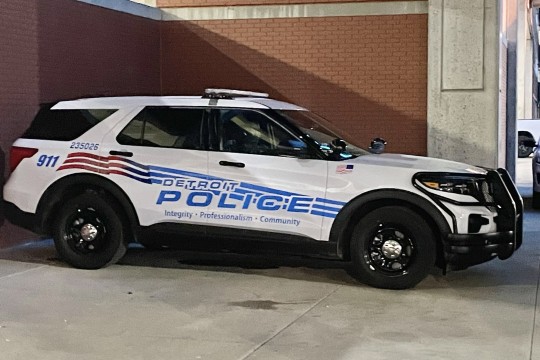
Detroit takes aim at ShotSpotter, may take a shot with a different gunshot detection system
Michigan Public highlighted research by Divya Ramjee, assistant professor of criminal justice, examining the effectiveness of ShotSpotter gunshot-detection technology in Detroit as city officials consider renewing or replacing the system.
-
June 17, 2026

RIT grad thrives in the courtroom and classroom
Experiences at RIT helped Ryan Lamon ’17 (criminal justice) discover his passion for practicing law.
-
April 23, 2026

From RIT to Fiji—RIT senior joins the Peace Corps
Jillian Antol, a double major in global public health and criminal justice, is postponing law school for the Peace Corps.
