Computational Mathematics Bachelor of Science Degree

RIT’s computational mathematics major emphasizes problem-solving using mathematical models to identify solutions in business, science, engineering, and more.
Overview for Computational Mathematics BS
Why Major in Computational Mathematics at RIT
Learn by Doing: Gain experience through an experiential learning component of the program approved by the School of Mathematics and Statistics.
Real World Experience: With RIT’s cooperative education and internship program you'll earn more than a degree. You’ll gain practical hands-on experience that sets you apart.
Strong Career Paths: Recent computational mathematics graduates are employed at Carbon Black, iCitizen, Amazon, National Security Agency, KJT Group, Department of Defense, and Hewlett Packard.
Accelerated Bachelor’s/Master’s Available: Earn both your bachelor’s and your master’s in less time and with a cost savings, giving you a competitive advantage in your field.
STEM-OPT Visa Eligible: The STEM Optional Practical Training (OPT) program allows full-time, on-campus international students on an F-1 student visa to stay and work in the U.S. for up to three years after graduation.
What is Computational Mathematics?
Computational mathematics, or computational and applied mathematics, focuses on using numerical methods and algorithms to solve mathematical problems and perform mathematical computations with the aid of computers. It bridges the gap between theoretical mathematics and practical applications in various fields, including science, engineering, finance, and more.
RIT’s Computational Mathematics Major
The computational mathematics bachelor's degree combines the beauty and logic of mathematics with the application of today’s fastest and most powerful computers. At RIT, you get the solid foundation in both mathematics and computational methods that you need to be successful in the field or in graduate school.
RIT’s computational mathematics major uses computers as problem-solving tools to come up with mathematical solutions to real-world problems in engineering, operations research, economics, business, and other areas of science.
Computational Mathematics Degree Curriculum
The skills you learn in the computational mathematics degree can be applied to everyday life, from computing security and telecommunication networking to routes for school buses and delivery companies. The degree provides computational mathematics courses such as:
- Calculus
- Differential equations
- Graph theory
- Abstract and linear algebra
- Mathematical modeling
- Numerical analysis
Students are required to complete an experiential learning component of the program, as approved by the School of Mathematics and Statistics. Students are encouraged to participate in research opportunities or cooperative education experiences. You will gain extensive computing skills through a number of high-level programming, system design, and other computer science courses.
Furthering Your Education in Computational Mathematics
Combined Accelerated Bachelor’s/Master’s Degrees
Today’s careers require advanced degrees grounded in real-world experience. RIT’s Combined Accelerated Bachelor’s/Master’s Degrees enable you to earn both a bachelor’s and a master’s degree in as little as five years of study, all while gaining the valuable hands-on experience that comes from co-ops, internships, research, study abroad, and more.
- Computational Mathematics BS/Applied and Computational Mathematics MS: Master the field of computational mathematics with this combined accelerated dual degree. You’ll start by developing a strong foundation in computer science and mathematical analysis with ample opportunity to solidify your knowledge with hands-on experiences like research, co-op, and internships. Moving into the master’s program will deepen your skills with additional coursework along with a thesis or project to apply your knowledge to a field that interests you. Graduates are prepared for in-demand computation jobs in industries such as data analytics, engineering, biology, manufacturing, financial planning, and more.
- Computational Mathematics BS/Computer Science MS: Combine a computational mathematics BS degree with a master’s in computer science to prepare for careers in the rapidly growing and ever-changing field of computing. Start by establishing a strong foundation in computing languages, mathematical models, and numerical algorithms that will become the background you need for continued study and application in areas like data management and intelligence systems. You’ll tailor your degree to your interests along the way including selecting a cluster of computer science courses during your graduate work that will help you reach your goals in a career you love.
- +1 MBA: Students who enroll in a qualifying undergraduate degree have the opportunity to add an MBA to their bachelor’s degree after their first year of study, depending on their program. Learn how the +1 MBA can accelerate your learning and position you for success.
-

Join Us for Accepted Student Open House
Visit campus on April 11 to meet faculty, tour campus, and ask your questions.
Careers and Cooperative Education
Typical Job Titles
| Data Scientist | Software Engineer | Research Scientist |
| Game Designer |
Industries
Cooperative Education
What’s different about an RIT education? It’s the career experience you gain by completing cooperative education and internships with top companies in every single industry. You’ll earn more than a degree. You’ll gain real-world career experience that sets you apart. It’s exposure–early and often–to a variety of professional work environments, career paths, and industries.
Co-ops and internships take your knowledge and turn it into know-how. Science co-ops include a range of hands-on experiences, from co-ops and internships and work in labs to undergraduate research and clinical experience in health care settings. These opportunities provide the hands-on experience that enables you to apply your scientific, math, and health care knowledge in professional settings while you make valuable connections between classwork and real-world applications.
Although cooperative education is optional for computational mathematics students, it may be used to fulfill the experiential learning component of the program. Students have worked in a variety of settings on problem-solving teams with engineers, biologists, computer scientists, physicists, and marketing specialists.
Featured Work and Profiles
-
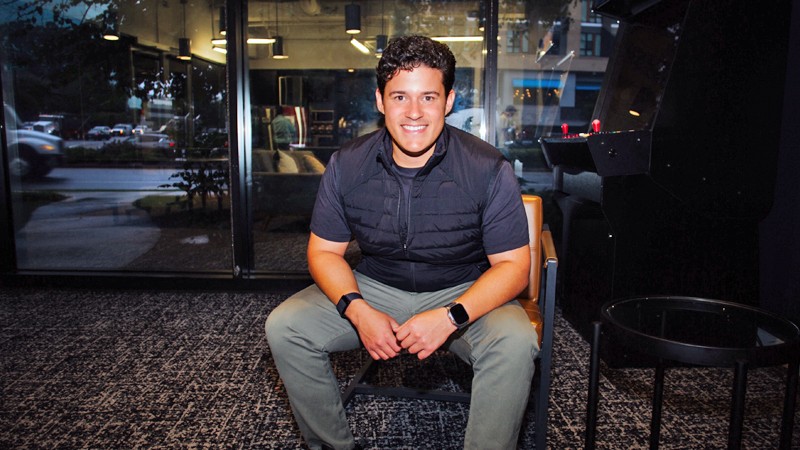
How Computational Math Set the Stage for a Startup
At RIT, Luis Andino ’20 developed the problem-solving mindset that now powers his work as founder of Ditch, a fintech startup built on his computational math skills.
Read More about How Computational Math Set the Stage for a Startup -
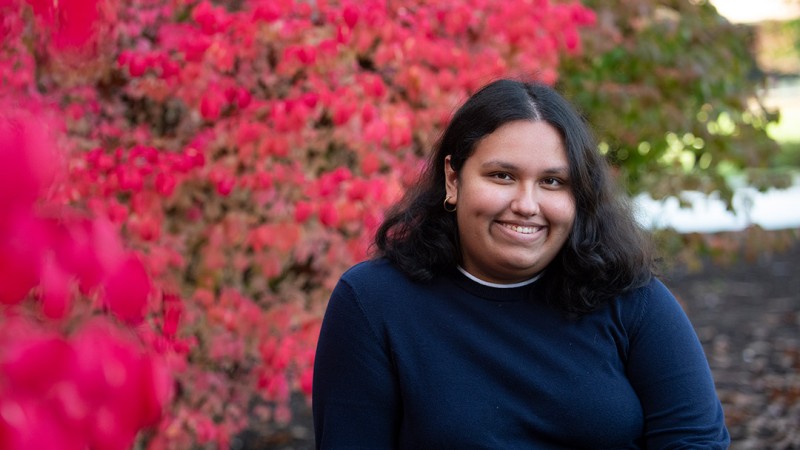
A Beacon of Public Leadership at RIT Wins Newman Civic Fellowship
Student Nidhi Baindur was awarded a Newman Civic Fellowship for her role as a change-maker and public problem-solver at RIT.
Read More about A Beacon of Public Leadership at RIT Wins Newman Civic Fellowship -

Artificial Intelligence, Mathematics, and Designing Mini Protein Drugs
David Longo ’10, CEO of Ordaōs, shares his experience at RIT and explains how computational mathematics allowed him to think outside the box to come up with advanced solutions.
Read More about Artificial Intelligence, Mathematics, and Designing Mini Protein Drugs -

Computational Mathematics and a Future in Cryptography
Keegan Kresge loves math and programming, making him the perfect fit for cryptography. After completing his degree in computational mathematics, he plans to work at the Department of Defense.
Read More about Computational Mathematics and a Future in Cryptography -

Math + Real-World Applications = Success
Selene Chew ’16 (computational mathematics) The computational mathematics program at RIT was the perfect balance of math and computer science for Selene Chew ‘16, who’s now a software engineer at Kensho.
Read More about Math + Real-World Applications = Success
Curriculum for 2025-2026 for Computational Mathematics BS
Current Students: See Curriculum Requirements
Admissions and Financial Aid
This program is STEM designated when studying on campus and full time.
First-Year Admission
First-year applicants are expected to demonstrate a strong academic background that includes:
- 4 years of English
- 3 years of social studies and/or history
- 4 years of mathematics is required and must include algebra, geometry, algebra 2/trigonometry, and pre-calculus. Calculus is preferred.
- 2-3 years of science is required and must include chemistry or physics; both are recommended.
Transfer Admission
Transfer applicants should meet these minimum degree-specific requirements:
- A minimum of precalculus is required. Calculus is preferred.
- Chemistry or physics is required.
Financial Aid and Scholarships
100% of all incoming first-year and transfer students receive aid.
RIT’s personalized and comprehensive financial aid program includes scholarships, grants, loans, and campus employment programs. When all these are put to work, your actual cost may be much lower than the published estimated cost of attendance.
Learn more about financial aid and scholarships


Research
Undergraduate Research Opportunities
Many students join research teams and engage in research projects starting as early as their first year. Participation in undergraduate research leads to the development of real-world skills, enhanced problem-solving techniques, and broader career opportunities. Our students have opportunities to travel to national conferences for presentations and also become contributing authors on peer-reviewed manuscripts. Explore the variety of mathematics and statistics undergraduate research projects happening across the university.
Related News
-
March 16, 2026
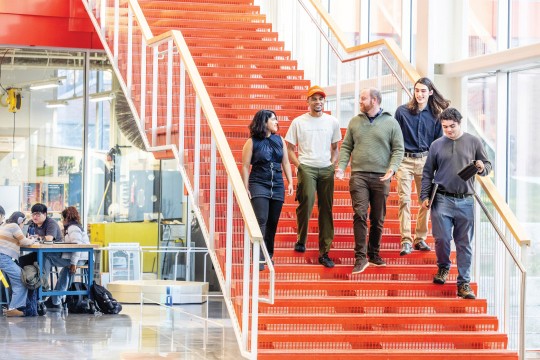
Got big ideas? Gap Year fellows do
Hridiza Roy followed a summer internship at Disney Studios, with a fall position in the Gap Year Entrepreneurial Fellowship. The RIT program gave her a block of time and a stipend to advance her passion project—Painterly, an animation software tool.
-
January 9, 2025

Philanthropy, leadership, and networking opportunities are keys to Greek Life at RIT
The 750 RIT undergraduate students who belong to one of the 28 fraternities or sororities on campus also perform thousands of hours of community service and raise thousands of dollars for charities each year.
-
May 13, 2024

Graduate Joseph Casale ready to return to Malaysia as a Fulbright awardee
Joseph Casale had hardly been on a plane when he traveled to Malaysia to do research a year ago. Now, he gets the opportunity to do it again.
Contact

School of Mathematics and Statistics