Mechanical Engineering Technology Bachelor of Science Degree

RIT's mechanical engineering technology degree teaches you how products and machinery work through course work and hands-on experiences.
$75K
Median First-Year Salary of RIT Graduates from this degree
71%
required courses in the College of Engineering Technology for this major have a lab component
#2
Best Engineering Job: Mechanical Engineer
Overview for Mechanical Engineering Technology BS
Why Pursue a Bachelor of Science in Mechanical Engineering Technology at RIT?
Two Dynamic Options: Tailor your degree with an option in robotics and automation or product design.
Gain Real-World Experience: Required cooperative education means hands-on, full-time, paid work experience at top companies in industry.
Jobs at Industry Leading Companies: Recent graduates with a degree in mechanical engineering technology are employed at Amazon Robotics, Tesla, NASA, SpaceX, Apple, Boeing, Rivian, Lockheed Martin, L3Harris and more.
Accelerated Bachelor’s/Master’s Available: Earn both your bachelor’s and your master’s in less time and with a cost savings, giving you a competitive advantage in your field.
STEM-OPT Visa Eligible: The STEM Optional Practical Training (OPT) program allows full-time, on-campus international students on an F-1 student visa to stay and work in the U.S. for up to three years after graduation.
What is Mechanical Engineering Technology?
From consumer products to high-performance automobiles (electric vehicles, autonomous driving), aerospace systems (rockets, jets, drones), to bioengineered devices, and energy technologies, mechanical engineering technology has changed society for the better. Understanding how products and machinery work, as well as how to design, manufacture, or use technology to develop mechanical systems is the focus of RIT's bachelor of mechanical engineering technology. Mechanical engineering technology involves understanding how products and machinery work and how to design, make or use them.
RIT's Mechanical Engineering Technology Degree
In our mechanical engineering technology BS, you'll study the foundations of mechanics, materials, and energy. You will learn technical skills such as:
- Computer-aided design (CAD)
- Generative design
- Materials characterization
- Mechanical system analysis and design
- Thermal-fluid system design
- Product design and development
You also will learn to apply these principles and skills to the various fields of mechanical engineering technology--such as product and machine design, power generation, energy management, and advanced manufacturing--through laboratories and design projects. Full-time students gain valuable industrial experience through the required cooperative education program. Students may select an option in robotics and automation or product design.
What Can You Do with a Mechanical Engineering Technology Degree?
The mechanical engineering technology major develops well-rounded engineers as lifelong learners with the ability to adapt, grow, and succeed in a highly competitive workplace. The required cooperative education experience enables students to be well-prepared to step into professional positions after graduation and be immediately productive in jobs that include product development, machine design, and analysis, alternative energy, manufacturing engineering, or systems engineering.
Mechanical Engineering Technology Curriculum
RIT’s degree in mechanical engineering technology offers select concentrations in one of the following areas:
- Alternative energy
- Heating/ventilating/air conditioning (HVAC)
- Machine design and analysis
- Materials engineering
- Product development
- Thermofluids engineering
The curriculum offers some flexibility in enabling you to customize your own concentration based on your career objectives or personal interests.
Options
The mechanical engineering technology major offers two options that enable you to further develop an area of expertise.
- The product design option allows for specialized study in all engineering aspects of product ideation, innovation, design confirmation, and design validation.
- The robotics and automation option allows for specialized study in all engineering aspects of industrial and collaborative (cobots) robotics, along with automation/controls.
Careers in Mechanical Engineering Technology
A bachelor's degree in mechanical engineering technology can lead to a range of exciting careers in mechanical engineering technology, including positions such as:
- Mechanical engineer
- Digital manufacturing engineer
- Process engineer
- Quality engineer
- Algorithm engineer
- Sales engineer
Graduates are in demand, and companies such as GE, General Motors, Stanley Black & Decker, Thermo Fisher Scientific, and many others seek out our graduates.
High-Performance Teams and Professional Organizations
Many mechanical engineering students participate in high-octane performance teams, including the RIT Formula SAE Racing Team, the SAE Aerodesign Club, the RIT Baja SAE Team, RIT SAE Clean Snowmobile Team, and the Human-Powered Vehicle Competition team. They are also encouraged to participate in the student chapters of professional societies such as the American Society of Mechanical Engineers, the Society of Women Engineers, the National Society of Black Engineers, the Society of Hispanic Professional Engineers, the American Institute of Aeronautics and Astronautics, and the Society of Automotive Engineers.
Engineering vs. Engineering Technology
Two dynamic areas of study, both with outstanding outcomes rates. Which do you choose?
What’s the difference between engineering and engineering technology? It’s a question we’re asked all the time. While there are subtle differences in the course work between the two, choosing a major in engineering vs. engineering technology is more about identifying what you like to do and how you like to do it.
Combined Accelerated Bachelor’s/Master’s Degrees
Today’s careers require advanced degrees grounded in real-world experience. RIT’s Combined Accelerated Bachelor’s/Master’s Degrees enable you to earn both a bachelor’s and a master’s degree in as little as five years of study, all while gaining the valuable hands-on experience that comes from co-ops, internships, research, study abroad, and more.
- Mechanical Engineering Technology/Mechatronics and Mechanical Systems MS: Fast-track your success with this dynamic accelerated dual-degree pathway in mechanical engineering technology BS and mechatronics and mechanical systems MS. Drive the design, development, and implementation of everything from high-performance automobiles (electric and autonomous driving) to aerospace systems (rockets, jets, drones) to bioengineered devices, energy technologies, and consumer products. Deep dive into mechanical or manufacturing engineering and round out your tool belt with a career-ready business and management skillset from the mechatronics and mechanical systems MS.
- +1 MBA: Students who enroll in a qualifying undergraduate degree have the opportunity to add an MBA to their bachelor’s degree after their first year of study, depending on their program. Learn how the +1 MBA can accelerate your learning and position you for success.
-

Join Us for Accepted Student Open House
Visit campus on March 28 or April 11 to meet faculty, tour campus, and ask your questions.
Careers and Cooperative Education
Typical Job Titles
| Mechanical Engineer | Digital Manufacturing Engineer | Process Engineer |
| Product Development Engineer | Quality Engineer | Algorithm Engineer |
| Sales Engineer | Controls Engineer | Design Engineer |
Industries
Cooperative Education
What’s different about an RIT education? It’s the career experience you gain by completing cooperative education and internships with top companies in every single industry. You’ll earn more than a degree. You’ll gain real-world career experience that sets you apart. It’s exposure–early and often–to a variety of professional work environments, career paths, and industries.
Co-ops and internships take your knowledge and turn it into know-how. Your engineering co-ops will provide hands-on experience that enables you to apply your engineering knowledge in professional settings while you make valuable connections between classwork and real-world applications.
Students in the mechanical engineering technology degree are required to complete four co-op blocks. This typically includes one spring, one fall, and two summer blocks. You'll alternate periods of full-time study with full-time paid work experience in your career field. In some circumstances, other forms of experiential education (e.g., study abroad, research, military service) may be used to fulfill part of the co-op requirement. Each student is assigned a co-op advisor to assist in identifying and applying to co-op opportunities.
Featured Work and Profiles
-

The Spark of Success: How Students Forged the First NYS American Welding Society Chapter
It took a spark of an idea from CET students to forge the first American Welding Society student chapter in New York State. The club now unites over 50 members from majors as diverse as engineering...
Read More about The Spark of Success: How Students Forged the First NYS American Welding Society Chapter -
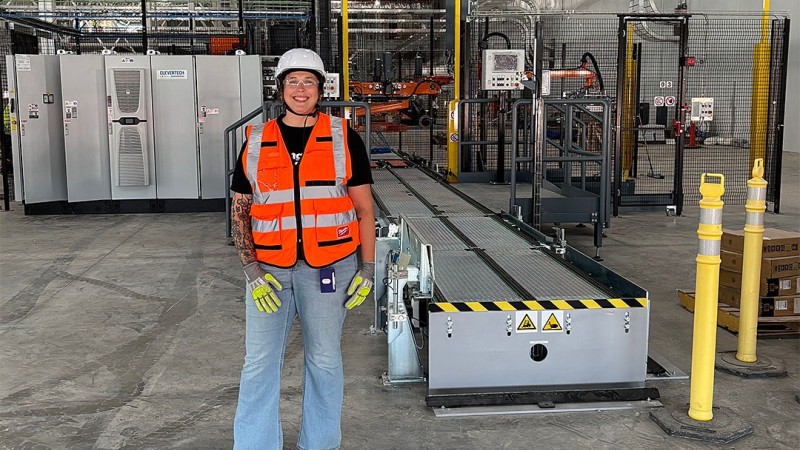
NTID/CET Alumna Launches the Future of Tide and Gain as a P&G Engineer
Kayley Judd ’25 Kayley Judd ’25 landed a career solving the toughest problems that ensure global staples, like Tide and Gain, make it seamlessly from the factory to your laundry room. As a Fabric Care Packaging...
Read More about NTID/CET Alumna Launches the Future of Tide and Gain as a P&G Engineer -

Undecided to Unstoppable: An Alum's Drive to Innovate as a GM Manufacturing Process Engineer
Discover how an undecided RIT student found his calling in Mechanical Engineering Technology, graduated in '24, is now powering iconic vehicles as a Manufacturing Process Engineer at General Motors.
Read More about Undecided to Unstoppable: An Alum's Drive to Innovate as a GM Manufacturing Process Engineer -

Taking Flight on Co-op: Student Discovers her Passion for Production at Honda Aircraft Co.
Allison Fink, a Manufacturing Engineering Technology student, always wondered how machines worked. Her co-op at Honda Aircraft Co. gave her the ultimate real-world experience, taking her from the...
Read More about Taking Flight on Co-op: Student Discovers her Passion for Production at Honda Aircraft Co. -
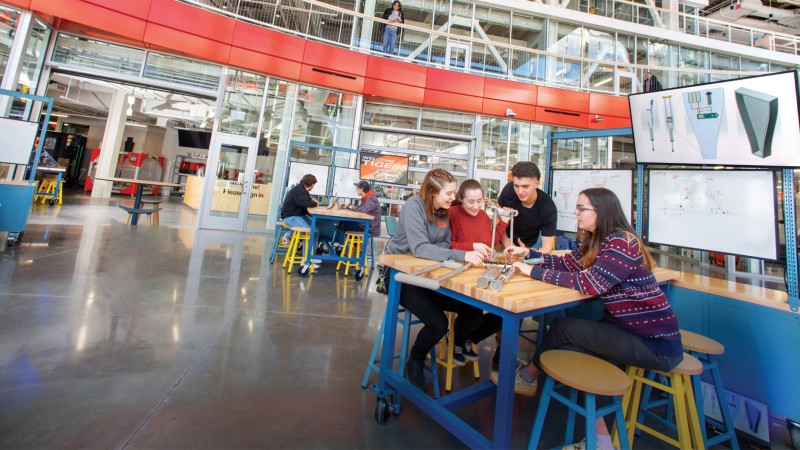
What's Being Made in the SHED
Making at RIT has hit a new level now that several makerspaces in the Student Hall for Exploration and Development (SHED) have opened. Learn what's being created.
Read More about What's Being Made in the SHED -
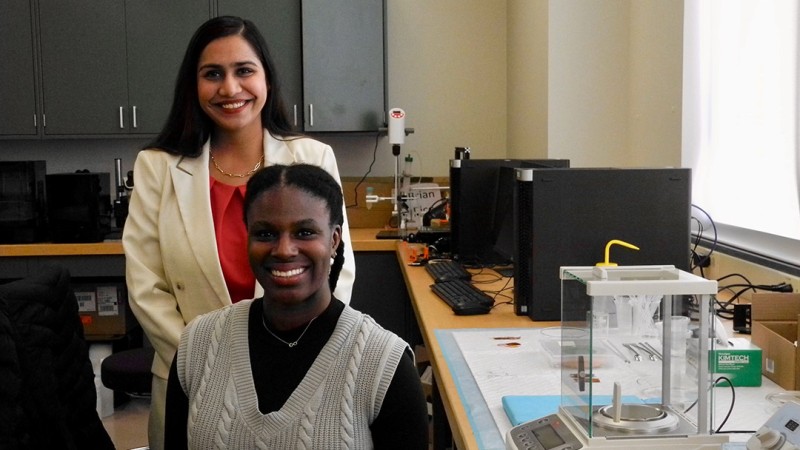
Student-Professor Duo's Cutting-Edge Prosthetic Sensor Research
Leila Daly, a fifth-year computer engineering technology student, is working with assistant professor, Krittika Goyal, to develop a sensor system for a more touch-responsive prosthetic finger that’s...
Read More about Student-Professor Duo's Cutting-Edge Prosthetic Sensor Research
Curriculum for 2025-2026 for Mechanical Engineering Technology BS
Current Students: See Curriculum Requirements
Admissions and Financial Aid
This program is STEM designated when studying on campus and full time.
First-Year Admission
First-year applicants are expected to demonstrate a strong academic background that includes:
- 4 years of English
- 3 years of social studies and/or history
- 3 years of math is required and must include algebra, geometry, and algebra 2/trigonometry. Pre-calculus is preferred.
- 2-3 years of science. Chemistry or physics is required and biology is recommended.
- Technology electives are preferred.
Transfer Admission
Transfer applicants should meet these minimum degree-specific requirements:
- A minimum of college algebra is required. Pre-calculus or calculus is preferred.
- Chemistry or physics is required.
Financial Aid and Scholarships
100% of all incoming first-year and transfer students receive aid.
RIT’s personalized and comprehensive financial aid program includes scholarships, grants, loans, and campus employment programs. When all these are put to work, your actual cost may be much lower than the published estimated cost of attendance.
Learn more about financial aid and scholarships


Resources
Access Resources for students including academic advisors, student clubs and organizations, documents, technical information and support, and software help.
Related News
-
February 9, 2026

Twelve graduates honored with Distinguished Alumni Awards
Distinguished Alumni Awards are presented annually by each of RIT’s nine colleges, the Graduate School, and the School of Individualized Study to alumni who have performed at the highest levels of their profession or who have contributed to the advancement and leadership of civic, philanthropic, or service organizations.
-
February 5, 2026

Co-op course helps students break into competitive industries
The Independent Professional Development course was developed last year to reflect fluctuations in the current job market and to support students who, despite their best efforts, have not yet secured co-ops.
-
November 10, 2025

NTID alumnus is driven to lead
As a business team leader at the company’s Pennsylvania plant, Trauger oversees operations on the cab-over line, where the refuse collection trucks are assembled, with a focus on safety, quality, and delivery.
Contact

Department of Mechanical and Mechatronics Engineering Technology