RIT alumni train Artemis II astronauts in photography
The flight operations imagery instructors designed training modules to mimic conditions in space
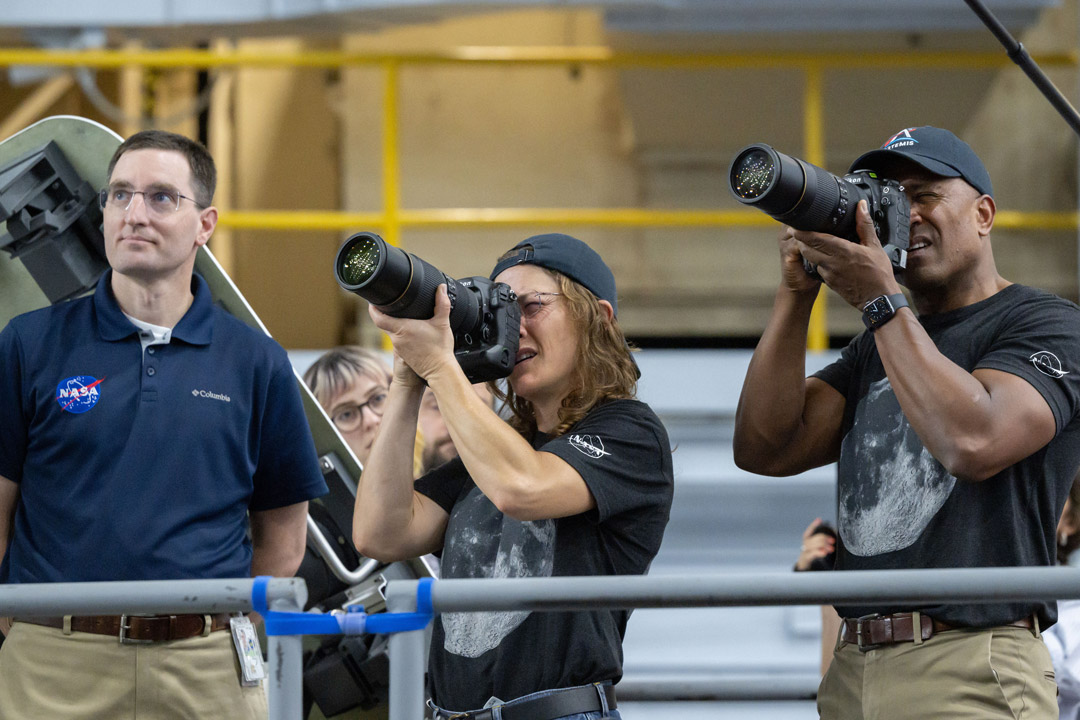
NASA image provided by Paul Reichert
Paul Reichert ’01, left, said that they try to get cameras into the hands of astronauts as much as possible before the launch. Here, he trains astronauts Christina Koch and Victor Glover on how to take pictures of the moon during the lunar flyby on the Artemis 2 mission.
The four astronauts on NASA’s Artemis II mission that launched April 1 are well equipped to document their journey around the moon because of training from RIT alumni.
Katrina Willoughby ’04 and Paul Reichert ’01—graduates of RIT’s imaging and photographic technology program, now known as photographic sciences—are flight operations imagery instructors who gave the astronauts training in photography techniques at the Johnson Space Center in Houston.
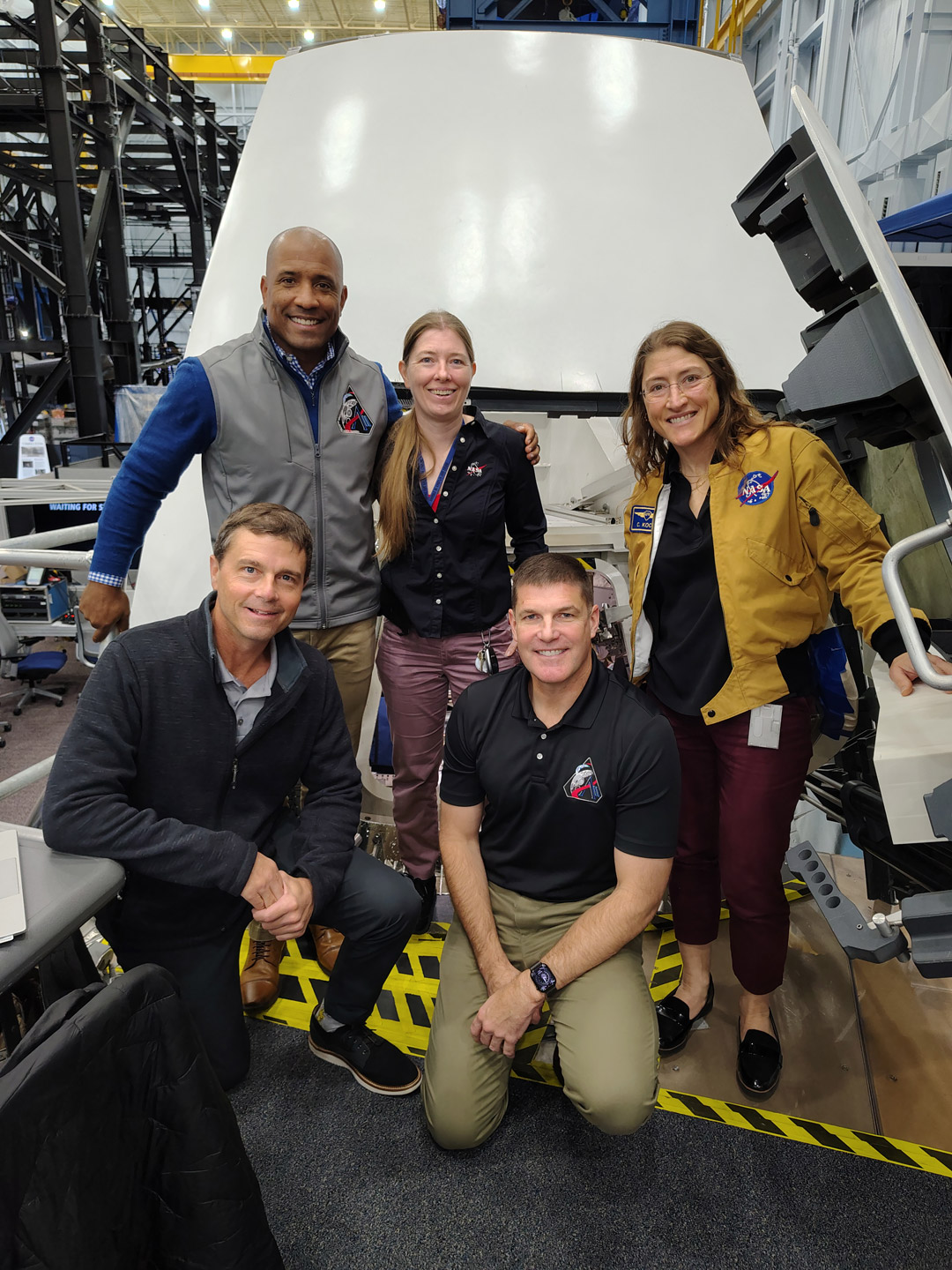
NASA image provided by Katrina Willoughby
Katrina Willoughby ‘04, center, poses for a photo with the full Artemis II crew in front of a mock-up of the Orion spacecraft used for photography training.
“Most people can use a camera and get a photo that is good enough, but good enough isn't what we're after scientifically. We’re really teaching the astronauts how to go beyond the basics,” said Willoughby. “Being able to understand how to use the equipment, and what the options are, gives us a lot more capability.”
The historic mission—carried out by NASA astronauts Reid Wiseman, Victor Glover, Christina Koch, and CSA (Canadian Space Agency) astronaut Jeremy Hansen—will last approximately 10 days. During this time, Willoughby and Reichert will be on call as the primary support representatives for their imaging sub-group of the mission.
Imagery has become a critical element of any mission, according to Willoughby and Reichert. Second chances on space missions are few and far between if a photo isn’t captured as planned, which is why giving astronauts as much imaging training as possible before launch is key.
“There are pictures we want to get, and then there are pictures that the team is depending on. The imagery is their data,” said Willoughby. “If something breaks, for example, we need a picture or video to show us on the ground what's going on. Sometimes, the imagery is what is needed to move forward, so it is important that the crew can get it right the first time.”
To make sure the astronauts were fully prepared, Willoughby and Reichert worked with the crew members for roughly two years. The pair designed a series of classes and training modules that allowed the crew to get hands-on experiences with the complex photography equipment that emulate conditions in space.
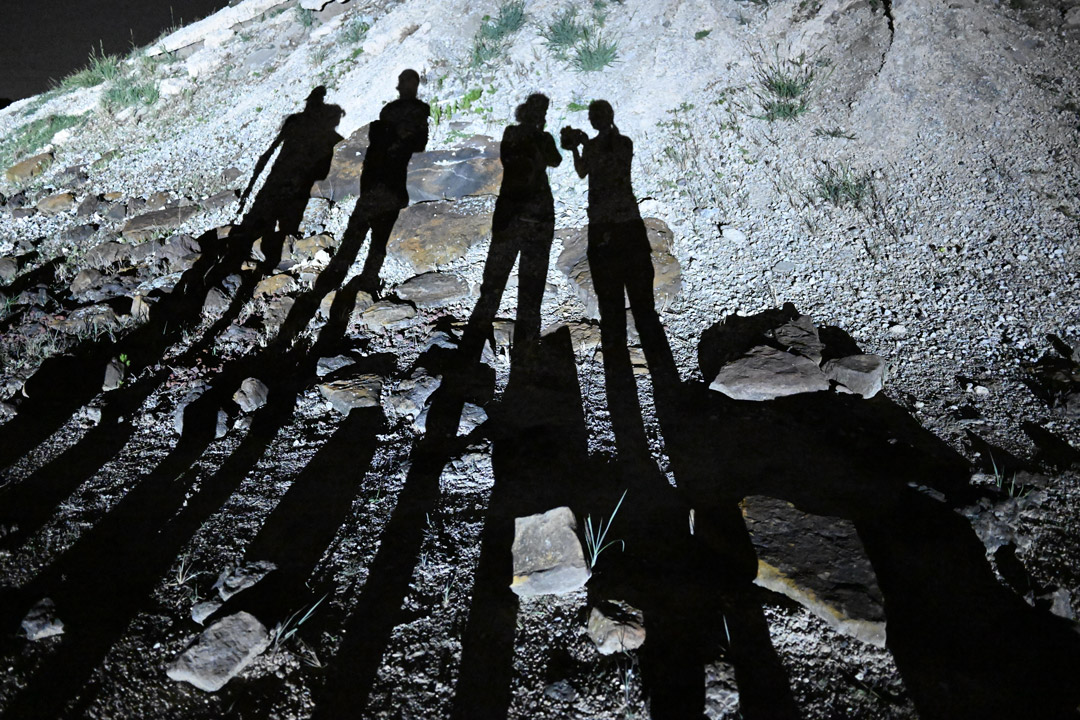
NASA image provided by Katrina Willoughby
Willoughby and Reichert designed training modules that attempt to emulate the realistic environmental conditions of photographing in space. Here, in the shadows, Willoughby, right, handles a camera during early simulations of the environment for lunar EVAs, which were conducted at night.
“We have mock-ups of the different vehicles so the crew can practice using the cameras in a flight-like environment. For training, we’ll give them a problem or request for a certain kind of photo, and then we let them work through how they're going to accomplish the task,” said Reichert. “In the end, when they're on their space mission, we can't be there with them, so they need to feel confident that they can figure some of this stuff out on their own.”
Both Willoughby and Reichert found their way to NASA through alumni and faculty connections. When NASA was looking to hire more imaging experts in the early 2000s, an alumnus who worked at the agency pointed recruiters to former RIT professor Andrew Davidhazy, who shared the posting with his students.
The pair credits Davidhazy for not only sharing the opportunity, but for preparing them with the critical thinking skills required for their job.
The two have trained nearly every astronaut—nationally and internationally—that has been active in the past 25 years.
Reichert said that along with the scientific advancements made possible through the imagery, the photographs from this mission will inspire the next generation of innovators.
“For the Artemis II mission, there are four people on that vehicle going around the moon, and there are eight billion of us on the ground that don't get to go on that ride. Through the pictures they get, they’re taking the rest of the world on the ride with them,” he said. “Maybe a kid sees these images and is inspired to go into the field when they grow up, or an engineer sees imagery of our equipment and thinks, ‘I can fix that or make it better.’”
Turning astronauts into photographers
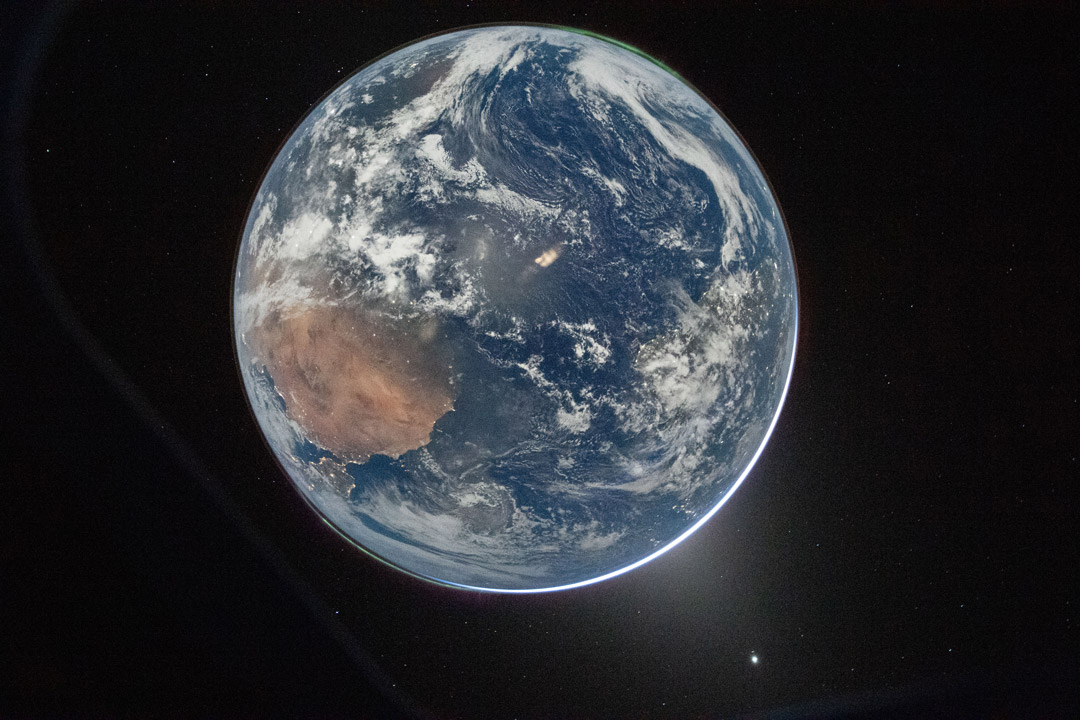
NASA/Reid Wiseman
NASA astronaut and Artemis II Commander Reid Wiseman took this picture of Earth from the Orion spacecraft's window on April 2, 2026, after completing the translunar injection burn.
Paul Reichert explained that most astronauts have very little photography experience, which makes their training crucial. The pair teaches the astronauts how to operate commercially available technology, as well as highly specialized cameras and custom hardware.
The series of training courses designed by Reichert and Katrina Willoughby provide a mix of classroom learning and hands-on practice in the field or in mock-ups. At the Johnson Space Center, there is a mock-up of several different vehicles, including the Orion spacecraft, where astronauts can get experience with the spatial and lighting challenges that will be present during the actual mission.