Bioinformatics Master of Science Degree

A bioinformatics master’s degree prepares you to tackle complex problems in biology using big data, data mining, machine learning and modeling.


30%

Merit Scholarship

Average award given to accepted students

$1M+

Equipment in Genomics Lab


Overview for Bioinformatics MS

Why Pursue an MS in Bioinformatics at RIT?


  • STEM-OPT Visa Eligible: The STEM Optional Practical Training (OPT) program allows full-time, on-campus international students on an F-1 student visa to stay and work in the U.S. for up to three years after graduation.

  • Jobs at Industry Leading Companies: Graduates from our bioinformatics program have secured positions at esteemed institutions such as Pacific Northwest National Laboratory, Personal Genome Diagnostics, University of Rochester Genomics Research Center, and Asuragen, Inc., highlighting the program’s efficacy in facilitating career advancement.

  • Educational Enhancement: Our bridge program supplements your existing education, ensuring a seamless transition into the rigorous curriculum of bioinformatics.

  • Tailored Learning Experience: Delve into a customized curriculum offering a robust blend of biotech and computer programming, providing you with a solid foundation in both fields.

  • Cutting-Edge Research: Engage with faculty actively involved in groundbreaking research spanning molecular evolution, ecological modeling, cancer chromatin, machine learning, genomics, and forensic science, enriching your academic journey with the latest advancements in the field.

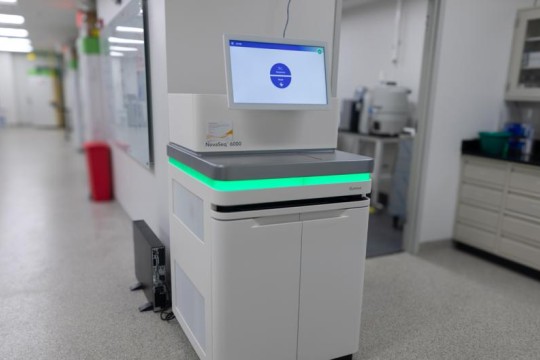
  • State-of-the-Art Genomics Lab: Access our Genomics Lab equipped with an Illumina MiSeq, allowing students to sequence and annotate whole genomes of diverse organisms, providing hands-on experience with cutting-edge technology in genomic analysis.

RIT’s bioinformatics master’s degree combines biotechnology, computer programming, and computational mathematics to prepare you to utilize and create technologies that discover, treat, and cure a range of medical illnesses. With a strong foundation in biotechnology, computer programming, computational mathematics, statistics, and database management, you will be well-prepared for academia and careers in the biotechnology, bioinformatics, pharmaceutical, and vaccine industries.

RIT’s Bioinformatics Master’s Degree

Bioinformatics is a field that has been developing over the last thirty years. It is a discipline that represents a marriage between biotechnology and computer technologies and has evolved through the convergence of advances in each of these fields. Today bioinformatics is a field that encompasses all aspects of the application of computer technologies to biological data. Computers are used to organize, link, analyze, and visualize complex sets of biological data to discover, treat, and cure a range of medical illnesses.

RIT’s bioinformatics master’s degree is focused on cutting-edge computational techniques, such as data mining, to understand biomedical data. In laboratory exercises and assignments, you will learn to sequence DNA and use computer programs to analyze DNA sequences and predict molecular models. You are also encouraged to pursue cooperative education opportunities to gain hands-on career experience in industry.

Current bioinformatics students have worked on projects including:

  • Database development
  • Cancer vaccine design
  • Literature mining
  • Molecular dynamics simulation

The program provides you with the capability to enter the bioinformatics workforce and become a leader in the field. The curriculum is designed to fulfill the needs of students with diverse educational and professional backgrounds. Individuals entering the program typically have degrees in biology, biotechnology, chemistry, statistics, computer science, information technology, or a related field. To prepare applicants from various backgrounds, the curriculum includes a comprehensive bridge program that includes courses in biology, mathematics, computer science, statistics, or other related fields. The program offers two tracks, one for students with backgrounds in the life sciences and one for those with backgrounds in the computational sciences.

Careers in Bioinformatics

With the advent of high-throughput technologies such as Next Generation Sequencing and proteomics, bioinformatics has become essential to the biological sciences in general. In the past, laboratories were able to manage and analyze their experimental data in spreadsheets. Many research labs now require the expertise of dedicated bioinformatics core centers or their own in-house bioinformaticists.

Graduates of the bioinformatics master’s program have entered such laboratories, both in industry and academia, as bioinformaticists. Some have also gone on to leverage their biotechnology experiences as wet lab experimentalists. The diversity of skills you will cultivate in the program give you access to a wide range of career choices.

The job market is rich with opportunities for those with graduate degree in bioinformatics, particularly when coupled with research as thesis work. This research provides exposure to real-world problems—and their solutions—not otherwise attainable in an academic setting.

Graduates of the bioinformatics master’s degree currently work senior analysts/programmers, associate systems analysts, bioinformaticist, bioinformatics analysts, bioinformatics engineers, computational biologists, and software engineers.

Loading...

Careers and Cooperative Education

Typical Job Titles

Researcher Business Intelligence Developer Computational Biologist
Bioinformatics Software Engineer RD Bioinformatics and Laboratory Researcher Innovation Consultant
Associate Software Engineer

Post-Graduation Salary and Career Info for Bioinformatics MS

Cooperative Education

What makes an RIT science and math education exceptional? It’s the ability to complete science and math co-ops and gain real-world experience that sets you apart. Co-ops in the College of Science include cooperative education and internship experiences in industry and health care settings, as well as research in an academic, industry, or national lab. These are not only possible at RIT, but are passionately encouraged.

What makes an RIT education exceptional? It’s the ability to complete relevant, hands-on career experience. At the graduate level, and paired with an advanced degree, cooperative education and internships give you the unparalleled credentials that truly set you apart. Learn more about graduate co-op and how it provides you with the career experience employers look for in their next top hires.

Featured Work and Profiles

Curriculum for 2025-2026 for Bioinformatics MS

Current Students: See Curriculum Requirements

Admissions and Financial Aid

This program is available on-campus only.

Offered Admit Term(s) Application Deadline STEM Designated
Full‑time Fall or Spring Rolling Yes
Part‑time Fall or Spring Rolling No

Full-time study is 9+ semester credit hours. Part-time study is 1‑8 semester credit hours. International students requiring a visa to study at the RIT Rochester campus must study full‑time.

Application Details

To be considered for admission to the Bioinformatics MS program, candidates must fulfill the following requirements:

  • Complete an online graduate application
  • Submit copies of official transcript(s) (in English) of all previously completed undergraduate and graduate course work, including any transfer credit earned.
  • Hold a baccalaureate degree (or US equivalent) from an accredited university or college in biology, biotechnology, biochemistry, chemistry, computer science, information technology, statistics, or a related discipline. A minimum cumulative GPA of 3.2 (or equivalent) is recommended.
  • Submit a current resume or curriculum vitae.
  • Submit a personal statement of educational objectives.
  • Submit two letters of recommendation.
  • Entrance exam requirements: GRE required for individuals with degrees from international universities. No minimum score requirement.
  • Submit English language test scores (TOEFL, IELTS, PTE Academic, etc.), if required. Details are below.

English Language Test Scores

International applicants whose native language is not English must submit one of the following official English language test scores. Some international applicants may be considered for an English test requirement waiver.

Duolingo (DET): 120

IELTS: 6.5

LanguageCert Academic: 70

PTE Academic: 56

TOEFL: 79

International students below the minimum requirement may be considered for conditional admission. Deaf and hard-of-hearing test takers with significant hearing loss do not need to take the listening and speaking sections for the TOEFL and IELTS. Each program requires balanced sub-scores when determining an applicant’s need for additional English language courses.

How to Apply Start or Manage Your Application

Cost and Financial Aid

An RIT graduate degree is an investment with lifelong returns. Graduate tuition varies by degree, the number of credits taken per semester, and delivery method. View the general cost of attendance or estimate the cost of your graduate degree.

A combination of sources can help fund your graduate degree. Learn how to fund your degree

Research

Faculty in the College of Science receive research grant awards from organizations such as the National Science Foundation and the National Institutes of Health, which provide you with unique opportunities to conduct cutting-edge graduate-level thesis research. Using modern computational tools and approaches the bioinformatics faculty conduct research on a broad variety of topics including:

  • molecular evolution
  • ecological modeling
  • cancer biology
  • genomics

Learn more by exploring our life science research areas.

Related News

Contact

Admissions Contact
Program Contact