Neuroscience Bachelor of Science Degree

Study the brain to help advance AI, combat diseases, and support those with learning challenges in RIT’s neuroscience degree.
3
Specialized Track Options:
4
Student Clubs with a Neuroscience Focus
Overview for Neuroscience BS
Why Pursue a Neuroscience Degree at RIT?
Interdisciplinary Approach: The neuroscience degree is a collaboration between the College of Science and the department of psychology in the College of Liberal Arts, mixing critical course work from both fields.
Three Dynamic Tracks: Choose from neurobiology, computational neuroscience, or behavioral neuroscience.
Pre-Med/Pre-Health and Pre-Vet Advising Programs: Receive personalized guidance to become a competitive candidate for admission to medical and veterinary schools and graduate programs in the health professions.
Direct Path to Medical School: RIT’s partnership with the University of Buffalo’s Jacobs School of Medicine offers eligible pre-health/pre-med students early admission and mentorship through the Early Opportunity Program in Medicine.
Active Neuroscience Research Laboratories: Get hands-on lab experience all four years focused on comparative cognition, psychopathology, color perception, facial perception, and multisensory integration in VR/AR.
If you are drawn to questioning how we think, how we learn, and how understanding the systems in our brains can help change the world, then it’s time to consider RIT’s neuroscience BS. Major advancements in the field are expected in the coming years, and this degree in neuroscience will put you at the forefront of innovation.
BS in Neuroscience
Neuroscience is applied to a vast array of industries, including the rapidly developing field of artificial intelligence (AI). At the intersection of science, technology, and innovation, RIT is uniquely positioned to offer students a rich background in programming and computing as well as access to AI research projects to prepare for this booming field.
The study of the brain is also essential for understanding and combating neurodegenerative diseases like Alzheimer’s and Parkinson’s. Experts in neuroscience are at the forefront of treating mental illnesses and learning disabilities. With the combination of program electives and the opportunity to create your own track, you have the flexibility to design a neuroscience degree that will prepare you for admission to dental, medical, or optometry professional programs.
RIT’s Degree in Neuroscience
RIT’s flexible neuroscience BS involves the collaboration of the College of Science and the College of Liberal Arts to provide you with a multidisciplinary opportunity to study the brain while developing your background knowledge in the natural sciences, social sciences, and humanities. Graduates will be prepared for a multitude of professional careers and pre-professional programs.
Neuroscience Courses
You may choose from three track options based on your course preferences and career goals: neurobiology, computational neuroscience, and behavioral neuroscience. In addition to tracks, program electives make it possible for a double major or twin minor to be completed by students who wish to do so. The track courses and program electives allow you to expand your knowledge in intersecting subfields of neuroscience, such as biology, cognitive science, health science, psychology, and computing.
The lab requirements provide experience in the practical use of the equipment and methods used in the field of neuroscience today. This background gives graduates from this program a leg up when entering the workforce or continuing education.
Neuroscience Capstone
You will be required to participate in a two-semester capstone in your final year of study to enhance your skills in technical communication and scientific research practices. You will research, write, and present a proposal for an independent research project.
Neuroscience BS Tracks
Neurobiology: The neurobiology track explores the branch of life sciences that deals with the anatomy, physiology, and pathology of the nervous system. Neurobiology centers around the study of nerve cells and the organization of these cells into functional circuits that process information and mediate behavior. Develop an in-depth understanding of how information is processed and stored in the brain and the molecular and cellular mechanisms underlying neural functioning.
Computational Neuroscience: The computational neuroscience track prepares students to use mathematical modeling and computer simulations together with the theories and experimentally gained knowledge of how the brain works to understand the principles that underlie perception, cognition, learning, and other processes in the nervous system. Computational neuroscience addresses the relationship between neuroscience and artificial intelligence (AI). The development of artificial neural networks was inspired by studying brain function. AI researchers aim to emulate human intelligence by building models and developing biologically-inspired architectures that can make decisions and solve problems in the same way that humans do. Artificial intelligence is also increasingly used as a research tool in neuroscience to advance our understanding of how the human brain works. For example, by analyzing data on brain activity acquired using neuroimaging techniques, machine learning is used to uncover the patterns in brain activity and link them to specific cognitive and motor actions.
Behavioral Neuroscience: The behavioral neuroscience track focuses on the relationship between behavior and behavioral science, such as psychology and neuroscience. Behavioral neuroscience examines what is happening in the brain and the behaviors, thoughts, and emotions that are associated with those processes. A range of topics are studied in this field, including learning and memory, motivation, emotion, and sensory processes.
Careers in Neuroscience
A BS in neuroscience is versatile, and you can apply your knowledge to a variety of industries. Graduates are well qualified for positions as research analysts, forensic science technicians, lab managers, neuroradiology technicians, pharmaceutical sales representatives, patient care assistants, science writers, neurotechnologists, data science specialists, and AI research associates. Those interested in advanced study can continue their education in graduate degree programs. Some typical job titles for those with advanced degrees include clinical psychologist, physician, speech-language pathologist, machine learning research scientist, occupational therapist, audiologist, AI systems engineer, public policy consultant, medical research scientist, MRI technician, lawyer, and neuroeconomist.
Pre-Med/Pre-Health Advising
RIT’s Office of Pre-Health Advising offers an advising program that’s open to all majors and provides personal, individualized academic counseling to help you create a comprehensive long-term strategy to assist you in building successful applications to medical, dental, and veterinary schools or graduate degrees in the health professions (e.g., occupational therapy, physical therapy, etc.). Our pre-health advisors will have in-depth conversations with you around critical topics that include academic planning and course selection, MCAT and other admission exams, undergraduate research opportunities, clinical experiences and field work, timelines, and much more. Learn more about pre-med/pre-health advising.
Pre-Vet Advising
RIT’s pre-vet advising program provides personalized support to help you prepare successful applications for veterinary medical school. Pre-vet advising offers guidance on course selection, veterinary and animal care experience requirements, the veterinary school application process, and more. Learn about RIT’s pre-vet advising program.
Pre-Law Advising Program
Law schools welcome applications from students majoring in a wide range of academic programs. If you are interested in pursuing law school, RIT’s Pre-Law Advising Program is designed to maximize your chances of admission to law school. The program includes personalized advising, LSAT preparation, academic counseling, and a timetable for law school admission.
Further Your Career in Neuroscience
Today’s careers require advanced degrees grounded in real-world experience. RIT’s Combined Accelerated Bachelor’s/Master’s Degrees enable you to earn both a bachelor’s and a master’s degree in as little as five years of study, all while gaining the valuable hands-on experience that comes from co-ops, internships, research, study abroad, and more.
- +1 MBA: Students who enroll in a qualifying undergraduate degree have the opportunity to add an MBA to their bachelor’s degree after their first year of study, depending on their program. Learn how the +1 MBA can accelerate your learning and position you for success.
RIT/University of Buffalo’s Early Opportunity Program in Medicine
RIT pre-health/pre-med students have a direct path to medical school through an RIT partnership with the Jacobs School of Medicine and Biomedical Sciences at the University at Buffalo (UB). The Early Opportunity Program in Medicine allows eligible RIT students to secure a pre-admission offer to the Jacobs School while completing their undergraduate degree at RIT. Students accepted into the program gain early access to professional training and mentorship at UB’s medical school, helping them prepare for the demands of medical school and beyond. Learn more about the Early Opportunity Program in Medicine.
-

Apply for Fall 2027
Early Decision I and Early Action deadlines are November 1.
-
Meet Us on Campus
Learn about academics, co-op and internships, financial aid, and more at one of our on-campus open houses.
October 12 | October 24 | November 14
Careers and Cooperative Education
Typical Job Titles
| Research Analyst | Neurosurgeon | Neuroimaging Technician |
| Machine Learning Research Scientist | Neurotechnologist | Radiation Physicist |
| Behavioral Disorder Counselor | Social Worker | Data Science Specialist |
| Neuroeconomist | Lab Manager | Science Writer/Journalist |
| Clinical Psychologist | Artificial Intelligence Systems Engineer |
Cooperative Education
What’s different about an RIT education? It’s the career experience you gain by completing cooperative education and internships with top companies in every single industry. You’ll earn more than a degree. You’ll gain real-world career experience that sets you apart. It’s exposure–early and often–to a variety of professional work environments, career paths, and industries.
Co-ops and internships take your knowledge and turn it into know-how. Science co-ops include a range of hands-on experiences, from co-ops and internships and work in labs to undergraduate research and clinical experience in health care settings. These opportunities provide the hands-on experience that enables you to apply your scientific, math, and health care knowledge in professional settings while you make valuable connections between classwork and real-world applications.
Featured Work and Profiles
-
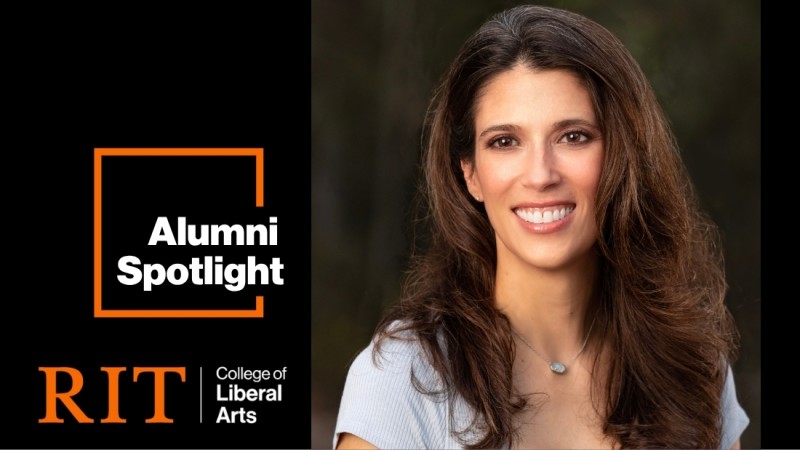
How an RIT Psychology Degree Led Andrea Krzyzaniak '04 to a Career in Trauma Research
A research experience at RIT changed her career path—and ultimately led to directing research at a Level 1 trauma center in San Diego
Read More about How an RIT Psychology Degree Led Andrea Krzyzaniak '04 to a Career in Trauma Research -

A Bright Future at RIT for Students Interested in Neuroscience
RIT researchers built a degree offering students a foundation in neuroscience concepts and research while taking advantage of the university’s strengths in color, imaging science, artificial...
Read More about A Bright Future at RIT for Students Interested in Neuroscience
Curriculum for 2026-2027 for Neuroscience BS
Current Students: See Curriculum Requirements
Admissions and Financial Aid
First-Year Admission
First-year applicants are expected to demonstrate a strong academic background that includes:
- 4 years of English
- 3 years of social studies and/or history
- 3 years of mathematics is required and must include algebra, geometry, and algebra 2/trigonometry. Pre-calculus is recommended.
- 2-3 years of science is required and must include biology and chemistry.
Transfer Admission
Transfer applicants should meet these minimum degree-specific requirements:
- A minimum of college algebra is required. Pre-calculus or calculus is preferred.
- Chemistry and biology are required.
Financial Aid and Scholarships
100% of all incoming first-year and transfer students receive aid.
RIT’s personalized and comprehensive financial aid program includes scholarships, grants, loans, and campus employment programs. When all these are put to work, your actual cost may be much lower than the published estimated cost of attendance.
Learn more about financial aid and scholarships


Research
Undergraduate Research Opportunities
Many students join research labs and engage in research starting as early as their first year. Participation in undergraduate research leads to the development of real-world lab techniques, enhanced problem-solving skills, and broader career opportunities. Our students have opportunities to travel to national conferences for presentations and also become contributing authors on peer-reviewed manuscripts. Explore the variety of neuroscience undergraduate research projects happening across the university.