Grad's thesis film educates about women's rights issues
HamideH Azimi
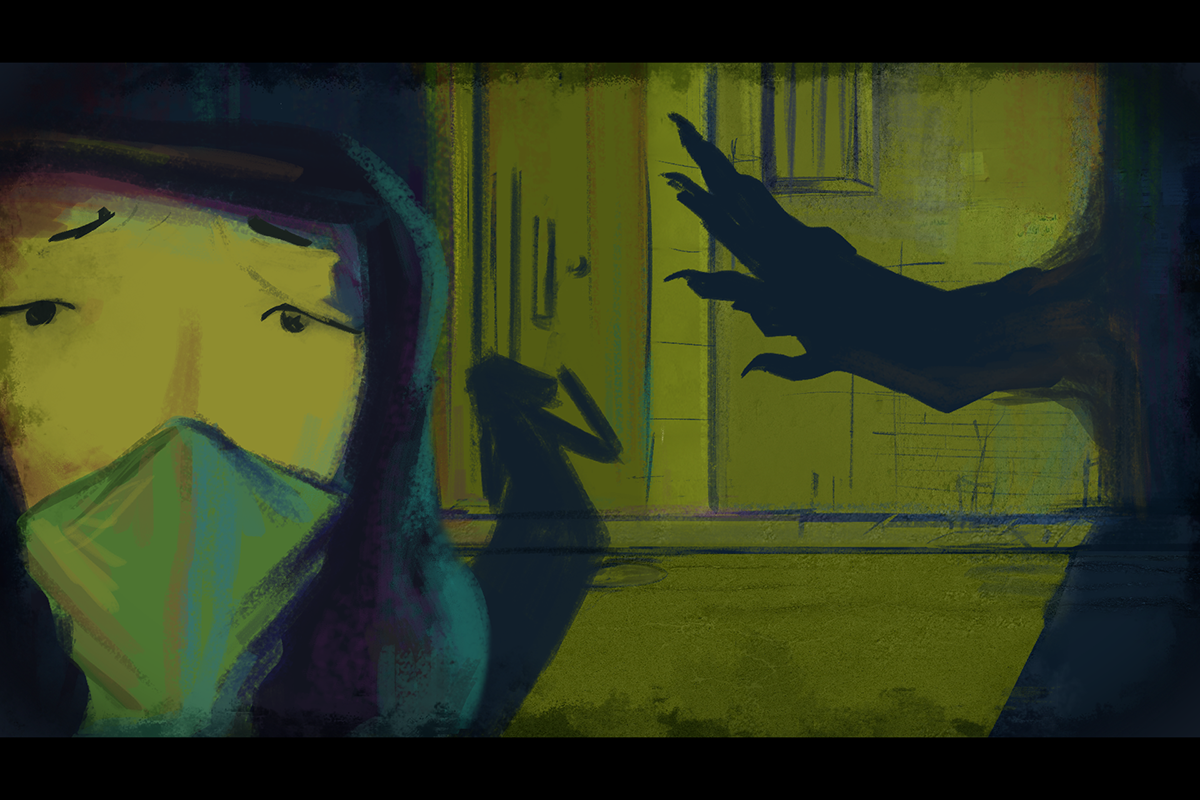
A scene from HamideH Azimi's "Tehran Is Ours," which has garnered attention on the festival circuit and earned CILECT's 2025 SCEDI Award (Standing Committee on Equity, Diversity and Inclusion) for Best Animation.
After arriving at RIT, HamideH Azimi ’24 MFA (film and animation) was introduced to a whole new side of animation.
As a trained computer programmer and self-taught animator working in industry, she was familiar with many of the technical aspects of the field. To her surprise, it was the theory-based courses — like Animation Film Language and History and Aesthetics of Animation — that advanced her storytelling and motivated her to pursue teaching and research in higher education.
“Being at RIT was the first time I was seeing independent and experimental types of works,” said Azimi, now an assistant teaching professor of animation in Ball State University’s School of Art. “At first, I didn’t care to learn about those things. But gradually, when I started to learn more, it totally changed my focus.”
Azimi put her new knowledge into practice with her RIT thesis film, Tehran Is Ours, which mixes experimental and 3D animation elements with her typical 2D style. The result was a powerful message challenging the ongoing repression of women’s rights in her native Iran. Azimi’s story — a response to the country’s Woman, Life, Freedom movement — follows an Iranian girl who joins protests in city streets that are met with police resistance.
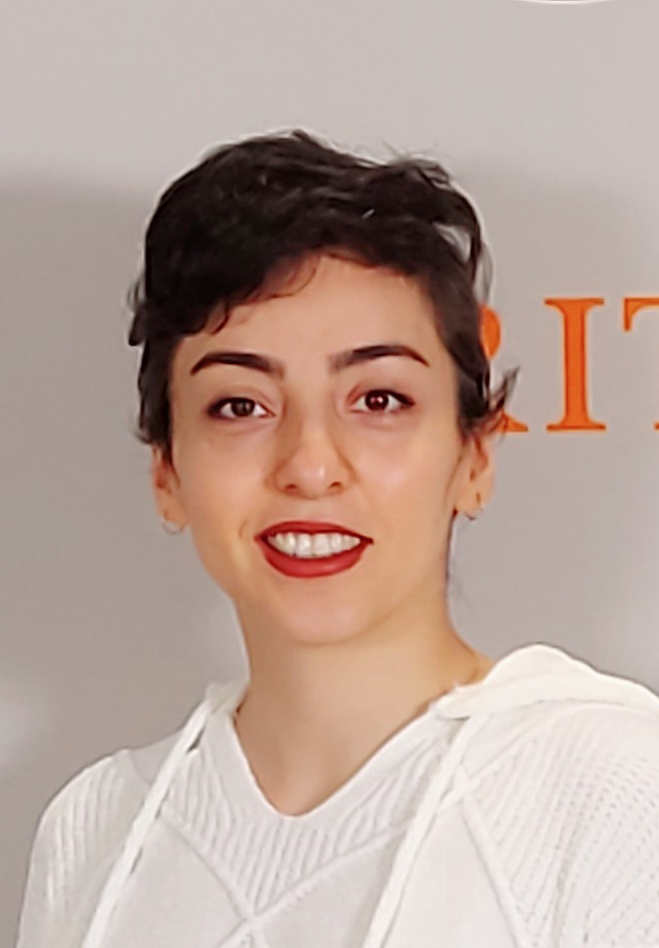
HamideH Azimi
Tehran Is Ours was honored by CILECT as the recipient of the 2025 SCEDI Award (Standing Committee on Equity, Diversity and Inclusion) for Best Animation. CILECT, the International Association of Cinema, Audiovisual and Media Schools, is an acclaimed organization committed to developing and promoting the highest standards of education, research, and training for film, television, and related media.
The film also experienced success on the festival circuit. To date, it has screened at more than 20 festivals around the world, including the Buffalo International Film Festival, Toronto International Women Film Festival, Urbanworld in New York City, London’s Golden Knight Malta International Film Festival, and Hawai'i International Film Festival.
The young girl protagonist represents women “in a society that has a lot of pressure and limitations, but she wants to fly with all those limitations,” Azimi said.
Despite being far away from where she grew up in the capital city of Tehran, Azimi was compelled to apply her creativity to support the protests while educating those outside Iran about the country’s women’s rights issues.
“I have access to media through which I can show others what is happening right now in Iran, so I wanted to dedicate this opportunity to this movement,” Azimi said. “I didn’t want people to feel like, ‘Oh, we are sorry you’re going through that.’ I wanted it to be, ‘OK, we are going through a hard situation but we are strong enough to get past it.’ I know it was risky, but I wanted to show the strength that is there.”
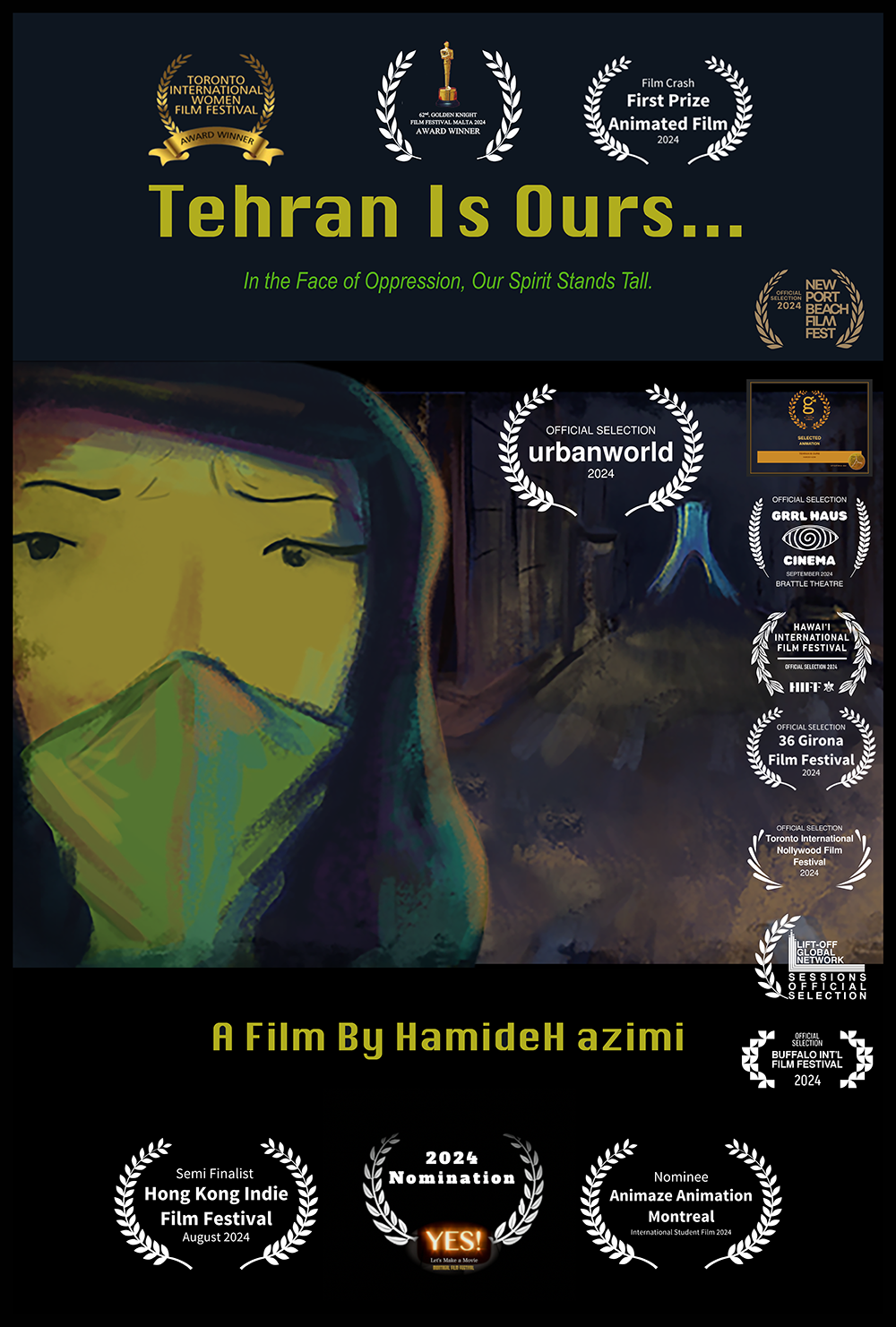
"Tehran is Ours" has traveled the world on the festival circuit.
For the film, Azimi experimented with an unconventional animation technique she tested for the first time.
“I painted everything frame by frame in Photoshop,” she said.
She recognized it was not the most efficient method of animating. But it served her vision of creating “a moving painting with lots of brush detail.”
Azimi, inspired by the deep meaning static paintings have to people, aimed to usher in similar emotions through her medium. Azimi credits her thesis advisor, Assistant Professor Christine Banna, for sharing her expertise in experimental animation to achieve the desired painting aesthetic.
“Whenever there is a painting somewhere, in that moment the painting is valuable,” Azimi said. “I wanted the same thing for my animation, frame by frame, because I believe the people who are protesting in Iran are so brave. They might lose their life, their job, their children. This fact was so valuable to me, so I decided to choose this technique.”