Biomedical Sciences Bachelor of Science Degree

Overview for Biomedical Sciences BS
Why Choose Biomedical Sciences at RIT
Comprehensive Curriculum: Core courses in biology, chemistry, anatomy, and physiology, plus electives in genetics, pharmacology, and epidemiology.
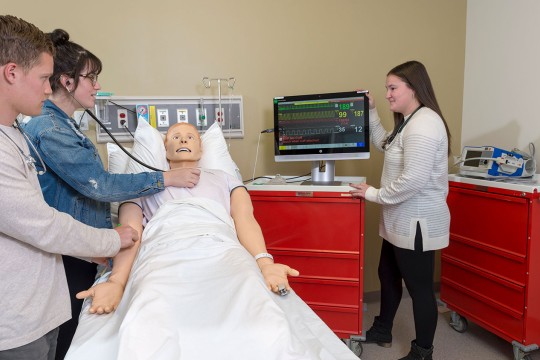
Medical School Preparation: Designed for students pursuing medicine, dentistry, veterinary, pharmacy, and allied health programs. Pre-med/Pre-health and pre-vet advising programs provide hands-on guidance for building competitive applications.
Hands-On Learning: Undergraduate research, cooperative education and internships, and study abroad opportunities.
Direct Path to Medical School: RIT’s partnership with the University of Buffalo’s Jacobs School of Medicine offers eligible pre-health/pre-med students early admission and mentorship through the Early Opportunity Program in Medicine.
Career Success: Alumni work at American Medical Response, American Red Cross, IBM, KAPS Biotechnology, ScribeAmerica, SUNY Upstate Medical University, and more.
STEM-OPT Visa Eligible: The STEM Optional Practical Training (OPT) program allows full-time, on-campus international students on an F-1 student visa to stay and work in the U.S. for up to three years after graduation.
What is Biomedical Sciences?
Biomedical sciences examines living systems at various scales. This includes at the cellular, tissue, organ, and whole-body levels to reveal mechanisms of disease and to discover how to prevent, diagnose, and treat patients. There is a cyclical continuum of identified need or problem, foundational research, clinical implementation, and public health intervention and assessment that connects biomedical discovery to real-world outcomes. It’s the innovation behind evidence-based care, the science that guides clinicians and policymakers, and the reason new therapeutics and care reach patients safely and effectively.
The biomedical sciences field is inherently interdisciplinary: biology meets chemistry and physics; engineering joins mathematics and computing; and AI and data science powers pattern-finding and prediction to improve the wellness of people.
RIT’s Biomedical Sciences Degree Program
The biomedical sciences degree embraces this interdisciplinary approach. Our biomedical sciences students will finish their undergraduate work highly prepared for successful admission to competitive medical and professional schools, or to engage in fulfilling careers in cutting edge medical research. Outside of the classroom, students are mentored and supported in experiential learning, problem-solving, self-discovery, and development of leadership skills. It is a core value that graduates of the biomedical sciences degree will change the face of health care while also having a meaningful impact on improving the lives of individuals and their communities.
Preparation for Advanced Study: Medical School, Professional Degrees, and More
It is also the only major at RIT that includes all the required or recommended courses built into its curriculum for pursuing advanced degrees such as MD, DO, MD/Ph.D., nursing, pharmacy, dental, physician assistant, and the master of public health.
Biomedical Sciences Courses
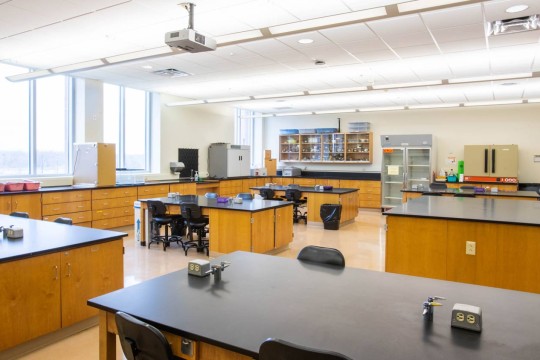
The diverse curriculum of RIT’s biomedical sciences BS includes a life sciences core combined with a broad range of flexible elective options that enable you to customize your education to pursue your professional areas of interest and engage in undergraduate research or independent study with a faculty mentor.
You are able to choose elective courses from a range of categories to customize your degree around your career aspirations and professional interests. Categories include medical foundations, medicine and disease, and medicine and health. A selection of professional electives ensures you can pursue in-depth courses in:
- genetics
- genetic engineering
- genomics
- exercise and kinesiology
- sports physiology
- nutrition
- pharmacology
- epidemiology, and more.
Amplify your degree with additional opportunities:
- Minors and immersions: Choose from more than 185+ minors and immersions, including applied cognitive neuroscience, global public health, and nutritional sciences.
- Interdisciplinary research: Work alongside faculty from the College of Science, the Kate Gleason College of Engineering, the Golisano College of Computing and Information Sciences, and other centers and colleges at RIT in research topics that interest you.
Learn more about program goals and learning outcomes for RIT's bachelor of science in biomedical sciences.
Pre-Health/Pre-Med Advising
RIT's Pre-Health Professions Advising Program emphasizes the importance of academic excellence while providing guidance and advice on extracurricular activities, undergraduate research opportunities, clinical and summer employment opportunities, MCAT and other graduate school admission exams, co-op and internship experiences, medical and graduate school applications, and more.
Pre-Vet Advising
RIT’s pre-vet advising program provides personalized support to help you prepare successful applications for veterinary medical school. Pre-vet advising offers guidance on course selection, veterinary and animal care experience requirements, the veterinary school application process, and more. Learn about RIT’s pre-vet advising program.
RIT/University of Buffalo’s Early Opportunity Program in Medicine
RIT pre-health/pre-med students have a direct path to medical school through an RIT partnership with the Jacobs School of Medicine and Biomedical Sciences at the University at Buffalo (UB). The Early Opportunity Program in Medicine allows eligible RIT students to secure a pre-admission offer to the Jacobs School while completing their undergraduate degree at RIT. Students accepted into the program gain early access to professional training and mentorship at UB’s medical school, helping them prepare for the demands of medical school and beyond. Learn more about the Early Opportunity Program in Medicine.
-

Apply for Fall 2027
Early Decision I and Early Action deadlines are November 1.
-
Meet Us on Campus
Learn about academics, co-op and internships, financial aid, and more at one of our on-campus open houses.
October 12 | October 24 | November 14
Careers and Experiential Learning
What Can You Do with a Biomedical Sciences Degree?
With its grounding in the sciences and mathematics, along with a complement of liberal arts courses, the bachelor's in biomedical sciences is the perfect preparation for a range of career opportunities.
Careers in Biomedical Sciences
Dynamic career opportunities in the biomedical sciences continue to grow. This increase in demand is due, in part, to advances in biotechnology, the need for more researchers studying health care problems, medical procedures, and diseases, better treatments for current and emerging health issues, and public policy challenges.
- Medical School and Graduate Programs in the Health Sciences: The bachelor's in biomedical sciences offers excellent undergraduate preparation for careers in medicine (allopathic and osteopathic), biomedical research, exercise science, pathology, pharmacy, pharmacology and drug development, toxicology, neuroscience, and genetic counseling. Recent graduates are pursuing medical school and health science graduate degrees at universities such as Boston University School of Medicine, Cornell University, Massachusetts Institute of Technology, New York University School of Medicine, SUNY Upstate School of Medicine, and Philadelphia College of Osteopathic Medicine.
- Direct Entry into Research Positions: Along with course work related to your curriculum, you will also have vast opportunities for hands-on research experiences in a range of areas. These opportunities will prepare you well for direct entry into research positions where you will investigate and explore solutions to a range of medical and health care problems.
Typical Job Titles
| Clinical Research Coordinator | Dietary Technician | EMT |
| Genetics Assistant | Image Analyst | Medical Assistant |
| Medical Scribe | Optometric Assistant | Patient Care Technician |
| Secondary Science Education |
Industries
A broad and demanding curriculum is the foundation for the career areas supported by the biomedical sciences degree. Yet, all of these areas also require some element of learning that occurs outside of the classroom. Hands-on, experiential learning allows students to explore new areas of study, solidify career goals, and acquire critical extracurricular credentials that increase the competitiveness of graduate and medical school applications and significantly enhance employment opportunities after graduation.
Research Internships
Research internships, offered both on and off-campus, take place during the summer. RIT offers numerous opportunities for students to participate in research, including three on-campus summer programs: Research Experiences for Undergraduates (REU), Summer Undergraduate Research Fellowships (SURF), and the Summer Undergraduate Research Programs (SURP). Many students participate in undergraduate research for course credit during the academic year.
Cooperative Education
What’s different about an RIT education? It’s the career experience you gain by completing cooperative education and internships with top companies in every single industry. You’ll earn more than a degree. You’ll gain real-world career experience that sets you apart. It’s exposure–early and often–to a variety of professional work environments, career paths, and industries.
Co-ops and internships take your knowledge and turn it into know-how. Science co-ops include a range of hands-on experiences, from co-ops and internships and work in labs to undergraduate research and clinical experience in health care settings. These opportunities provide the hands-on experience that enables you to apply your scientific, math, and health care knowledge in professional settings while you make valuable connections between classwork and real-world applications.
Featured Work and Profiles
-

Biomedical Sciences Student wins Community Health Gap Year Fellowship in Alabama
With a fellowship at the prestigious Project Horseshoe Farm, Elena Fuentes Solano '26 (biomedical sciences) will gain valuable understanding of the needs of rural communitites as she prepares to apply...
Read More about Biomedical Sciences Student wins Community Health Gap Year Fellowship in Alabama -

Recent Grad Wins Fulbright Scholarship to Study Public Health in England
Sammy Deol '25 (biomedical sciences) won a Fulbright Scholarship to attend graduate school in England. He will earn a master’s degree in public health in preparation for medical school.
Read More about Recent Grad Wins Fulbright Scholarship to Study Public Health in England -

Research Programs Fuel RIT Student Success
Two RIT scholarships provide underrepresented students with resources, professional development, and opportunities to conduct and present research.
Read More about Research Programs Fuel RIT Student Success -

Undergraduate Research Opportunities Cultivate Critical Thinking, Collaboration, and Problem-Solving Skills
Marissa Schroeter chose RIT for its science expertise and the chance to join a research lab in her first semester.
Read More about Undergraduate Research Opportunities Cultivate Critical Thinking, Collaboration, and Problem-Solving Skills -

RIT Fulbright Scholar Tackles Neuroscience Research in Quebec City
RIT biomedical sciences student Paige Mattoon spent her summer as a Fulbright Canada research intern in Quebec, studying neuron subpopulations linked to food intake.
Read More about RIT Fulbright Scholar Tackles Neuroscience Research in Quebec City
Curriculum for 2026-2027 for Biomedical Sciences BS
Current Students: See Curriculum Requirements
Admissions and Financial Aid
This program is STEM-OPT Visa Eligible when studying on campus and full time.
First-Year Admission
First-year applicants are expected to demonstrate a strong academic background that includes:
- 4 years of English
- 3 years of social studies and/or history
- 3 years of math is required and must include algebra, geometry, and algebra 2/trigonometry. Pre-calculus is preferred.
- 2-3 years of science. Biology and chemistry are required.
Transfer Admission
Transfer applicants should meet these minimum degree-specific requirements:
- A minimum of college algebra is required. Pre-calculus or calculus is preferred.
- Biology and chemistry are required.
Financial Aid and Scholarships
100% of all incoming first-year and transfer students receive aid.
RIT’s personalized and comprehensive financial aid program includes scholarships, grants, loans, and campus employment programs. When all these are put to work, your actual cost may be much lower than the published estimated cost of attendance.
Learn more about financial aid and scholarships


Related News
-
June 10, 2026

Hassan Aziz named dean of RIT’s College of Health Sciences and Technology
Hassan Aziz will join RIT from Texas A&M University-Corpus Christi, where he currently serves as dean and professor of the College of Nursing and Health Sciences. He starts on Aug. 1.
-
April 17, 2026

Biomedical sciences student wins Community Health Gap Year Fellowship in Alabama
A prestigious fellowship will deepen biomedical sciences student Elena Fuentes Solano’s understanding of the needs facing rural communities and help prepare her for a career in medicine.
-
February 6, 2026
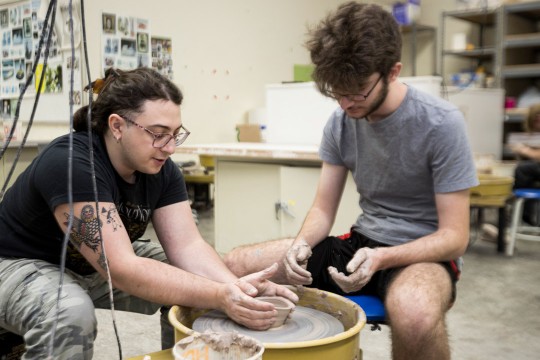
ArtEx students find community by leaning into creativity
ArtEx creates opportunities for students outside of RIT’s College of Art and Design to participate in creative and collaborative experiences by granting special access to engage with the studios, resources, and expertise available within the School for American Crafts and School of Art.
