Game Design and Development Bachelor of Science Degree
RIT’s game design BS is ranked 3rd for best game design program, according to the 2026 rankings from Us News & World Report.
$79.3K
Average First-Year Salary of RIT Graduates from this Game Design and Development BS degree
#3
Best Game Design and Development Programs
#4
Top 25 Game Design BS Degrees
#4
Top 50 Game Design Programs: Undergraduate Category
#6
Top 50 Game Design Schools and Colleges
Overview for Game Design and Development BS
Why Study Game Design and Development at RIT
Gain Real-World Experience: Two blocks of cooperative education provide you with full-time, paid experience in the games industry.
Specialization Opportunities: Pursue advanced studies that can be customized to suit your individual interests and career goals.
Industry Connections: Take advantage of Creative Industry Day, hosted by RIT’s Office of Career Services and Cooperative Education hosts, which connects students majoring in art, design, film and animation, photography, and select computing majors with companies, organizations, creative agencies, design firms, and more.
Studio Access: Create and commercialize your own games at RIT’s MAGIC Spell Studios.
Accelerated Bachelor’s/Master’s Available: Earn both your bachelor’s and your master’s in less time and with a cost savings, giving you a competitive advantage in your field.
STEM-OPT Visa Eligible: The STEM Optional Practical Training (OPT) program allows full-time, on-campus international students on an F-1 student visa to stay and work in the U.S. for up to three years after graduation.
RIT’s Game Design and Development Major
The game design bs emphasizes game programming within a core computing education to prepare you for careers in the game, simulation, modeling, training, and visualization industries. The emphasis on computing fundamentals gives you more career options and prepares you for graduate school.
In the context of computational game development, you gain a breadth of knowledge in:
- Game design
- Interactive media
- User interaction
- Animation
- Modeling
- Math
- Science
- Design
In addition to the core of required course work in the game design bs, you can pursue advanced studies that can be customized to your individual interests and career goals. You can further specialize by taking electives in areas such as:
- Game design
- Production
- Engines and systems
- Graphics programming and animation
- Mobile
- Web
- Audio
This depth of course work enables you to build a robust portfolio of games and other interactive projects.
Furthering Your Education in Game Design
Combined Accelerated Bachelor’s/Master’s Degrees
Today’s careers require advanced degrees grounded in real-world experience. RIT’s Combined Accelerated Bachelor’s/Master’s Degrees enable you to earn both a bachelor’s and a master’s degree in as little as five years of study, all while gaining the valuable hands-on experience that comes from co-ops, internships, research, study abroad, and more.
- Game Design and Development/Game Design and Development MS: The accelerated BS/MS pathway in game design and development provides you with the skills and hands-on experiences you need to develop and release your own games. Both the BS and MS degrees are Top-10 nationally-ranked programs, and our students are attractive recruits to major games studios, or independent upstarts. Following a foundation in game design and development and experiences working in professional facilities like MAGIC Spell Studios, you will focus on nurturing and growing new companies and publishing and distributing your own projects.
- +1 MBA: Students who enroll in a qualifying undergraduate degree have the opportunity to add an MBA to their bachelor’s degree after their first year of study, depending on their program. Learn how the +1 MBA can accelerate your learning and position you for success.
-

Apply for Fall 2027
Early Decision I and Early Action deadlines are November 1.
-

Meet Us on Campus
Learn about academics, co-op and internships, financial aid, and more at one of our on-campus open houses.
October 12 | October 24 | November 14
Careers and Experiential Learning
Typical Job Titles
| Associate Front End Engineer | Associate Game Designer | Associate UI Engineer |
| Developer | Engineer Programmer | Game Designer |
| Game Developer | Junior Software Engineer | Level Designer |
| Mobile Developer | Programmer | Quality Assurance Engineer |
| Software Developer | Software Development Engineer | Software Engineer |
| Tech Artist | UI/UX Designer | Web Developer |
Industries
Cooperative Education
What’s different about an RIT education? It’s the career experience you gain by completing cooperative education and internships with top companies in every single industry. You’ll earn more than a degree. You’ll gain real-world career experience that sets you apart. It’s exposure–early and often–to a variety of professional work environments, career paths, and industries.
Co-ops and internships take your knowledge and turn it into know-how. Your computing co-ops will provide hands-on experience that enables you to apply your computing knowledge in professional settings while you make valuable connections between classwork and real-world applications.
Students in the game design degree are required to complete two blocks of cooperative education experience. This may start after their second year of study. Although students usually complete co-ops during the summer term, they may also be completed during the academic year.
Creative Industry Day
RIT’s Office of Career Services and Cooperative Education hosts Creative Industry Day, which connects students majoring in art, design, film and animation, photography, and select computing majors with companies, organizations, creative agencies, design firms, and more. You’ll be able to network with company representatives and interview directly for open co-op and permanent employment positions.
Featured Work and Profiles
-
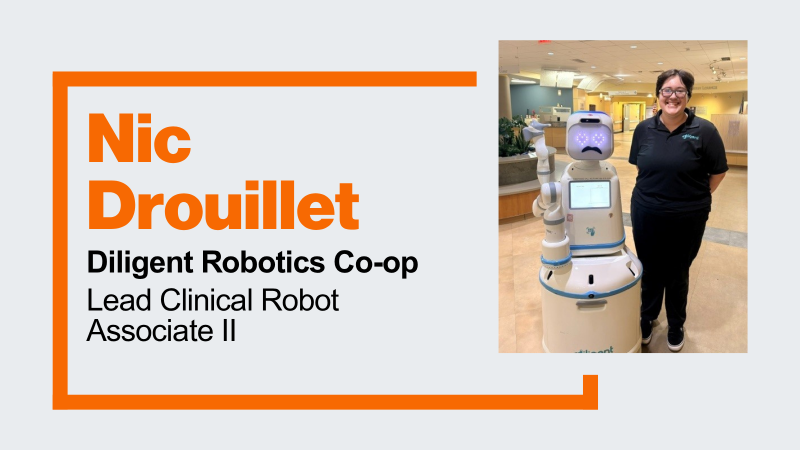
Game design student scores co-op promotion at AI robotics firm
Nic Drouillet’s work on Moxi, an AI-powered healthcare robot, during his co-op at Diligent Robotics highlights the versatility and technical breadth that come with a game design and development degree...
Read More about Game design student scores co-op promotion at AI robotics firm -
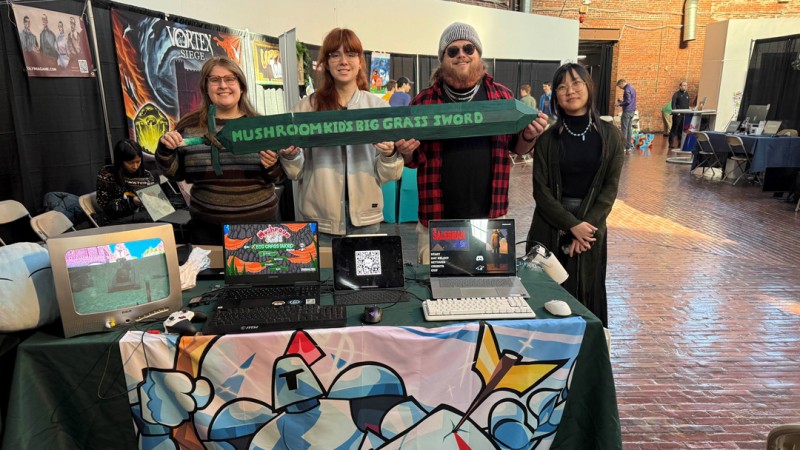
RIT students launch studio to bring bad game ideas to life
The Salesman, the first game produced by the studio, has already sold 8,000 times—at $5 for the game.
Read More about RIT students launch studio to bring bad game ideas to life -

RIT-created virtual reality game Changeling VR arrives on Steam
Elouise Oyzon More than 300 RIT students have published Changeling VR, a new narrative mystery game on Steam.
Read More about RIT-created virtual reality game Changeling VR arrives on Steam -

Grad’s job is all fun and games
Rohit Crasta, lead game designer for The New York Times, helps create some of the most popular digital puzzles
Read More about Grad’s job is all fun and games -

First-year game design and development ‘wonders’ win hackathon category
Game design and development students Abby Rochelle, Katie Yates, and Bella Miller teamed up for Women in Computing’s WICHacks 2025 in hopes of having fun weekend plans with one another. What...
Read More about First-year game design and development ‘wonders’ win hackathon category -

Pelican Post
Connor Petrei, Drew Genel, Gale Ellis, Joana Leong, Jason Weinberg, Josh Clark ’25 An upcoming wholesome, narrative-driven social sim game.
Read More about Pelican Post
Curriculum for 2026-2027 for Game Design and Development BS
Current Students: See Curriculum Requirements
Admissions and Financial Aid
This program is STEM-OPT Visa Eligible when studying on campus and full time.
First-Year Admission
First-year applicants are expected to demonstrate a strong academic background that includes:
- 4 years of English
- 3 years of social studies and/or history
- 4 years of mathematics is required and must include algebra, geometry, algebra 2/trigonometry, and pre-calculus. Calculus is preferred.
- 2-3 years of science is required and must include chemistry or physics; both are preferred.
- Computing electives are preferred.
Transfer applicants should meet these minimum degree-specific requirements:
- A minimum of precalculus is required. Calculus is preferred.
- Chemistry or physics is required.
- Computing courses are preferred.
Financial Aid and Scholarships
100% of all incoming first-year and transfer students receive aid.
RIT’s personalized and comprehensive financial aid program includes scholarships, grants, loans, and campus employment programs. When all these are put to work, your actual cost may be much lower than the published estimated cost of attendance.
Learn more about financial aid and scholarships


Related News
-
October 14, 2026
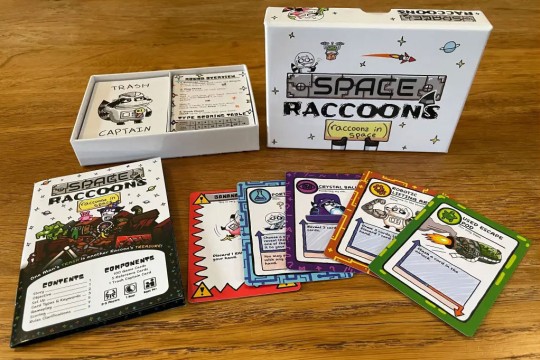
Korn having a blast with Space Raccoons card game
The Mercer Island Reporter interviews 2025 RIT game design and development graduate Brandon Korn about Space Raccoons: Raccoons in Space, a game he and fellow RIT students developed while at RIT.
-
September 24, 2026
RIT faculty, staff, and students come together to turn a Rochester teen’s Make-A-Wish dream into a playable game
19-year-old Caleb Pixley worked with RIT community members and Rochester-based ROC Game Dev over six months to bring his vision for "The MAW" to life.
-
September 24, 2026
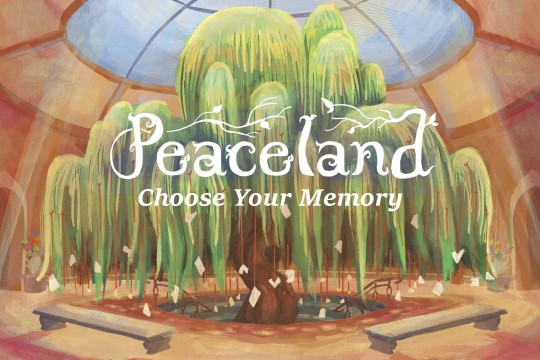
RIT students across disciplines create peacebuilding video game
Small choices can have big consequences. That’s the idea at the heart of Peaceland: Choose Your Memory, a new video game being developed by students and faculty at RIT.
Contact

School of Interactive Games and Media