Media
The National Technical Institute for the Deaf has become an international model for educating and preparing deaf students for technology-related careers. NTID at RIT is the only college in the world that offers deaf and hard-of-hearing students a variety of degrees in a wide range of technical and business fields.
NTID faculty and staff are experts in deaf-related fields, such as:
|
|
History/Mission
RIT competed against eight other colleges for NTID to become part of the university. In 1968, NTID began providing deaf and hard-of-hearing students with outstanding technical and professional education programs, complemented by a strong liberal arts and sciences curriculum, that prepares them to live and work in the mainstream of a rapidly changing global community and enhances their lifelong learning.

Experts/Sources
Dr. Caroline M. Solomon
NTID President, RIT Vice President and Dean
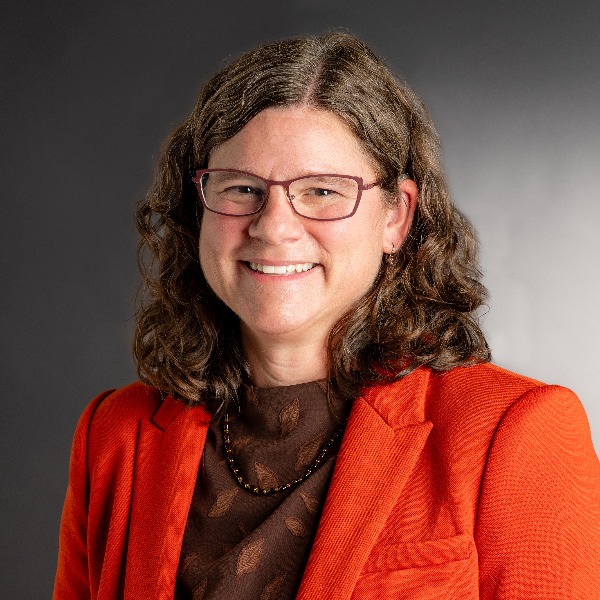 A renowned scientist and researcher, Dr. Caroline M. Solomon is the first woman to lead NTID since the college’s establishment in 1965.
As president, she provides leadership in developing and executing the college’s vision and strategic plan, and is responsible for NTID’s financial operations and budget, academic programs, enrollment management, external and federal relations, and fundraising.
Throughout her career, Solomon has devoted herself to encouraging and nurturing deaf and hard-of-hearing students in STEM fields. She joined the faculty of Gallaudet University as a biology instructor in 2000 and rose to the rank of professor in 2011. She received Gallaudet’s Distinguished Faculty Award in 2013 and was recognized by the Association for the Sciences of Limnology and Oceanography with their Ramon Margalef Award for Excellence in Education in 2017. She was appointed the dean of faculty at Gallaudet in 2024.
Solomon earned a bachelor’s degree in environmental science and public policy, magna cum laude, from Harvard University and a master’s degree in biological oceanography from University of Washington’s School of Oceanography. She earned a Ph.D. in marine, environmental and estuarine sciences from University of Maryland and has presented her research at national and international conferences. She is the co-creator of a database of science- and technology-related terms in American Sign Language to identify marine life and enhance accessibility for individuals who are deaf studying or working in the sciences.
A past participant in the Deaflympics as a swimmer, Solomon was inducted into the Deaflympics Hall of Fame in 2020. She and her husband, Barry, an attorney, have two children.
Contact: Susan Murad
(585) 475-6283
Catherine Clark
Cochlear Implant Program Coordinator
Assistant Professor
 Catherine Clark is NTID's Cochlear Implant expert, working with NTID's 100 students who have cochlear implants, a technology that changes and improves regularly. Catherine has presented and published in the areas of speech perception, speechreading, communication technologies and NTID's Cochlear Implant Program. Her bachelor's degree in Speech and Hearing Sciences is from Bradley University and she earned a master's degree in Audiology at the University of Louisville. She also received cochlear implant training at the House Ear Clinic in Los Angeles, California.
More info on Dr. Clark
Contact: Susan Murad
(585) 475-6283
Peter Hauser
Professor
Psychologist
Director, Deaf Studies Laboratory
 Hauser is a deaf clinical neuropsychologist who has published more than 30 articles and chapters on how deaf individuals learn.
His laboratory has received more than $1 million in federal funding and produces innovative research regarding visual cognitive, sign language and psychosocial aspects of the deaf experience.
He has developed ASL assessment instruments, validated psychological assessment instruments when used with deaf individuals and provides consultation on the forensic and clinical neuropsychological assessment of deaf individuals.
He is one of the executive leaders of the National Science Foundation Science of Learning Center on Visual Language and Visual Learning.
Hauser frequently presents his work at professional conferences, deaf educational programs and organizations nationally and internationally.
He has a bachelor’s degree in Psychology and Philosophy from Central Connecticut State University; masters’ degrees in Psychology and Linguistics from Gallaudet University and a Ph.D. in Clinical Psychology from Gallaudet.
Contact: Susan Murad
(585) 475-6283
Kim Brown Kurz
Professor
Chair, Department of American Sign Language and English Interpretation
- Ph.D., University of Kansas, Lawrence, Special Education/Deaf Education; Minor: Speech, Hearing, and Language and ASL Linguistics
- M.S., Rochester Institute of Technology, Career Counseling
- B.S.W., Rochester Institute of Technology
Dr. Kurz, a lecturer, trainer, and co-author of the national standards for teaching American Sign Language, is the co-author of the American Sign Language and Deaf Culture series. Dr. Kurz is the primary author of Learning Outcomes for American Sign Language Skills: Levels 1-4 document published in New York. In addition to this project, she is a member of the American Sign Language Standards National Committee and served as a consultant for the Outcomes for Graduates of Baccalaureate Interpreter Preparation Programs Specializing in Interpreting in K-12th Grade Settings document. The title of
Dr. Kurz's dissertation is A Comparison of Deaf Children's Comprehension in Direct Communication and Interpreted Education.
During Dr. Kurz's spare time, she enjoys spending time with her husband, Christopher Kurz, and their four sons; attending their hockey, baseball, lacrosse, and soccer games; volunteering at Camp Mark Seven; walking/hiking; reading novels; and watching movies.
Specializations: 5 C's Theories and Applications, ASL National Standards, Educational Interpreting
Marc Marschark
Professor
Department of Research
 The founder and editor of the Journal of Deaf Studies and Deaf Education, Marschark has also published more than 100 articles and chapters, and written and edited eleven books about learning, education, and deaf children's development. Marschark is leading NTID in innovative research efforts concerning sign language interpreting in educational settings, and has recently received more than $1.75 million in federal funding for his research.
More info on M. Marschark
Contact: Susan Murad
(585) 475-6283
NTID established the world's first ASL-English interpreter education program in 1969. Today, NTID also has the leading interpreting services program at both the associate and bachelor's level, and employs more than 130 interpreters who support the 1,200 deaf and hard-of-hearing students on the RIT/NTID campus in and out of the classroom.
Contact: Susan Murad
(585) 475-6283
Americans with Disabilities Act (ADA) has heightened awareness about integrating deaf and hard-of-hearing people into the workplace. NTID's Employment Specialists work with employers to make that integration easy. Many employers find NTID students to be an untapped resource of skilled workers in technical and professional fields. To talk with employers or their workers who are deaf or hard of hearing.
Contact Susan Murad
(585) 475-6283
While TTY's are rarely used today, smartphones and other hi-tech gadgets are increasing in use by people who are deaf or hard of hearing. From Video Relay services, webcams and videophones, deaf and hard-of-hearing people communicate quite differently than in the past. NTID has a host of professionals that can speak to the latest advances in assistive technology for deaf and hard-of-hearing people in the classroom, on the job or at home.
Contact: Susan Murad
(585) 475-6283

Comment Policies
The following rules apply to all participants in discussions that occur on NTID websites (those that begin with www.rit.edu/ntid), as well as NTID's official pages on Facebook, Twitter, YouTube, and other websites. RIT/NTID reserves the right to modify or delete communications that violate these policies, as well as the right to permanently ban and/or block members who repeatedly or egregiously violate the code of conduct.
Participants in discussions on NTID websites and social media pages:
- Will not intentionally offend, harass, or embarrass others.
- Will not solicit or spam others (if the purpose of your message is profit, it violates this policy).
- Will not post links to websites that contain illegal or obscene content.
- Will not use the NTID website to facilitate or promote illegal activities. This includes the illegal distribution of copyrighted works.
- Will refrain from using offensive language.
- Will not post or link to photos or videos that contain offensive or obscene imagery. Attempts to post pornographic material will result in a permanent ban.
- Will not use the network to impersonate or falsely represent another person or organization.
If you have any questions about these policies or would like to report a violation, please send a message to the NTID webteam (mxdnpa@rit.edu).