NCCC Success Story
Emily Ohl
Industrial Design
Design Intern
Where are you from?
I’m from Columbia, Maryland. I grew up in the center of Columbia until I was about eight years old, and then my family moved just outside of town.
What is your degree program?
I am pursuing a BFA in Industrial Design in the College of Art and Design at RIT, and I expect to graduate in May 2026.
What is your primary communication style – ASL, spoken English, both, or another language?
I grew up in a hearing family, so my first language was spoken English. I began learning ASL during COVID and it quickly became my preferred form of communication. For example, when I am out in public or at a job, I may use spoken English, but I feel most comfortable in ASL. Since my high school didn’t offer ASL classes, I started taking them at a community college. My neighbor, who had a great experience at RIT, encouraged me to apply. He even mentioned that there were deaf people at RIT, which was why he made the recommendation. When I first arrived, I had limited ASL skills and had never even met another deaf person before. Seeing NTID and meeting other deaf students here was life changing.
Tell us the date of your co-op/internship, your position title, and the company you worked for.
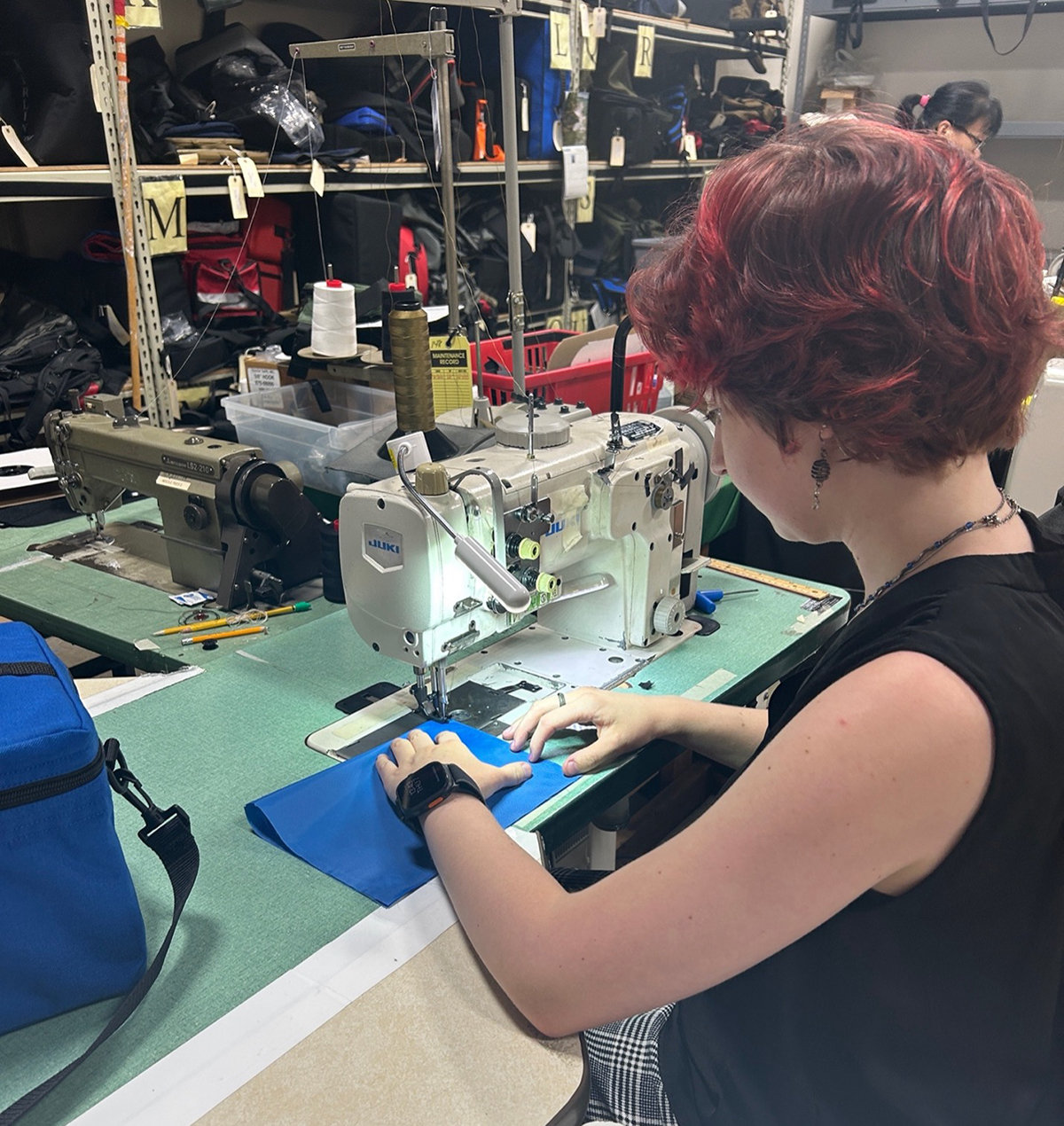
This past summer, I worked as a Design Intern at FieldTex, a company in Rochester, NY, just 15 minutes from campus. I was part of FieldTex Cases, a subsidiary that specializes in bags for military and medical equipment.
What was your role and what kinds of projects or tasks did you work on during your co-op/internship?
As a design intern, I supported the design team on a variety of projects—about 20 in total throughout the summer. My responsibilities included handling different aspects of product design and collaborating directly with customers. I had three main ways of starting projects:
- Project briefs: For straightforward projects, I received a brief and created a design based on it.
- Client collaboration: At times, I joined sales meetings to help clients shape their ideas into workable designs.
- Product adaptation: Some clients brought in existing bags they wanted manufactured by FieldTex. In those cases, I analyzed the product and figured out how to redesign it for our production process.
How did your experience at RIT/NTID prepare you for this job?
A class I took called “Bag Design Studio” was especially helpful. It gave me hands-on experience with design processes that closely mirrored the work I did at FieldTex. That class really helped me understand how to approach projects in a systematic way.
Additional Questions
What skills did you gain or strengthen during your time at the company?
I gained a much deeper understanding of the textile manufacturing process. For example, if I created something on my own, I could spend more time at each step of the design process. However, manufacturing the same thing (at FieldTex) required me to consider things like repeated work, machine capability, and speed. At FieldTex, I learned how the company prioritized efficiency and used specific techniques to speed up production like methods for sewing zippers quickly and effectively. This gave me insight into how design connects directly with large-scale manufacturing.
Did this experience change or confirm your career goals?
This experience confirmed that I enjoy working directly with people. A big part of my role was designing for customers through collaboration with sales staff. Helping clients articulate their needs and then translating those into functional designs was my favorite part of the job. It showed me that in my future career, I want to continue working closely with customers as part of the design process.
What advice would you give to other deaf and hard-of-hearing students preparing for their first co-op or internship?
Even if you don’t think you’ll need them, request accommodations. Having those supports in place makes a difference. If that’s not possible, don’t be afraid to be vocal about your deafness—sometimes you need to be very clear so hearing people understand.
What would you want future employers to know about working with deaf and hard-of-hearing professionals?
I want employers to know that it’s okay to ask questions about accommodations. Doing so helps create a safe space and shows that the employer genuinely wants to support their deaf or hard-of-hearing employees.