AST Colloquium - Blind Source Separation of Astrophysical Images
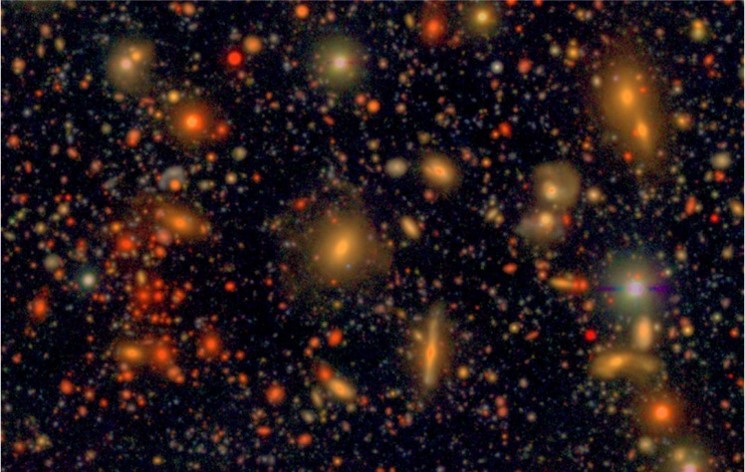
Blind Source Separation of Astrophysical ImagesDr. Fred MoolekampPrinceton UniversityAbstract:Current surveys like the Dark Energy Survey, Hyper Suprime-Cam survey, and the future Large Synoptic Survey Telescope (LSST) survey combine images of the sky over timescales as long as 10 years, allowing us to look deeper into the galaxy and the universe over large regions of the sky. In order to make any scientifically interesting measurements of astrophysical sources from deep astrophysical images one has to address the problem of blending, where the 2D projection of the 3D universe on a camera causes foreground and background objects to overlap. I'll discuss how this deceptively simple problem will affect various astrophysical measurements planned over the next decade and outline how deblending is currently performed in popular software packages, their limitations, and our efforts in LSST to use both standard gradient descent and machine learning techniques to address our anticipated challenges.Speaker Bio:Dr. Fred Moolekamp worked as a software developer for several years before returning to university and receiving his undergraduate degree in Physics from the University of New Orleans in 2008. He received his Masters in Physics and PhD in Physics and Astronomy from the University of Rochester in 2010 and 2016 respectively where he published work in many areas of physics including optics, theoretical high energy physics, and observational and computational astronomy. He has spent the past three years as a post doc at Princeton University developing the deblender for the Large Synoptic Survey Telescope and has recently returned home to Rochester while continuing to work on the project. Intended Audience:Undergraduates. Graduates. Experts.
Event Snapshot
When and Where
Who
Open to the Public