BMECHE-PhD Seminar - Professor Theodore Walker
Novel material formulations for improved selectivity and catalyst stability in liquid- and gas-phase biomass conversion process
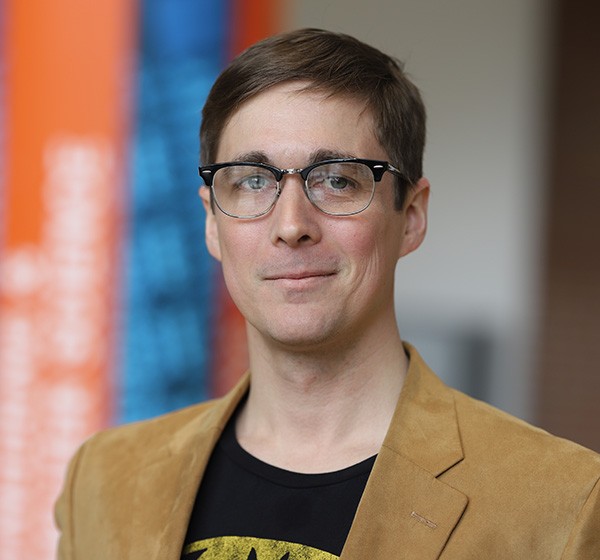
Dr. Theodore Walker
Ass. Prof. in Biomedical and Chemical Engineering at Syracuse University
Abstract:
Chemical kinetics in liquid phase catalytic processes are partially controlled by entropic effects resulting from many-body noncovalent interactions between reactant species and surrounding solvent molecules. Progress in combining detailed reaction kinetics investigations with innovative computational tools has revealed a wealth of detailed insight around the role of solvent molecules in mediating charge transfer and proton shuttling mechanisms; modulating the free energy of transition states by preferential solvation; and otherwise facilitating distinct chemistry relative to gas phase reaction sequences. These insights have enabled a number of innovative approaches to control the selectivity of liquid phase processes by deliberately modulating the composition of the solvent system; and some key examples in this context are biomass conversion studies. However, techonomic analyses have revealed managing complex solvent mixtures as a key cost driver in these otherwise promising bio-renewable chemical technologies.
Here, I will briefly review some of my own Ph.D. thesis work (at the University of Wisconsin – Madison), exploring the role of mixed solvent systems in controlling the rates and selectivities of acid-catalyzed biomass conversion processes. I will then introduce the seminal work from my research group at Syracuse University, where we are tethering polymer grafts of precisely tuned dimensions onto acid-functionalized nanoparticles to create tailored local solvation environments near the catalyst surface, eliminating the need for an expensive organic cosolvent. We are furthermore exploring the role of post-transition elements in modulating the dissolution resistance of first-row transition metal catalysts during electrochemical oxidation reactions; and developing strategies to improve the alkali metal tolerance of zeolitic catalysts. I will describe some of our preliminary efforts toward these ends.
Bio:
Dr. Theodore (Ted) Walker grew up in Southern Illinois. He joined the US Army’s 75th Ranger Regiment after graduating from high school in 2005 and deployed multiple times to both Iraq and Afghanistan before being honorably discharged in 2012. Thereafter, he used his veteran’s benefits to obtain a BS in Chemical Engineering from the University of Illinois at Chicago in 2015. He obtained his Ph.D. in Chemical and Biological Engineering from the University of Wisconsin – Madison in 2019 under the advisement of Prof.’s Jim Dumesic and George Huber. After obtaining his Ph.D., Dr. Walker joined the ExxonMobil Research and Engineering Company as a Senior Scientist from 2019-2022, where he published multiple patents in the areas of low-carbon fuel production and refinery process intensification. He joined the Biomedical and Chemical Engineering Department at Syracuse University as an Assistant Professor in 2022, where he now leads an independent research group specializing in heterogeneous catalyst design for liquid- and gas-phase upgrading of biomass, waste plastics, and other renewable sources of organic carbon. He is the recipient of the ExxonMobil Process Technology Department’s Innovator of the year award, the ExxonMobil Research and Development Excellence Award, and the Ronald A. Ragatz Teaching Assistant award from UW-Madison.
Event Snapshot
When and Where
Who
Open to the Public
Interpreter Requested?
No