CANCELLED Can AI Help Doctors Communicate Better with Patients?
The SOPHIE Project
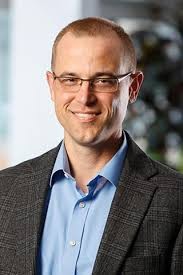
Speaker: Dr. Thomas Carroll
Abstract: Can, and should, AI be used to help doctors communicate better with patients? That’s the guiding question of my talk, and I’ll answer it by discussing an interdisciplinary initiative that I’ve been working on at the University of Rochester: the SOPHIE Project. In this pilot project, we’ve created AI avatars of cancer patients, monitored doctors’ conversations with them, and used automated tools to provide feedback on how the discussions went. Since these avatars cannot experience anything, including suffering, the project raises a host of questions concerning ethics—particularly around design justice and empathy—and efficacy.
About the Speaker: Dr. Thomas Carroll is a Professor of Medicine at the University of Rochester Medical Center. He received his M.D. and Ph.D. from the University of Connecticut and then completed his internal medicine training at the University of Rochester, where he subsequently served as Chief Resident and completed the fellowship program in Hospice and Palliative Medicine. Dr. Carroll practices both general internal medicine and palliative care in office and hospital settings. He also directs the Advanced Communication Training (ACT) Program (act-ur.com), which seeks to improve patient care by supporting communication excellence among individual clinicians and clinical teams. His interests include communication training, medical education at all stages of training, and Catholic bioethics.
Please submit interpreting requests to myAccess.rit.edu.
Event Snapshot
When and Where
Who
Open to the Public
Interpreter Requested?
No