Photographic Justice: The Corky Lee Story
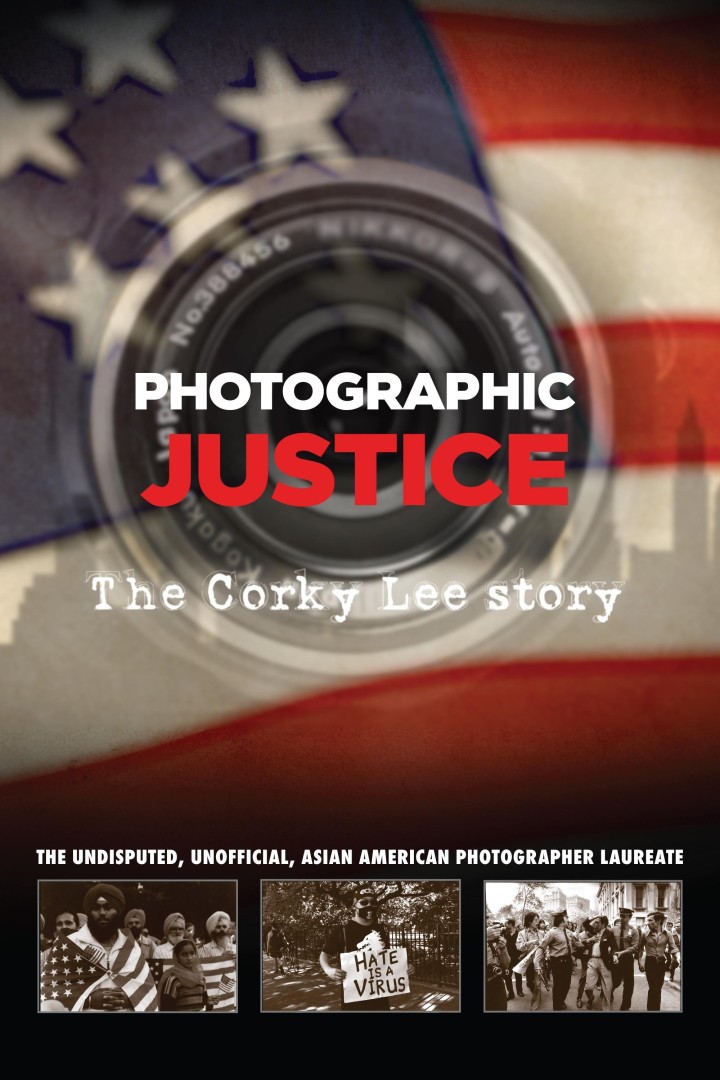
Using his camera as a “weapon against injustice,” Chinese American photographer Corky Lee’s art is his activism. His unforgettable images of Asian American life empowered generations. This film’s intimate portrait reveals the triumphs and tragedies of the man behind the lens.
Join us while we look back 50 years as Chinese American photographer Corky Lee tirelessly documented the celebrations, struggles, and daily lives of Asian American Pacific Islanders. Determined to push mainstream media to include AAPI culture in the visual record of American history, Lee produced an astonishing archive of nearly a million compelling photographs. His work takes on new urgency with the alarming rise in anti-Asian attacks during the Covid pandemic. This film’s intimate portrait reveals the triumphs and tragedies of the man behind the lens.
About the film
The film celebrates the life and legacy of Corky Lee (1947–2021) — the son of Chinese immigrants
who became one of America’s most influential documentarians of Asian American history,
culture, and activism. Often called the “Undisputed, Unofficial, Asian American Photographer
Laureate,” Lee used his camera to reveal the everyday stories and struggles of a community too
often overlooked, creating a visual legacy that continues to inspire generations.
Following the screening, audience members will have the opportunity to participate in a panel
discussion and Q&A with the filmmakers, exploring the intersections of art, identity, and civic
engagement.
About Corky Lee
Born in Queens, New York, to immigrant parents, Corky Lee devoted over five decades to
capturing the Asian American experience through his photography. From civil rights movements
to cultural celebrations, his lens documented the richness, resilience, and visibility of Asian
American life. He described his work as a mission to “change America one photograph at a time.”
Learn more about his life and legacy at www.corkylee.org and about the film at
www.photographicjustice.com.
About the Rochester Screening
The Rochester screening, hosted by APAPA-ROC, will feature the documentary followed by a
panel discussion and audience Q&A with the filmmakers. The event aims to celebrate cultural
heritage, encourage youth participation, and foster meaningful dialogue across communities.
APAPA Rochester is collaborating with organizations across Greater Rochester and Monroe
County to make this an inclusive and community-driven event that honors Corky Lee’s vision of
unity and representation.
Venue Website: www.theaterais.com
Film Website: www.photographicjustice.com
Presented by: APAPA Rochester NY (Asian Pacific American Public Affairs Association)
Media Contact: apapa.roc@apapa.org
Tickets: $10 general admission | Students: Free
Transportation for students: Register on Campus Groups for the shuttle bus.
Please submit interpreting requests to myAccess.rit.edu.
Event Snapshot
When and Where
Who
Open to the Public
| Cost | $10.00 |
Interpreter Requested?
No